
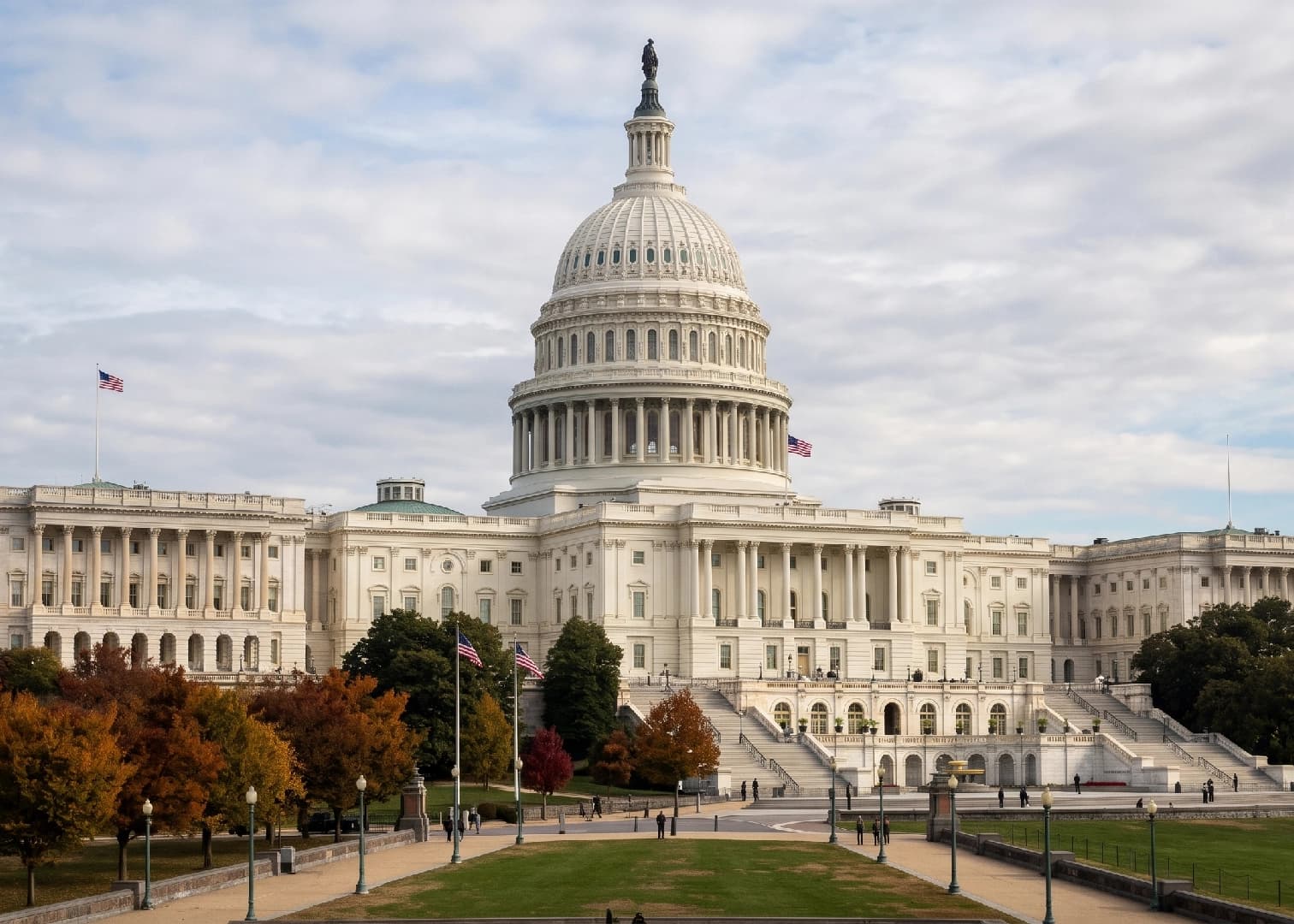
The US midterm elections have shifted the balance of power in Washington, with Democrats making significant gains in the House of Representatives and Senate.
Their victories have ended Republican control of Congress, making it harder for President Donald Trump to advance his agenda during the final two years of his term.
The results represent a major departure from the political landscape Republicans entered the elections with.
Before Tuesday’s vote, Republicans controlled the House with 219 seats against the Democrats’ 214, while holding a 53-47 advantage in the Senate, including two independents who caucus with Democrats.
NBC News projected that Democrats had won control of the House, estimating that the party would secure approximately 255 seats, comfortably above the 218 required for a majority.
The Senate also shifted to Democratic control following victories in several closely watched Republican-held states.
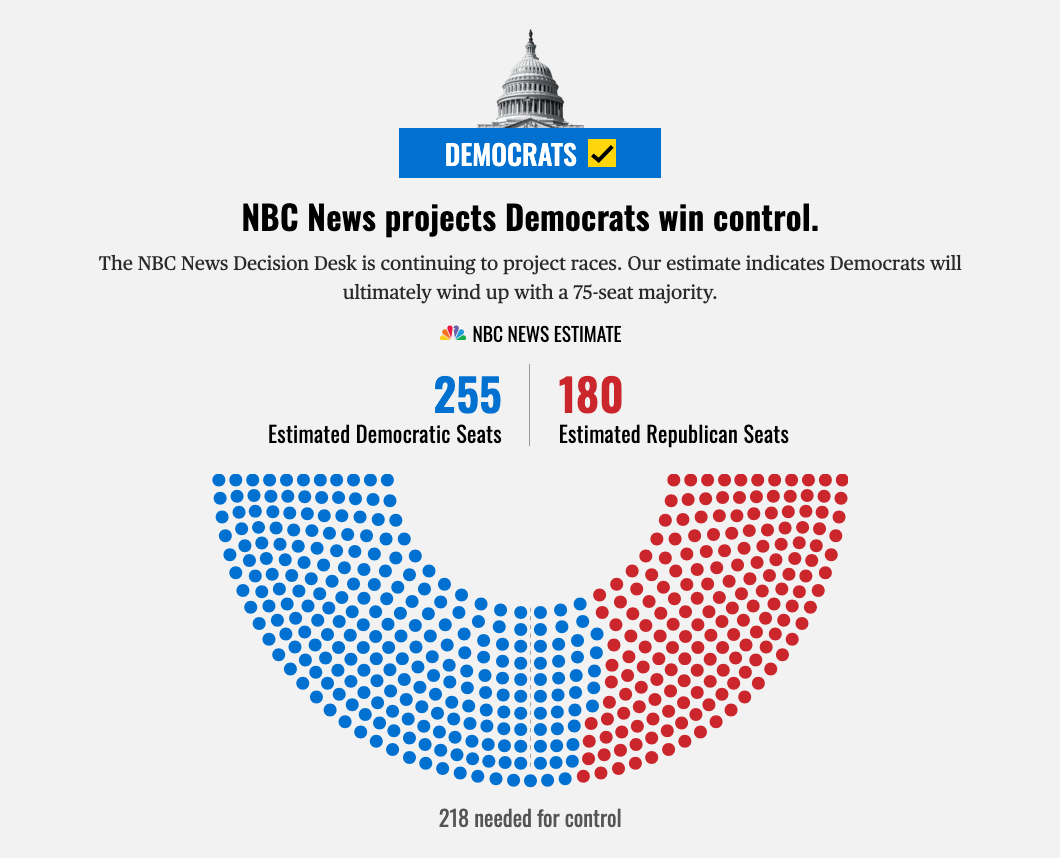
The scale of the gains is particularly significant because Democrats needed only a handful of seats to change the balance of power.
Instead, their victories extended into states that have traditionally leaned Republican, suggesting a broader rejection of the governing party rather than an isolated swing in a few competitive districts.
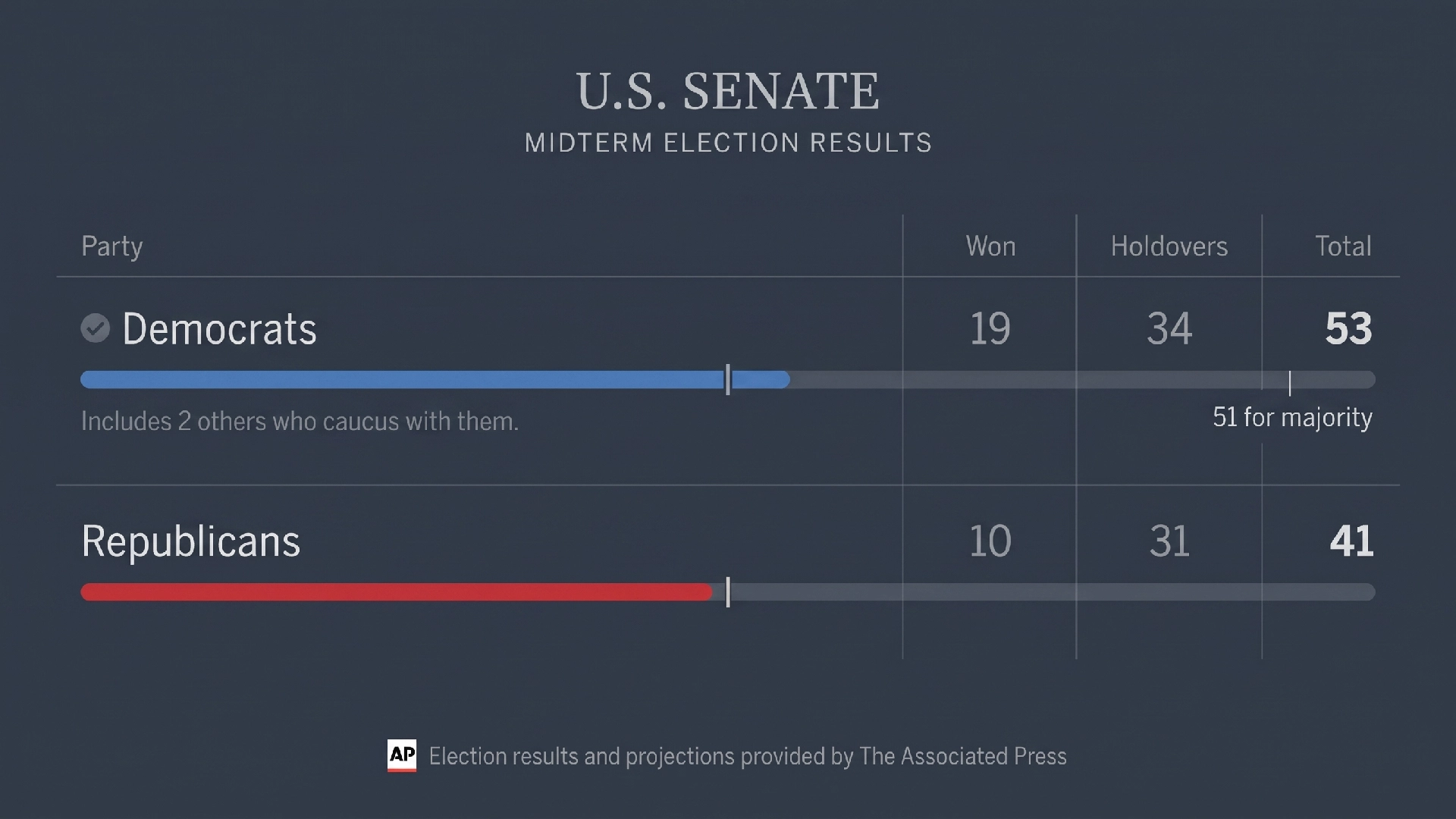
The Senate results are particularly striking because Democrats needed to gain four seats to take control. NBC News projected six Republican-held seats would change hands, giving Democrats a majority and control of the chamber’s committees and legislative agenda.
| State | Democratic winner | Republican defeated |
| North Carolina | Roy Cooper | Michael Whatley |
| South Carolina | Annie Andrews | Darline Graham |
| Texas | James Talarico | Ken Paxton |
| Ohio | Sherrod Brown | Jon Husted |
| Kansas | Adam Hamilton | Roger Marshall |
| Iowa | Josh Turek | Ashley Hinson |
The victories in Texas, Kansas, and South Carolina stand out.
All three have traditionally been Republican strongholds in federal elections. Texas had not elected a Democratic senator since 1988, Kansas had not done so since 1932, while South Carolina’s previous Democratic Senate victory came in 1998.
The biggest consequence is that Trump will no longer enjoy the support of a Republican-controlled Congress to advance his second-term agenda.
Democrats will take control of congressional committees, allowing them to launch investigations, organize hearings, and demand information from the administration.
Issues likely to attract scrutiny include immigration enforcement, government spending, the president’s business interests, and decisions involving federal agencies.
Control of the Senate is equally important. Democrats will have greater influence over presidential appointments, including judicial and executive-branch nominations. They can also use committee hearings to scrutinize administration policies and challenge its decisions.
However, winning Congress does not provide Democrats unlimited legislative power. Trump remains president and retains his veto authority. The Senate’s 60-vote threshold for advancing most legislation also means Democrats will need Republican support to pass many major bills.
This makes congressional investigations, oversight, and political negotiations more likely to define the next two years than a sweeping Democratic legislative program.
The results are being read as a referendum on Trump’s second presidency, with voters pointing to the cost of living, the war in Iran, and concerns about government corruption.
The Democratic wins stretched well beyond the party’s strongholds into traditionally Republican states, which suggests the frustration with the administration was broad.
Republicans had financial resources at their disposal. According to reports, Elon Musk spent roughly $366 million on the 2026 election cycle, with about $276 million of that amount contributed since July, making him the largest known donor of the midterms.
For Republicans, the night raises questions about the party’s direction and whether Trump’s influence is helping or hurting candidates in tight races.
For Democrats, a majority is a starting point, and they now have to show voters real progress on affordability and accountability. Trump holds the White House until early 2029, but with both chambers in Democratic hands, Congress has far more power to challenge him.



Comments
No comments yet. Be the first to share your thoughts.