
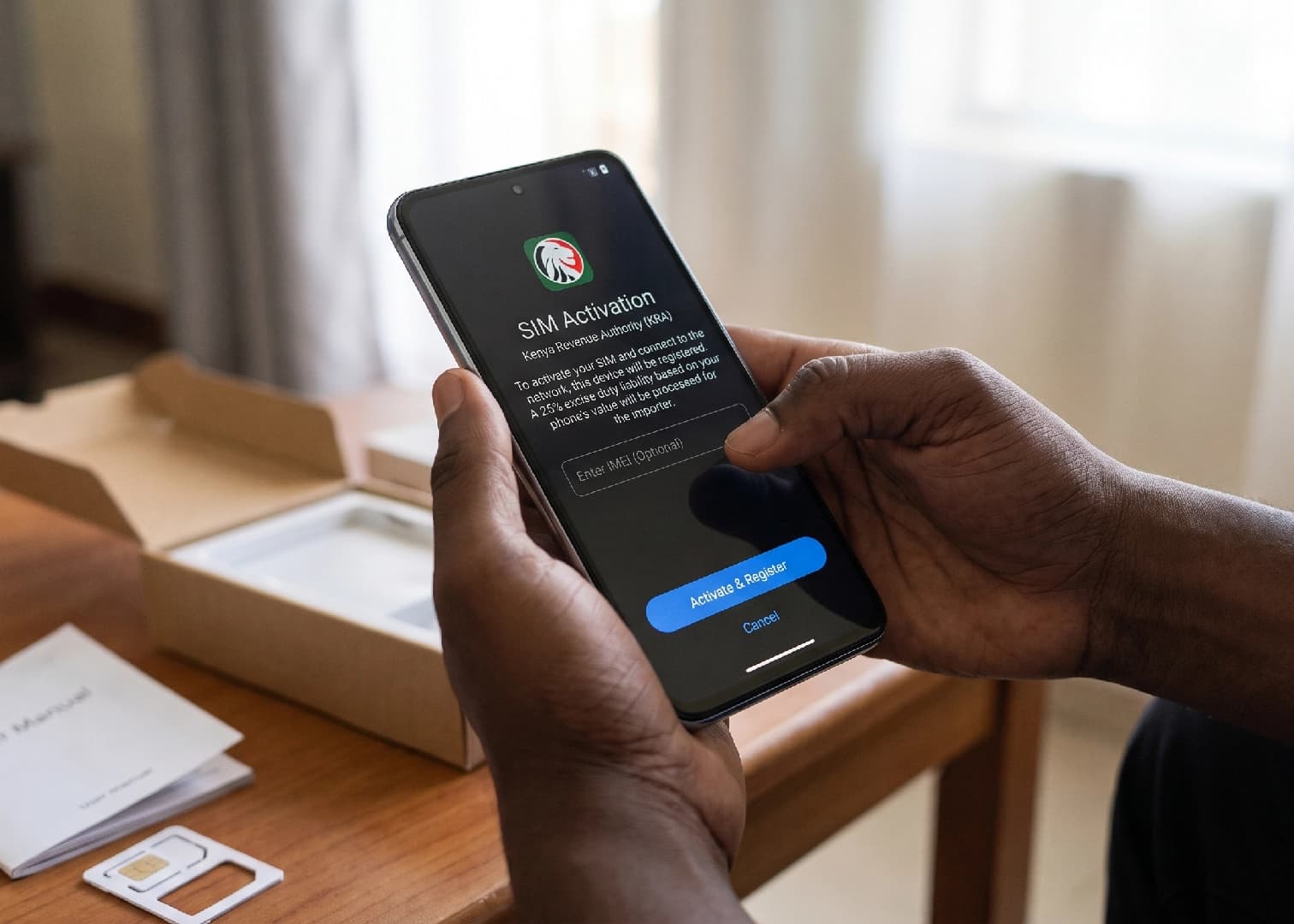
The idea of taxing phones when they first connect to a Kenyan network is back in the conversation, after KRA Board Chairperson Ndiritu Muriithi defended it at a media engagement in Laikipia, arguing that import-stage checks are being beaten by under-declaration and the misuse of consolidated cargo.
However, the proposed 25% tax is not currently in force. It appeared in the Finance Bill 2026, but Parliament’s Finance and National Planning Committee recommended its removal.
It was subsequently dropped from the Finance Act 2026. The existing 10% excise duty on mobile phones therefore remains unchanged.
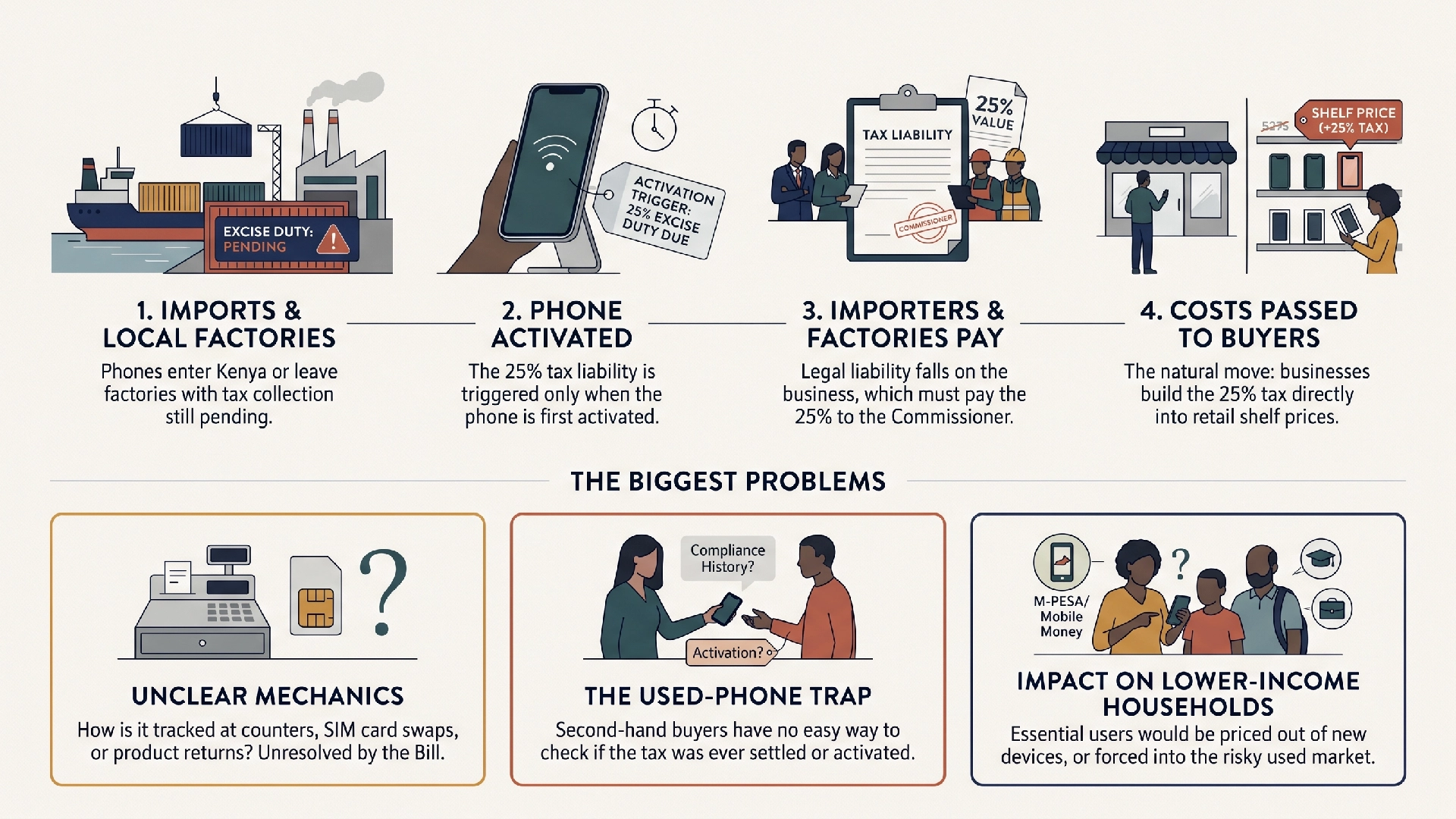
Currently, excise duty is collected when a phone is imported or manufactured locally. Under the proposal, importers and licensed manufacturers would become liable for the 25% duty when a device is activated on a Kenyan network.
This would allow KRA to use mobile network records to identify devices and reconcile them against import declarations and tax payments.
However, the Bill did not clearly define activation. Would it mean switching on a phone, inserting a SIM card, or connecting to a local network for the first time? This distinction is relevant for imported personal devices, second-hand phones, and handsets used exclusively over Wi-Fi.
Parliament’s committee flagged this ambiguity and recommended removing the proposal.
Muriithi argues that some importers exploit consolidated cargo arrangements, where several traders share shipping costs, to under-declare goods or conceal high-value phones among other shipments.
There is evidence of the problem. Business Daily reported in September that KRA investigators uncovered 55,607 basic smartphones in a shipment where only 3,000 had been declared for taxation. They also found 309 undeclared high-end phones and an alleged KES 56 million in under-declared taxes.
The investigation supports KRA’s concerns, although it does not establish the overall scale of phone tax evasion.
KRA’s reasoning is that big importers hide behind small traders in consolidated shipments, making it difficult to tell who owns what and what it is worth.
A phone that connects to a network leaves a record, which gives the taxman a second checkpoint, and honest importers would get to pay later, easing the cash-flow strain of holding unsold stock, as the Treasury argued.
Phones would have cleared customs or left factories untaxed, leaving importers and manufacturers holding stock with the duty pending. The liability would arise at activation, when 25% of the taxable value of telephones under tariff heading 8517 had to be paid.
The legal taxpayer would have been the business, not the buyer, though paying a quarter of a phone’s taxable value would push most firms to pass the cost into shelf prices, with the final rise depending on valuation and how much each seller absorbed.
The 25% would start with importers but end with buyers.
The Bill never said how retailers would prove a phone was tax-paid or what happens when buyers swap SIM cards.
Second-hand buyers faced the sharpest risk, unable to tell whether a used phone had been taxed, and lower-income households relying on phones for mobile money and work stood to be priced out.
An activation-based system would likely require device identifiers such as IMEI numbers to match phones with import and tax records.
This raises questions about who would access the information, how long it would be retained, and what safeguards would prevent misuse.
The concerns are significant given that the High Court quashed KRA and Communications Authority directives requiring mandatory IMEI disclosure in 2025 over privacy and legal safeguards.
KRA has already introduced measures targeting weaknesses in consolidated cargo arrangements. An October 2026 notice requires importers, customs agents, and consolidators to disclose individual importer details and the value of goods in their shipments.
KRA’s frustration with under-declared phones is backed by real cases, but the case for moving the tax to the point of activation is thinner.
The authority has yet to publish the size of the revenue gap or explain why its new cargo disclosure rules, inspections, audits, and prosecutions cannot close it. Until it does, a 25% activation tax would hand the cost and the data risk to every phone buyer, for a problem that began with a smaller group of importers.



Comments
No comments yet. Be the first to share your thoughts.