
The ongoing El Niño event is strengthening rapidly and could become one of the strongest recorded since at least 1950, with the phenomenon expected to continue influencing global weather patterns through early 2027.
In a statement on October 8, the World Meteorological Organization (WMO) said sea-surface temperatures in the central and eastern tropical Pacific are forecast to reach record levels during the October-November-December period.
The UN weather agency said El Niño is expected to peak in December, with its effects likely to be felt through changes in rainfall patterns and temperatures across different parts of the world.
“El Niño is firmly established and strengthening rapidly. WMO forecasts indicate a near-100 per cent likelihood that it will persist through February 2027, potentially being one of the strongest since at least 1950,” WMO Secretary-General Celeste Saulo said.
Pacific Ocean Temperatures Rise
According to the WMO, sea-surface temperature anomalies in the central-eastern equatorial Pacific, which is the region at the centre of the El Niño phenomenon, are measured using the Niño 3.4 index.
The index rose from an average of 1.6°C above normal in June 2026 to 2.5°C above normal in August.
For October-December, the seasonal average Niño 3.4 anomaly is forecast to reach approximately 3.7°C, with the peak expected around December.
WMO said this would be the highest level since observations began, exceeding the previous record of 2.6°C recorded between November 2015 and January 2016.
“For October-November-December, the seasonal average Niño 3.4 sea surface temperature anomaly is forecast to reach approximately +3.7°C, peaking around December. This is the highest since observations began and is stronger than the previous record of + 2.6 °C in November 2015-January 2016,”stated WMO.
The agency said the strengthening El Niño will change global rainfall and temperature patterns, raising the likelihood of droughts and floods in different regions.
Global Temperatures Expected to Remain High
WMO seasonal update forecasts a very high likelihood of above-average temperatures across large parts of the world between October and December.
The agency said the forecast does not mean every location will experience above-average temperatures every day, but it indicates a strong seasonal signal that increases the likelihood of heat extremes and related impacts.
The warning comes after August recorded the highest global temperatures on record, according to monthly reports from the European Union’s Copernicus Climate Service, the US National Oceanic and Atmospheric Administration, and NASA.
WMO also reported that global sea-surface temperatures reached an all-time observed high in August.
Rainfall Patterns Set to Shift
The strengthening El Niño is also expected to cause significant changes in rainfall patterns across different regions.
WMO forecasts wetter-than-normal conditions across the central and eastern equatorial Pacific, particularly east of the International Date Line.
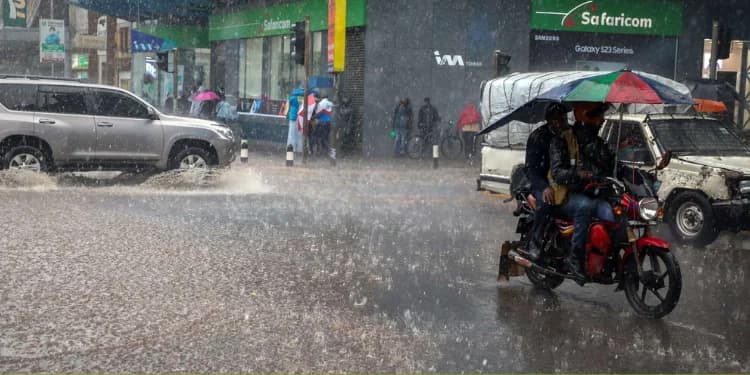
Above-normal rainfall is also more likely across the Greater Horn of Africa, parts of Central Asia and coastal East Asia, northern areas of the Arabian Peninsula, parts of North America south of 45°N and southeastern South America.
In contrast, drier-than-normal conditions are forecast across the western Pacific and equatorial Atlantic Ocean, extending across the South Pacific towards the southern tip of South America.
The Indian subcontinent, southern Central America, parts of the Caribbean, and northwestern South America are also expected to experience drier-than-normal conditions.
WMO cautioned that the seasonal signals indicate where wetter or drier conditions are more likely and should not replace national and local weather forecasts.
The agency said other ocean conditions are also contributing to the October-December seasonal outlook.
A positive Indian Ocean Dipole (IOD), which can influence rainfall patterns around the Indian Ocean, is expected to reach its peak in October before declining.
The seasonal IOD anomaly for October-December is forecast at approximately +0.5°C.
Meanwhile, sea-surface temperatures in the equatorial Atlantic are expected to remain above normal.
WMO Mobilizes Response
WMO said it and its member countries have mobilized efforts to minimize the impacts of El Niño across different sectors of the economy.
National Meteorological and Hydrological Services and regional climate outlook forums are providing regular updates to decision-makers to support preparedness and risk management.
The agency is also providing recurring updates across the United Nations system and to humanitarian partners through the WMO Coordination Mechanism.
The strengthening El Niño and the associated forecast increase in extreme heat are among the issues being discussed at the Global Heat Forum in Bangkok, Thailand, running from October 6 to 9, where about 600 experts are meeting to discuss ways of turning climate science into practical measures.
Follow our and X Account for real-time news updates



Comments
No comments yet. Be the first to share your thoughts.