
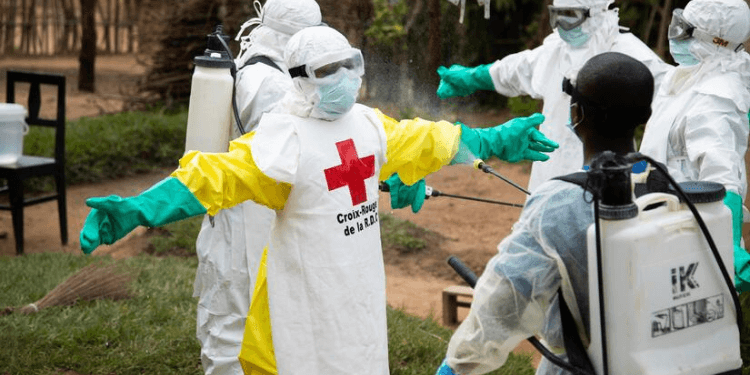
The United States has introduced a new Ebola-related travel requirement that will require passengers flying to the country from Kenya and other foreign destinations to sign a declaration confirming they have not been in the Democratic Republic of the Congo (DRC) during the previous 21 days.
In a statement on October 22, the US Centers for Disease Control and Prevention (CDC) announced that the new requirement would take effect on November 3 at 11:59 p.m. Eastern Standard Time.
The requirement applies to all passengers boarding international flights to the United States, including US citizens, nationals and lawful permanent residents. It covers commercial flights, private aircraft and general aviation.
Under the order, passengers must complete a signed statement, known as an attestation, before boarding their flights. Anyone who fails to provide the declaration will not be allowed to board unless they have an exemption issued by the US government.
“The Centers for Disease Control and Prevention (CDC) within the Department of Health and Human Services (HHS) issued an Order on October 22, 2026, requiring that all air passengers boarding an international flight into or connecting through the United States sign a statement (attestation) that they have not been present in DRC in the 21 days before boarding a flight to the United States,” stated the CDC.
The measure also applies to travellers who transited through an airport in the DRC, even if they did not leave the airport or the aircraft.
How the New US Travel Rule Works
CDC said the attestation requirement is intended to reduce the risk of Ebola entering the United States through air travel.
The 21-day period matches the maximum incubation period for Ebola, the time between exposure to the virus and the onset of symptoms.
Passengers who have been in the DRC must wait until Day 22 after leaving the country before boarding a flight to the United States, provided they meet all other travel requirements.
The CDC counts the day a passenger leaves the DRC as Day 0, while Day 1 is the first full calendar day spent outside the country. Travellers cannot board flights to the United States during Days 0 to 21.
The rule applies regardless of whether a passenger travelled through the DRC by air, land or sea. Even a brief connection through a Congolese airport counts as being present in the country.
Airlines Required to Verify Passenger Declarations
Airlines and other aircraft operators must ensure passengers complete the attestation before or at boarding.
The declaration can be completed on paper or electronically, provided the airline can verify that the passenger or an authorised representative submitted it.
Operators must deny boarding to passengers who fail to complete the declaration unless they qualify for an exemption.
They must also retain each completed attestation for at least 42 days after the passenger’s flight arrives in the United States. The records must be made available to the US government upon request for compliance checks or public health investigations.
The CDC recommends that airlines collect the declarations at check-in or at the last foreign airport before departure to the United States. Airlines may also include the process on their websites or in reservation applications.
DRC Ebola Outbreak Fuels Regional Concern as Cases Surge
The current Ebola outbreak in the DRC was officially declared on May 15, after laboratory testing confirmed Bundibugyo virus disease in Ituri Province.
The World Health Organisation (WHO) was alerted on May 5 to an unexplained illness with high mortality in the Mongbwalu health zone.
WHO said the first known suspected case had developed symptoms on April 24 and the patient, a health worker, later died at a medical centre in Bunia. Investigations indicated the outbreak initially centred in Mongbwalu, a busy mining area in Ituri, before spreading to neighbouring health zones.
The Bundibugyo virus, a species of Ebola, is causing the outbreak. WHO has described it as the largest Ebola outbreak ever recorded in the DRC, surpassing the 2018–2020 outbreak, which recorded 3,317 cases.
By September 23, the DRC had reported 7,890 confirmed cases and 3,799 deaths across 63 health zones in seven provinces. Ituri remained the epicentre, accounting for 6,032 confirmed cases.
The outbreak also crossed into Uganda after authorities detected imported cases from the DRC in May. Uganda reported 20 cases and two deaths before declaring itself Ebola-free on July 28, following the completion of its response measures and the discharge of its last confirmed patient on June 16.
WHO has warned that the continued transmission in the DRC poses a risk of further cross-border spread, particularly because of population movement and trade between affected areas and neighbouring countries.
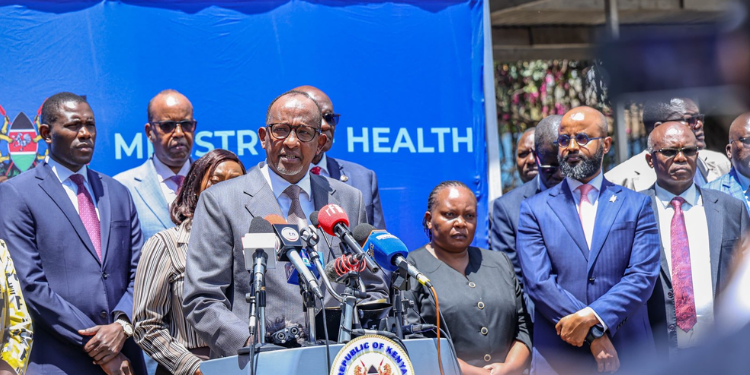
Kenya’s Ministry of Health confirmed the country’s first Ebola case on October 6, after a Kenyan man who had travelled from the DRC through Uganda tested positive for the Bundibugyo virus. The patient died on October 5 while receiving treatment in Nairobi.
“The Ministry of Health Kenya wishes to inform members of the public that it has confirmed the first imported case of Ebola, Bundibugyo virus disease. This patient is a Kenyan citizen who has been living in DRC for the past seven years. He fell ill about a month ago and was treated in several hospitals while still in DRC,” stated the Health Ministry.
By October 23, Kenya had reported nine confirmed cases, including one death, according to the Ministry of Health, and all cases were linked to the initial patient, with no evidence of community transmission.
Follow our and X Account for real-time news updates.



Comments
No comments yet. Be the first to share your thoughts.