
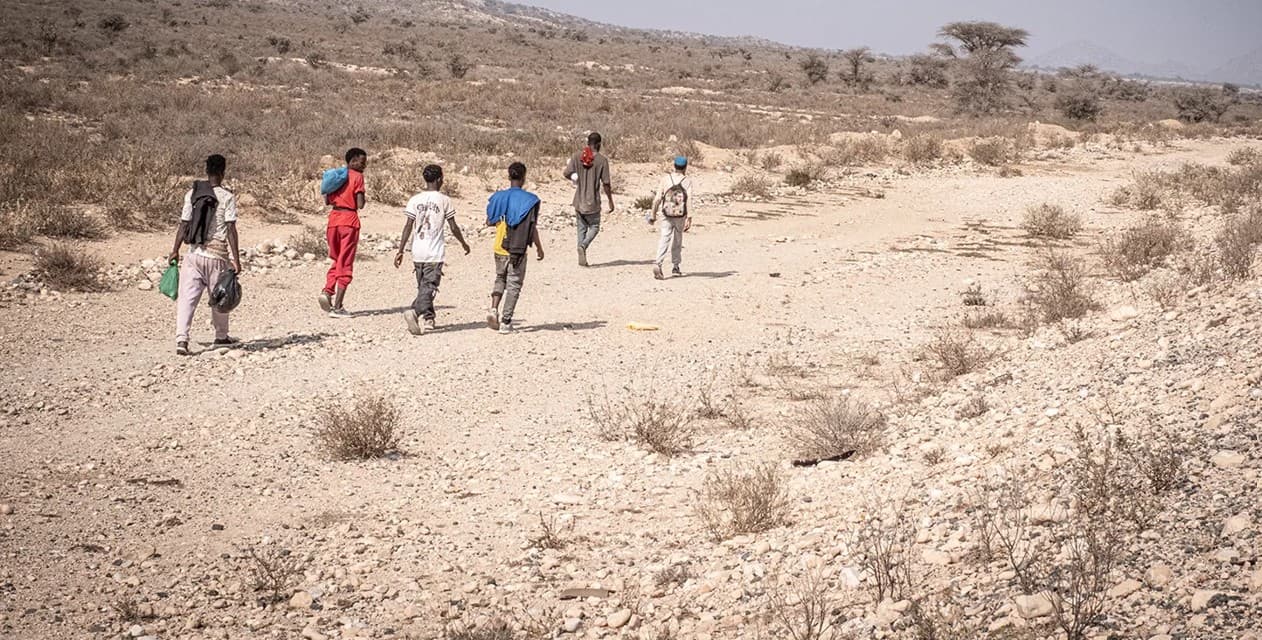
Thousands of Ethiopians seeking better employment opportunities abroad are increasingly falling prey to human trafficking networks that use fraudulent job advertisements to lure victims into forced labour and sexual exploitation, the 2026 US Trafficking in Persons (TIP) Report has revealed.
The report highlights emerging cases of Ethiopian men recruited through online advertisements for purported information technology jobs in Thailand before being trafficked into online scam operations in Myanmar, Cambodia and Laos.
The victims are reportedly subjected to confinement, debt bondage and physical abuse while being forced to participate in financial fraud schemes.
The report cites traffickers' growing use of digital technologies to recruit, deceive and control victims through fraudulent employment opportunities, educational schemes, ethnic-based disinformation and fabricated success stories. It also points to the emerging use of big data analytics, cryptocurrency, artificial intelligence and the dark web to facilitate human trafficking.
Ethiopia's high unemployment, poverty and limited economic opportunities have contributed to increased overseas migration, with the government reporting that 500,000 registered workers travelled abroad in 2025.
At the same time, more than 142,000 Ethiopians returned from working abroad during the year, many of whom were vulnerable to trafficking in destination countries, along migration routes and upon their return home.
The Middle East remains a major destination where Ethiopian women face exploitation, particularly in domestic work. In countries including Saudi Arabia, Lebanon, Kuwait, Qatar, Oman, Bahrain, Jordan and the United Arab Emirates, employer-based visa systems tie domestic workers to individual employers, restricting their movement and increasing their vulnerability to exploitation.
The report says Ethiopian women working in domestic settings across the region were subjected to severe physical and emotional abuse. Some also faced stigma, loss of employment and possible deportation after leaving abusive employers.
Ethiopian girls are also exploited in domestic servitude and sex trafficking in neighbouring countries, particularly Djibouti and Sudan, while boys face forced begging, domestic servitude and labour exploitation, including in shopkeeping.
Kenya has also featured in regional trafficking networks involving Ethiopian nationals, with authorities periodically arresting Ethiopians found in the custody of suspected traffickers or while being transported across the region. Some cases have raised concerns over alleged collusion between traffickers and rogue law enforcement officers.
The report further raised concerns over the recruitment and use of children by armed groups in conflict-affected parts of Ethiopia.
It cited credible reports that government forces, including the Ethiopian National Defence Forces (ENDF), unlawfully recruited and used child soldiers in combat and support roles. Non-state actors, including Fano forces, the Tigray People's Liberation Front (TPLF) and the Oromo Liberation Army (OLA), were also reported to have recruited and used children.
The report further highlighted allegations by media organisations and non-governmental organisations that Russian officials and illicit recruiters fraudulently recruited young women aged between 18 and 22 from Ethiopia and other countries for vocational training programmes before placing them in military drone production facilities.
Workers at the facilities were reportedly subjected to hazardous working conditions, surveillance, violations of working hours and wages, contract switching and recruitment fees, all of which are indicators of potential human trafficking.
Internally displaced persons and refugees were also identified as particularly vulnerable due to limited access to justice, education, economic opportunities and basic services. An estimated two million people were internally displaced last year.
The report noted that trafficking networks range from small-scale local operators, often drawn from victims' own communities, to highly organised criminal groups facilitating irregular migration and exploiting people in sex and labour trafficking.
Poverty, unemployment, conflict and limited awareness of emerging trafficking schemes continue to expose Ethiopians to exploitation, while corruption and alleged collusion by some officials undermine efforts to combat the crime.
According to the report, the Ethiopian government identified 164 trafficking victims during the latest reporting period, up from 105 in the previous period. Of the victims identified, 37 were exploited in forced labour, while 127 were classified under unspecified forms of trafficking.
All 37 forced labour victims were children, comprising 27 boys and 10 girls. The 127 victims classified under unspecified forms of trafficking were adults, including 66 women and 61 men.
The government also screened vulnerable Ethiopians returning from the Middle East and other African countries for trafficking indicators, identifying 142,679 potential victims, compared with 56,333 in 2024.
Non-governmental organisations and international organisations reported identifying an additional 2,016 potential trafficking victims. Authorities referred 6,640 identified and potential victims to support services, while providing assistance to 106,435 people across the two categories.
The figures underscore the scale of trafficking risks facing Ethiopians migrating for work and returning from abroad, as well as the challenges of identifying and supporting people exposed to exploitation.


Comments
No comments yet. Be the first to share your thoughts.