
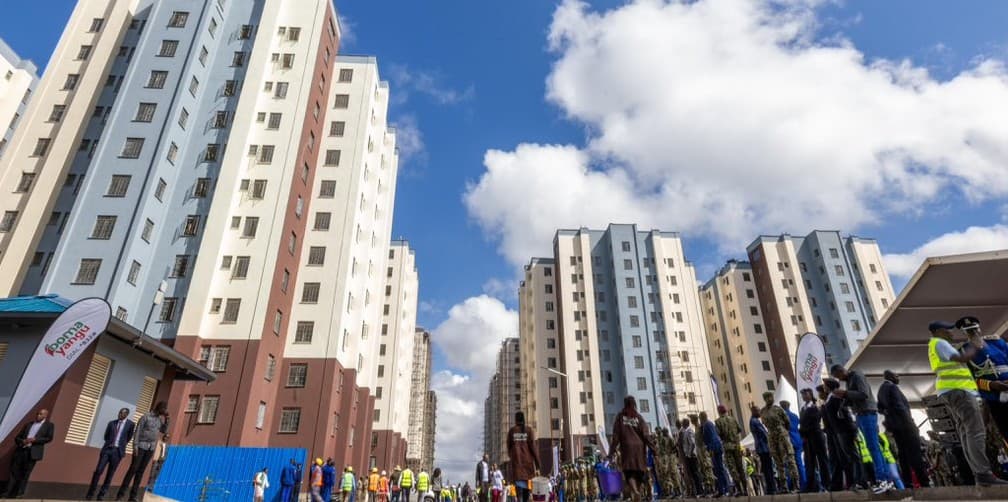
Kenya's struggle to provide adequate and affordable housing for millions of urban residents is in focus as the world marks World Cities Day, with renewed calls for urban regeneration that improves living conditions without displacing vulnerable communities.
The global event is being observed in Fuzhou, China, under a programme running from October 31 to November 2, bringing together governments, urban planners, development partners and communities to exchange solutions for more inclusive and sustainable cities.
“World Cities Day 2026 will provide a platform for national and local governments, United Nations entities, international organisations, academia, the private sector and communities to exchange experiences, showcase innovative practices and identify practical solutions,” the United Nations said.
This year's theme, Regenerating the City: Adequate Housing for All, highlights the need for cities to upgrade ageing infrastructure, improve informal settlements and expand access to affordable housing while building resilience to climate change.
It also emphasises community-led planning, with existing residents involved in redevelopment decisions to ensure improvements do not price them out of their neighbourhoods or disrupt their livelihoods.
Kenya's rapid urbanisation has, in particular, placed pressure on housing, sanitation, water supply, transport and other essential services, especially in informal settlements where residents often face overcrowding, insecure tenure and inadequate infrastructure.
At the same time, the growth of Kenya’s population, currently estimated at 55 million, has contributed to the country’s inadequate supply of new housing units. Annual demand stands at 250,000 units, but only an estimated 50,000 units are supplied, according to a new report by Habitat for Humanity.
"About 6.4 million people from Kenya’s urban population live in informal settlements, while an estimated 60 per cent of the capital city Nairobi’s residents live in slums. In rural areas, the problem is characterised by poor-quality housing and a lack of basic services, such as clean drinking water," it states.
"In addition, 68 per cent of Kenyans lack land documentation or tenure security. The Kenyan government has made adequate and affordable housing one of its priorities to bridge the housing deficit. However, the delivery of housing is the responsibility of county governments, which often lack adequate resources."
Government efforts to upgrade informal settlements and improve urban infrastructure continue to face a growing affordability challenge, with rising property values threatening to lock low-income residents out of neighbourhoods targeted for regeneration.
The global observance, led by UN-Habitat and partners, highlights urban regeneration as an opportunity to improve existing neighbourhoods while ensuring low-income households benefit from investments in housing and infrastructure.
UN Secretary-General Antonio Guterres urged cities everywhere to invest in adequate housing for all so that everyone has a place to call home.
“Housing is foundational to tackling inequality & speeding sustainable development. Yet, more than 3 billion people lack access to adequate housing,” he said in a post on X.
Up to 3.4 billion people globally lack access to adequate housing, secure tenure, basic services or affordable living conditions.
The theme calls for integrated approaches that combine affordable housing with improvements to public spaces, transport connectivity, infrastructure and climate resilience.
In Kenya, however, efforts to upgrade informal settlements and improve urban infrastructure have at times led to rising property values, raising concerns that some low-income residents could be priced out of neighbourhoods targeted for regeneration.
This year’s theme, however, presents an opportunity to examine how urban development programmes can address the needs of residents in informal settlements while preventing forced displacement and ensuring communities participate in decisions affecting their neighbourhoods.
Urban regeneration can involve upgrading drainage systems, improving sanitation and roads, rehabilitating public spaces and expanding access to essential services, alongside measures to provide secure tenure and affordable housing.
Climate resilience is also an important consideration, particularly for settlements exposed to flooding and other environmental hazards. Investments in drainage, waste management and resilient infrastructure can help reduce risks while improving residents' quality of life.



Comments
No comments yet. Be the first to share your thoughts.