
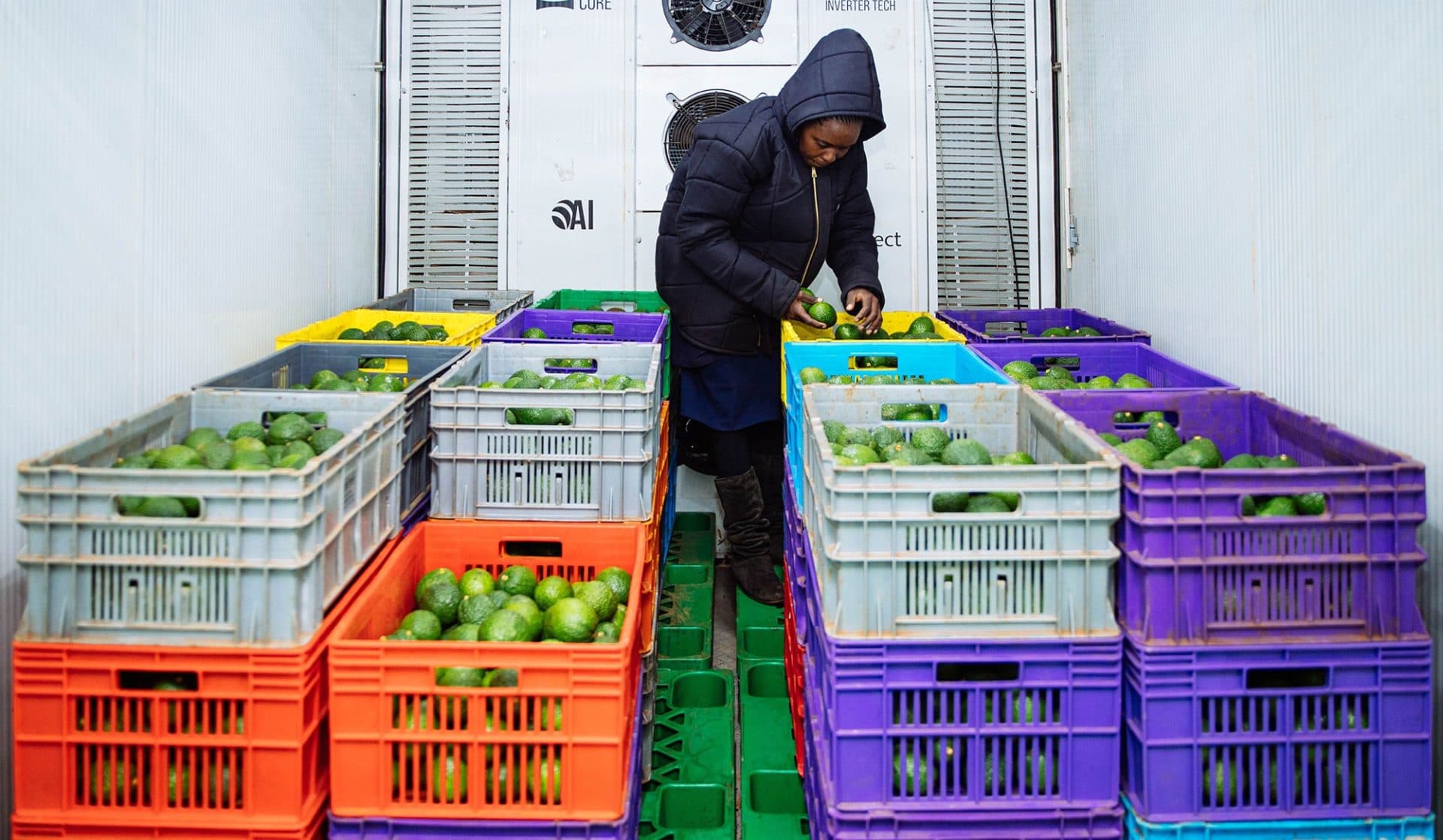
Farmers and agribusinesses across Kenya’s key agricultural value chains are set to benefit from increased access to solar-powered cold storage as Absa Bank Kenya partners with the United Nations Capital Development Fund (UNCDF) and the United Nations Development Programme (UNDP) to expand financing for cold-chain infrastructure.
The three institutions have entered into a portfolio guarantee arrangement aimed at helping address Kenya’s estimated $2.1 billion gap in cold storage capacity and reduce post-harvest losses in sectors including horticulture, dairy, fisheries and meat.
Under the partnership, Absa will provide asset-based financing of between $500,000 and $2 million, equivalent to about Sh64 million to Sh258 million, to aggregators, equipment suppliers, exporters and other major players in agricultural value chains.
The businesses will use the financing to deploy solar-powered cold storage facilities to smallholder farmers and agribusinesses, enabling them to preserve produce for longer, reduce losses and reach markets at greater scale.
The financing is supported by a portfolio-sharing guarantee from UNCDF, which is intended to reduce the risks associated with lending to the cold-chain sector.
The arrangement addresses some of the barriers that have limited investment in cold storage, including high initial capital requirements and perceived market risks.
The partnership coincides with the launch of Phase II of the cold chain services programme in Kenya, implemented by UNCDF and UNDP with support from the Mitigation Action Facility (MAF).
The first phase demonstrated significant demand for solar-powered cold storage, with pilot projects estimated to have the potential to benefit more than 60,000 farmers and generate about 1,200 jobs.
Under the wider programme, UNCDF provides risk-sharing and blended-finance instruments to encourage private investment, while UNDP supports policy engagement, technical assistance and coordination among players in the cold-chain ecosystem.
Agriculture accounts for about a quarter of Kenya’s gross domestic product and provides employment to more than 40 per cent of the population, according to the Kenya National Bureau of Statistics.
However, the country is estimated to lose about 40 per cent of its agricultural produce each year because of inadequate post-harvest handling and storage.
“The collaboration reflects Absa Bank’s commitment to enabling sustainable economic growth while advancing climate-smart solutions in the agricultural sector. Through this partnership with UNCDF and UNDP, we are unlocking innovative financing that empowers agribusinesses to invest in cold storage infrastructure, strengthening food security and improving livelihoods,” said Renato D’Souza, Business Banking Director at Absa Bank Kenya.
UNDP Kenya Resident Representative Dr. Jean Luc Stalon said reducing post-harvest losses presented opportunities beyond food security, including climate and economic benefits.
“Addressing post-harvest losses is not only a food security priority, but also a climate and economic opportunity,” he said.
The financing will use an asset-based lending model, with the solar-powered cold storage equipment serving as collateral alongside the UNCDF guarantee.
The approach is also expected to support Kenya’s shift towards clean energy, particularly in rural areas where access to reliable electricity remains a challenge.
The initiative forms part of efforts to scale up solar-powered cold storage in Kenya, increase private-sector investment in agricultural infrastructure and support the country’s climate commitments under its Nationally Determined Contributions.


Comments
No comments yet. Be the first to share your thoughts.