
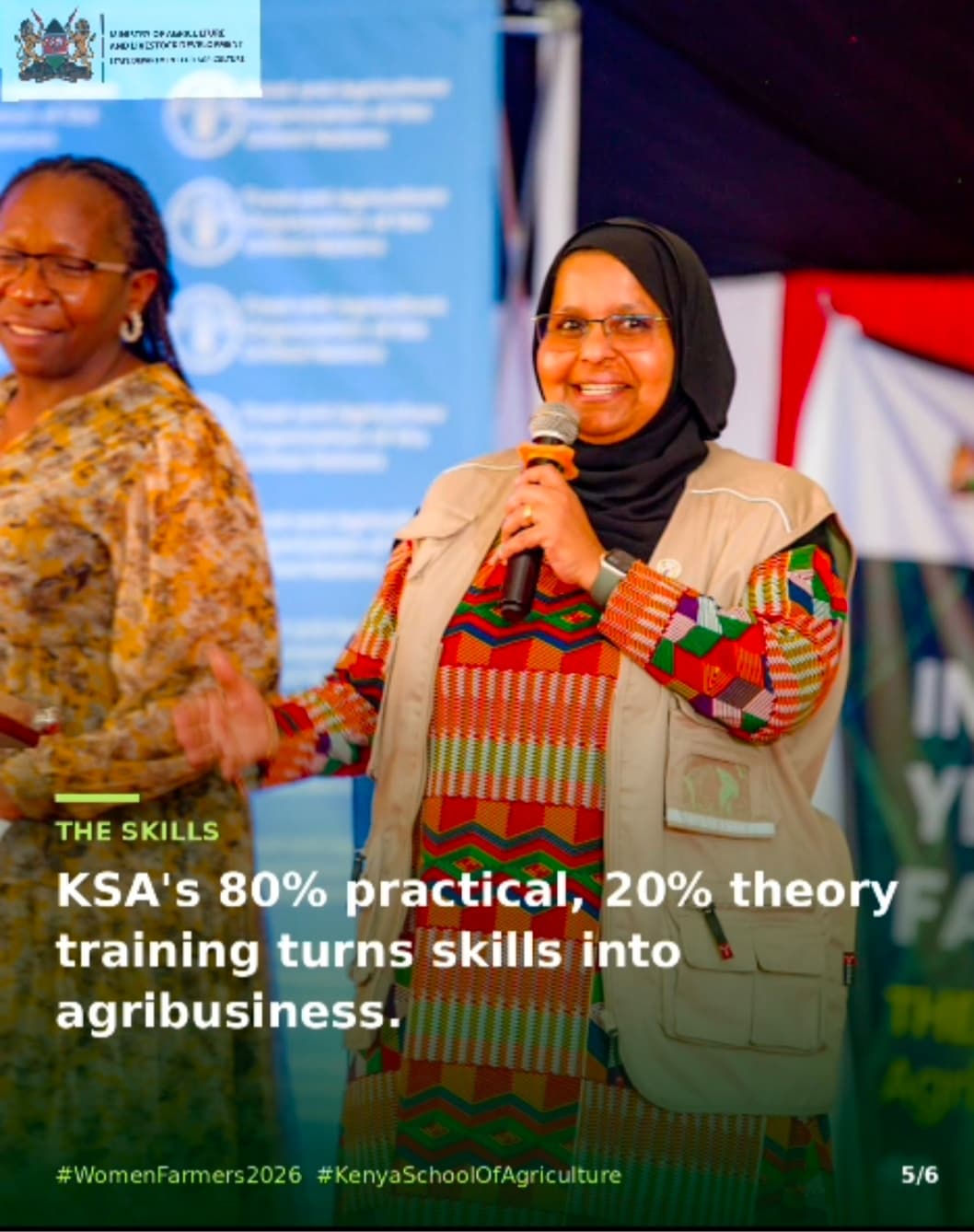
Women farmers all over the world play a central role in food production, in ensuring household nutrition, and in maintaining rural economic resilience, but they still encounter systemic obstacles which limit their potential. At the International Year of Women Farmers 2026 forum, which was organised by the Kenya School of Agriculture (KSA) in association with its partners and had the theme “Empowered Women Transforming Agri-Food Systems”, the need to deal with these problems was given primary attention.
The important event brought together women farmers, government officials, development partners, researchers, media and other key agricultural stakeholders in order to celebrate the vital roles that women play throughout the value chains and to set out specific actions aimed at addressing the ongoing gender gaps.
The fact that women make a significant contribution at every stage of the agricultural value chain, whether it be in growing crops and looking after livestock or in agro-processing, marketing and providing for family nutrition—was highlighted in the discussions. Yet their productivity is still limited by structural inequalities:
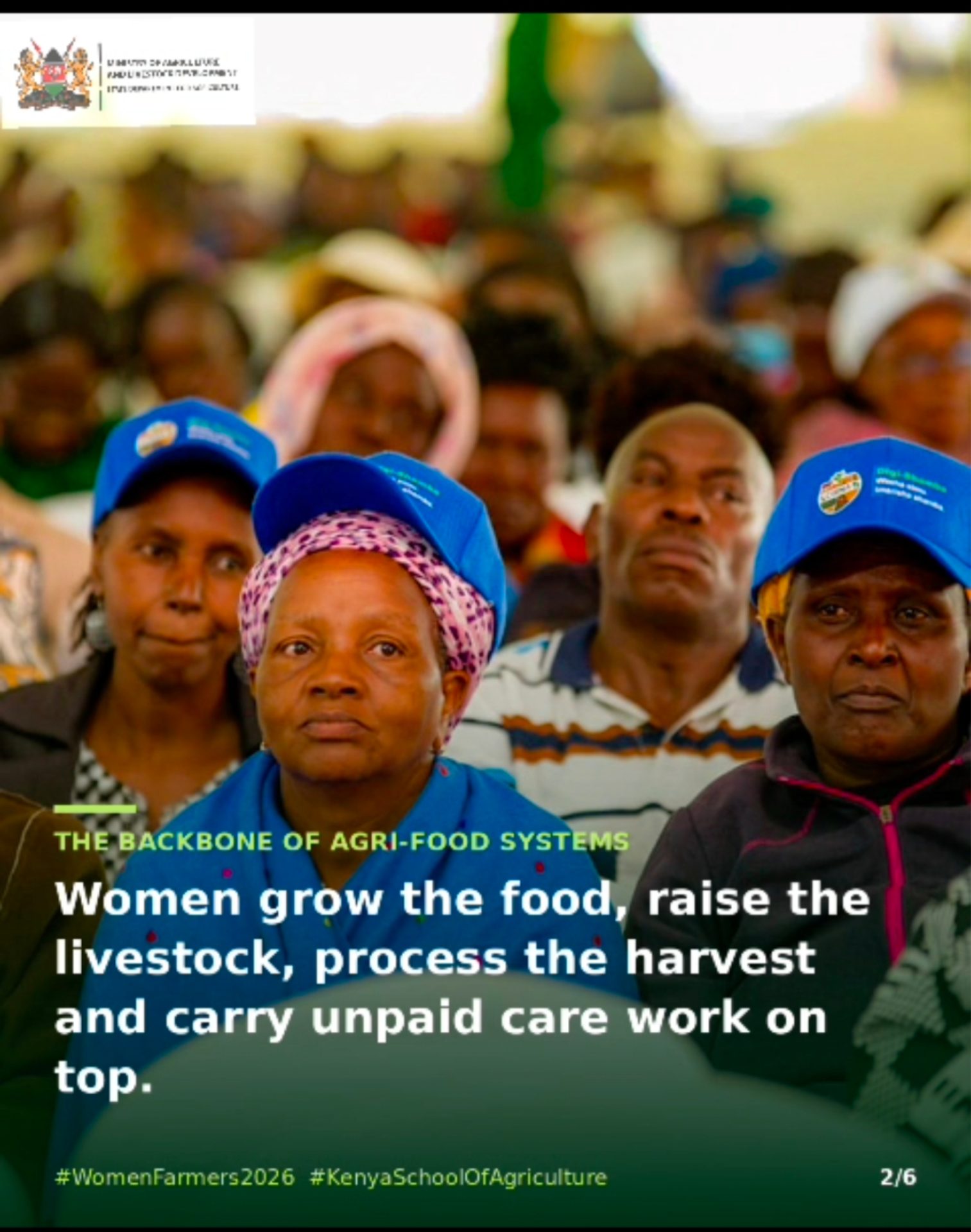
Women tend to encounter obstacles in obtaining land titles, affordable credit, high-quality inputs, modern machinery, and formal extension services.
The strain of carrying out unpaid domestic and care duties greatly restricts the amount of time and energy that women have available for expanding their commercial farming activities or for taking on leadership roles.
Women are often seen only as farm workers and not as business owners in a commercial sense, as agri-entrepreneurs or as people who make decisions.
Stakeholders at the forum emphasized that achieving real transformation requires a transition from awareness to targeted, sustained investment across four main strategic pillars:
Training institutes such as the Kenya School of Agriculture Nyeru under Director Rosemary Nyamu has been at the forefront of the move towards practical and market-focused education. The school points out its approach of having 80 per cent of its teaching based on hands-on experience and 20 per cent theoretical content, with the aim of giving students the practical skills needed in commercial agribusiness, value addition, Integrated Pest Management (IPM), and kitchen gardening. Moreover, it is important to extend access to digital tools, mobile advisory applications, and smart farming equipment if women are to be linked with up-to-date market information and financial services.
Delegates urged that policy measures be taken to tackle the gender gap in regard to land tenure and financial inclusion. If women are given legal rights to land and receive credit facilities that are both appropriate and affordable, they will be able to make investments in important productive assets, such as irrigation systems, modern livestock facilities, and processing equipment, and thus move their operations from subsistence farming to profitable enterprises.
Co-op Bank targets cereal farmers with financing to boost production
Women-led farmer groups in Kenya were identified as important factors in achieving economic leverage and in the development of leadership. By organising together, women are able to raise financial capital, share agricultural knowledge, make efficient use of extension services, and gain stronger bargaining power in competitive markets as a result of pooling their production and carrying out collective marketing.
With regard to policy integration and governance, the participants at the forum suggested that women’s agricultural priorities should be incorporated directly into national frameworks and the County Integrated Development Plans (CIDPs). In order to make sure that local agricultural policies take into account social norms, the domestic responsibilities borne by women, and the structural obstacles they face, it is necessary to increase women’s representation in governance bodies.
A main point that came out of the forum was that efforts to empower women in agriculture should not be seen as a charitable action but rather as an economic strategy with a high return. By closing the gap in access to resources, farm outputs increase, household incomes rise, and national food security as well as climate resilience are improved.
As the International Year of Women Farmers in 2026 goes on, the demand for action is still very clear: governments, members of the private sector, and civil society need to go beyond simply acknowledging the issue and instead make continuous investments, introduce fair policies, and provide real opportunities so that women can take on leadership roles in shaping the future of agriculture.
Comments
No comments yet. Be the first to share your thoughts.