
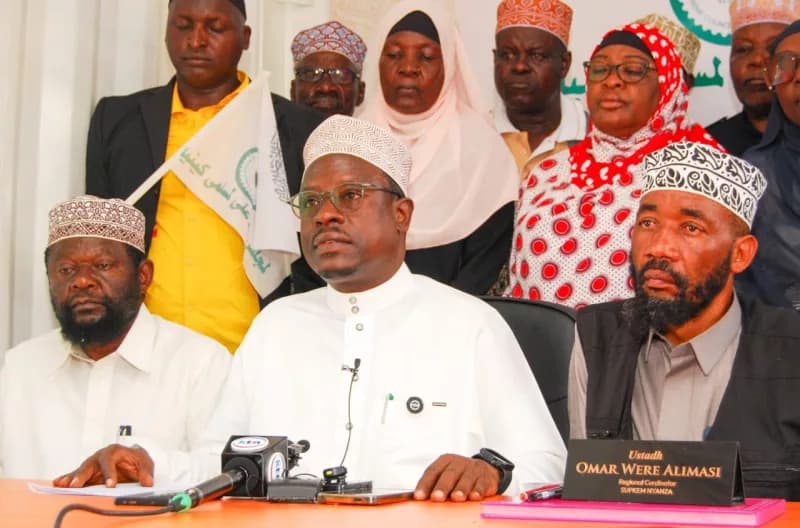
SUPKEM National Chairman Al-Hajj Hassan Ole Naado speaking in Kisumu during the launch of SUPKEM’s regional office for Western Kenya on October 31, 2026/HANDOUT

The Supreme Council of Kenya Muslims (SUPKEM) has urged President William Ruto to intervene in the resettlement of more than 3,500 Nubian residents displaced by demolitions in Kibos, Kisumu County, in 2021.
SUPKEM National Chairman Al-Hajj Hassan Ole Naado called on the President to direct the Ministry of Lands and the National Land Commission to fast-track the issuance of title deeds to the affected families following a Supreme Court ruling on the dispute.
The council also wants the government to formally recognise the Nubian community as an indigenous Kenyan tribe and end what it described as discriminatory vetting procedures that have delayed the issuance of national identity cards, passports and other identification documents.
Speaking in Kisumu on Saturday during the launch of SUPKEM’s regional office for Western Kenya, Ole Naado said the community's legal victory must translate into tangible action by the government.
He said the Supreme Court had dismissed an appeal by the Kenya Railways Corporation on October 23, affirming that the demolitions carried out in Kibos in February 2021 violated the residents' constitutional rights to property, housing and human dignity.
“This is no longer a matter of a community begging for a favour; it is now a matter of strict constitutional and legal compliance,” Ole Naado said.

He said despite the court victory, many affected residents remained displaced and were yet to secure permanent settlement on the land where their ancestors were settled in 1938.
“Justice on paper must now urgently translate to justice on the ground,” he said.
Ole Naado said the President should issue an executive directive reinforcing the Nubian community's status as a bona fide Kenyan tribe and ensure that residents receive proper documentation without unnecessary administrative delays.
The SUPKEM chairman spoke as the council formally opened its Western Kenya regional office in Kisumu, which he said would bring its services closer to Muslim communities across the region.
The office is expected to coordinate community dispute resolution, education, social welfare programmes and Halal certification support.
Ole Naado said Muslims in Western Kenya continued to face economic marginalisation, limited representation in public appointments and inadequate access to government development funds.
He also raised concern over drug and substance abuse among young people in Kisumu and neighbouring counties, saying SUPKEM would work with religious leaders, community elders, the county government and the National Authority for the Campaign Against Alcohol and Drug Abuse (NACADA) to strengthen prevention and rehabilitation efforts.
He said the new office would also monitor human rights concerns and track the distribution of public resources to ensure Muslim communities were not left behind.
Comments
No comments yet. Be the first to share your thoughts.