
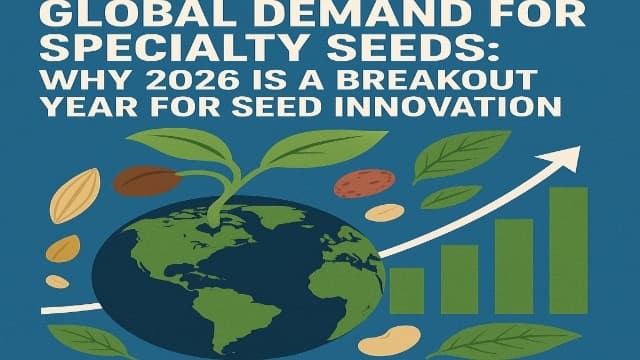
Seed markets rarely make headlines, yet 2026 has quietly become one of the most transformative years for the global seed industry. From small home gardens to large-scale commercial agriculture, demand for specialty seeds is rising faster than many analysts predicted. Several regions in Africa, Asia, Europe, and the Americas are seeing increased interest in seeds that offer more predictable performance, better genetic stability, or unique growing characteristics.
This shift is not driven by farmers alone. It reflects a broader global trend in which consumers, hobbyists, startups, and agricultural innovators are becoming more intentional about what they plant, how they grow, and what outcomes they expect. As seed technology advances, the market is moving from generic bulk seed sales toward more specialized, high-value genetic offerings.
Why Specialty Seeds Are Becoming a Global Business Trend
Specialty seed demand is rising for three key reasons: predictability, performance, and personalization.
Consumers increasingly gravitate toward seeds that offer reliability and consistent results. For example, many gardeners prefer feminized seed varieties that help ensure predictable outcomes and reduce the guesswork associated with planted crops. Businesses catering to this demand have seen significant online growth, with more buyers exploring reliable genetic lines such as those found at https://hypnoseeds.com/feminized-seeds/
Predictability is now a form of value. When people know what to expect from a seed, they are more willing to invest time and space into growing it.
Performance is another driving factor. As global consumers become more educated, they are increasingly interested in seeds with clearly defined characteristics. This includes everything from disease resistance to growth behavior and structural traits. Categories like cannabis sativa seeds, which traditionally represent taller and more vigorous plant profiles, are an example of how consumers are aligning their choices with desired plant attributes.
Lastly, personalization matters. People want seeds that fit their environment, lifestyle, and goals. Specialty seeds allow growers to match their selection to climate conditions, available space, and the type of harvest they prefer.
How Technology Is Reshaping the Seed Industry
Advances in digital commerce, genetic mapping, and agricultural data have accelerated the expansion of the specialty seed market. Modern seed companies now operate more like tech-enabled platforms, offering transparent descriptions, direct-to-consumer access, and advanced filtering tools that help buyers make informed choices.
This digital shift has lowered the entry barrier for new growers. It has also created an environment where businesses can showcase niche offerings that were once difficult to market. The result is a richer, more diverse global seed marketplace.
Another innovation driving the sector is the development of high-performance genetics. Categories associated with enhanced potency or targeted outcomes have seen increased demand. For instance, varieties often labeled as high-value or high-performance seeds attract experienced growers who focus on achieving specific results.
The rise of performance-focused genetics signals that the seed market is no longer viewed as a commodity sector. It is now seen as a precision industry built around data, specificity, and tailored outcomes.
The Economic Ripple Effect Across Regions
Emerging markets, particularly in Africa, South America, and parts of Asia, are experiencing rapid interest in seed innovation. Several factors are contributing to this growth:
● Expanding middle-class populations
● Increased awareness of home gardening and self-sufficiency
● Greater access to e-commerce seed platforms
● Agricultural modernization across developing regions
In Kenya, Nigeria, South Africa, and other African markets, younger consumers are showing a stronger interest in growing their own plants, partly inspired by sustainability movements and partly by a desire for healthier living. Specialty seeds offer an appealing entry point for this demographic because they combine accessibility with high perceived value.
This shift has created business opportunities for both local agriculture startups and global seed innovators. As digital adoption increases, cross-border relationships are making specialty seeds more available than ever.
What 2026 Means for the Future of Seed Innovation
The seed industry is transitioning from bulk supply to precision-driven demand. Consumers are asking for more control, more clarity, and more tailored offerings. As a result, companies investing in genetic stability, transparent information, and user-friendly seed catalogues are gaining a competitive edge.
The year 2026 represents a turning point because global awareness around specialty seeds has never been higher. Whether people are choosing seeds based on structure, performance, or stability, the market now rewards innovation.
As demand grows, we are likely to see:
● more research-driven seed development
● increased collaboration between technology and agriculture
● new regulatory frameworks for seed commerce
● stronger consumer education around plant genetics
Specialty seeds are no longer a niche category. They are becoming a mainstream sector within global agriculture and home gardening.
For businesses and consumers alike, the message is clear: seed innovation is not slowing down. It is accelerating, expanding, and reshaping how the world grows.

Comments
No comments yet. Be the first to share your thoughts.