
KPC (Kenya Pipeline Company) delivered a solid financial performance for the year ended June 2026, the first annual profit statement since being listed at the Nairobi Securities Exchange(NSE) earlier in the year,
Revenue increased 8.8% to KSh 42.98 billion while Earnings per share (EPS)an indicator of profitability, improved from KSh 0.56 to KSh 0.64.
The growth was supported by higher petroleum throughput, which increased approximately 7.4% to 10.61 million cubic metres. Transport revenue, the company’s dominant income stream, rose 8.4% to KSh 41.82 billion.
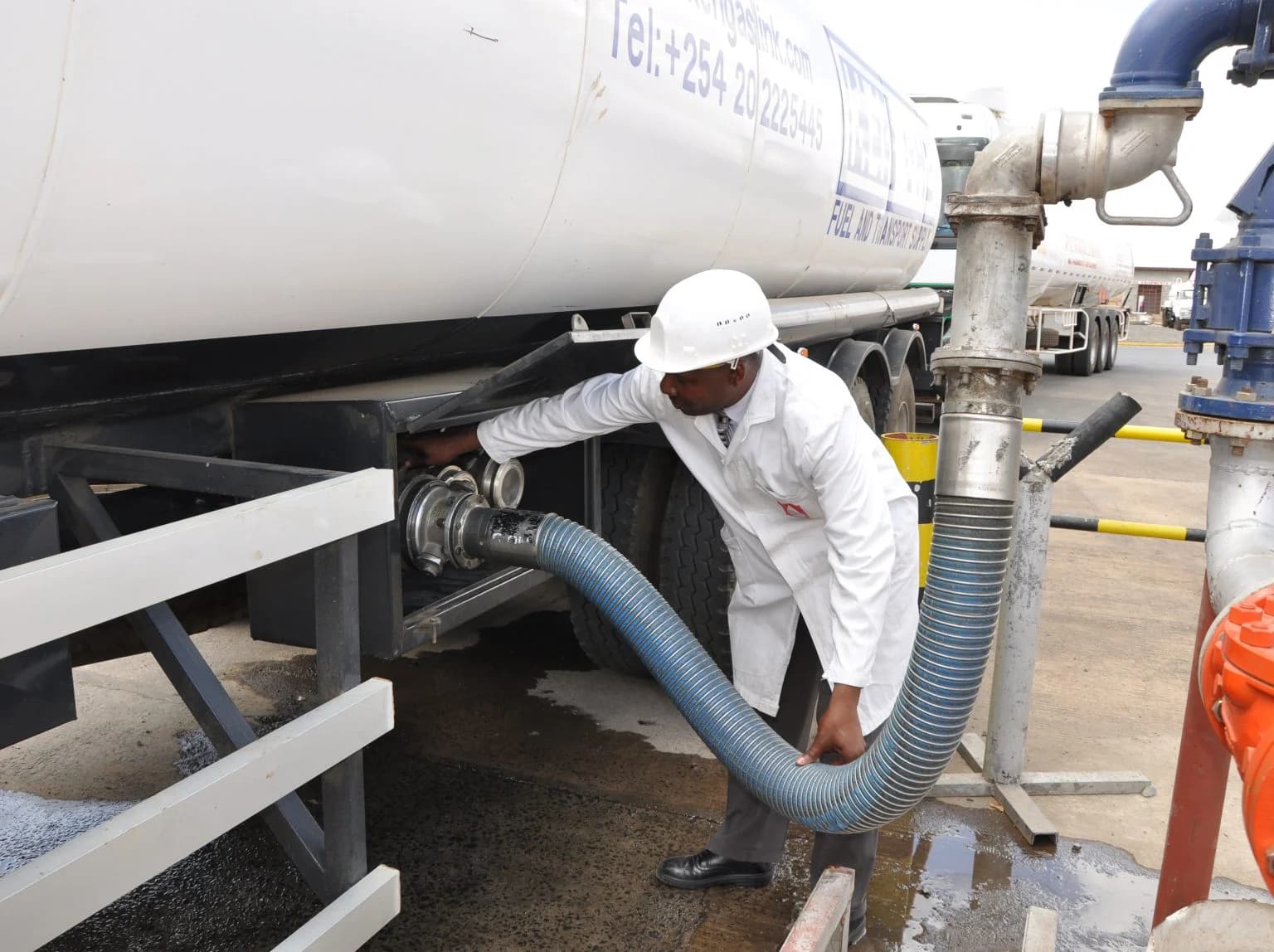
This matters because KPC’s core business depends on transporting petroleum products through essential infrastructure.
Higher throughput improves infrastructure utilisation and supports revenue growth, although the resulting profitability depends on tariffs, operating costs and service mix.
EBITDA grew 10.7% to KSh 24.95 billion, outpacing revenue growth and lifting the EBITDA margin from approximately 57.1% to 58.0%. This indicates improved operating earnings relative to revenue.
However, operating profit grew more slowly, at 6.8% to KSh 17.21 billion. The difference between EBITDA and operating profit widened, consistent with a higher depreciation and amortisation charge. This warrants attention given the capital-intensive nature of KPC’s operations.
Net profit also benefited from a lower effective tax rate, which declined from approximately 36.7% to 34.0%. Consequently, the 13.1% growth in earnings should not be attributed entirely to operating improvements.
Investment implication: Earnings growth is encouraging, but its sustainability depends on throughput, operating efficiency, infrastructure costs and whether the favourable tax movement persists.
KPC Cash Generation Capability
KPC Operating cash flow increased 34.3% to KSh17.39 billion, materially outpacing profit growth. This suggests improved cash generation, reportedly supported by stronger collections and higher throughput. More importantly, cash and cash equivalents rose 84.4% to KSh 20.54 billion, an increase of KSh 9.40 billion.
The cash flow figures help explain this movement. Operating activities generated KSh 17.39 billion, while net investing and financing activities absorbed KSh 4.48 billion and KSh 3.50 billion, respectively. Together, these imply a net cash increase of approximately KSh 9.41 billion, consistent with the reported movement after rounding.
This is a meaningful improvement: KPC generated sufficient operating cash to cover its reported net investing and financing outflows while substantially increasing its cash reserves.
The balance sheet also strengthened. Borrowings fell 83.4% to KSh 442.86 million, while the current ratio improved from 2.40x to 4.94x, reflecting higher current assets and lower current liabilities.
Stronger cash generation, higher reserves and lower borrowing exposure provide greater financial flexibility.
However, cash held is not necessarily surplus cash. Future maintenance commitments, working-capital requirements and contracted expenditure will determine how much of the KSh 20.54 billion is genuinely available.
KPC Net investing cash outflow increased from KSh 2.52 billion to KSh 4.48 billion. While this may reflect increased investment activity, the figure is not equivalent to total capital expenditure and does not establish how much was spent on pipeline maintenance or expansion.
For KPC, this distinction is critical. Infrastructure maintenance is not merely discretionary spending; it is essential to operational reliability, safety and the preservation of long-term earning capacity.
The key question is whether the company can adequately fund its maintenance and expansion programme through operating cash flow and existing liquidity without compromising financial resilience or shareholder distributions.
Investors should monitor the breakdown between maintenance and expansion capital expenditure, committed future projects and the cash remaining after essential investment.
Property, plant and equipment increased 3.2% to KSh 94.40 billion, but the movement in its carrying value does not independently establish whether infrastructure investment is keeping pace with depreciation and maintenance requirements.
KPC is in a stronger position to fund its infrastructure requirements, but the adequacy of that funding cannot be established without the forward capital expenditure programme.
KPC maintained its proposed total dividend at KSh 5.90 billion, equivalent to approximately KSh 0.32 per share. Against financial year 2026 net profit of KSh 11.58 billion, this represents an earnings payout ratio of approximately 51%, leaving about KSh 5.68 billion of earnings undistributed.
Operating cash flow covered the proposed dividend approximately 2.95 times. Operating cash flow less net investing cash outflow was KSh 12.91 billion, or approximately 2.19 times the dividend. This is an indicative cash coverage measure, not definitive free cash flow, because net investing cash flow is not equivalent to total capital expenditure.
The distribution appears supported by 2026 earnings and cash generation. However, future dividend sustainability will depend on the demands of the next infrastructure investment cycle.
KPC’s 2026 results are positive across profitability, cash generation, liquidity and balance-sheet strength. Revenue grew 8.8%, net profit increased 13.1%, operating cash flow rose 34.3%, and year-end cash reached KSh 20.54 billion. Borrowings declined substantially, strengthening the company’s financial flexibility.
The most consequential development is the improvement in operating cash generation alongside the increase in cash reserves. This materially eases my initial concern about KPC’s ability to finance its infrastructure requirements without excessive reliance on borrowing.
Nevertheless, the investment thesis now hinges on capital allocation: how effectively management balances essential infrastructure investment, earnings growth, liquidity preservation and shareholder distributions.
The central question is no longer simply whether KPC can generate cash. 2026 demonstrates stronger cash generation. The question is how much can be retained after essential infrastructure investment while sustaining earnings growth and dividends.

Comments
No comments yet. Be the first to share your thoughts.