

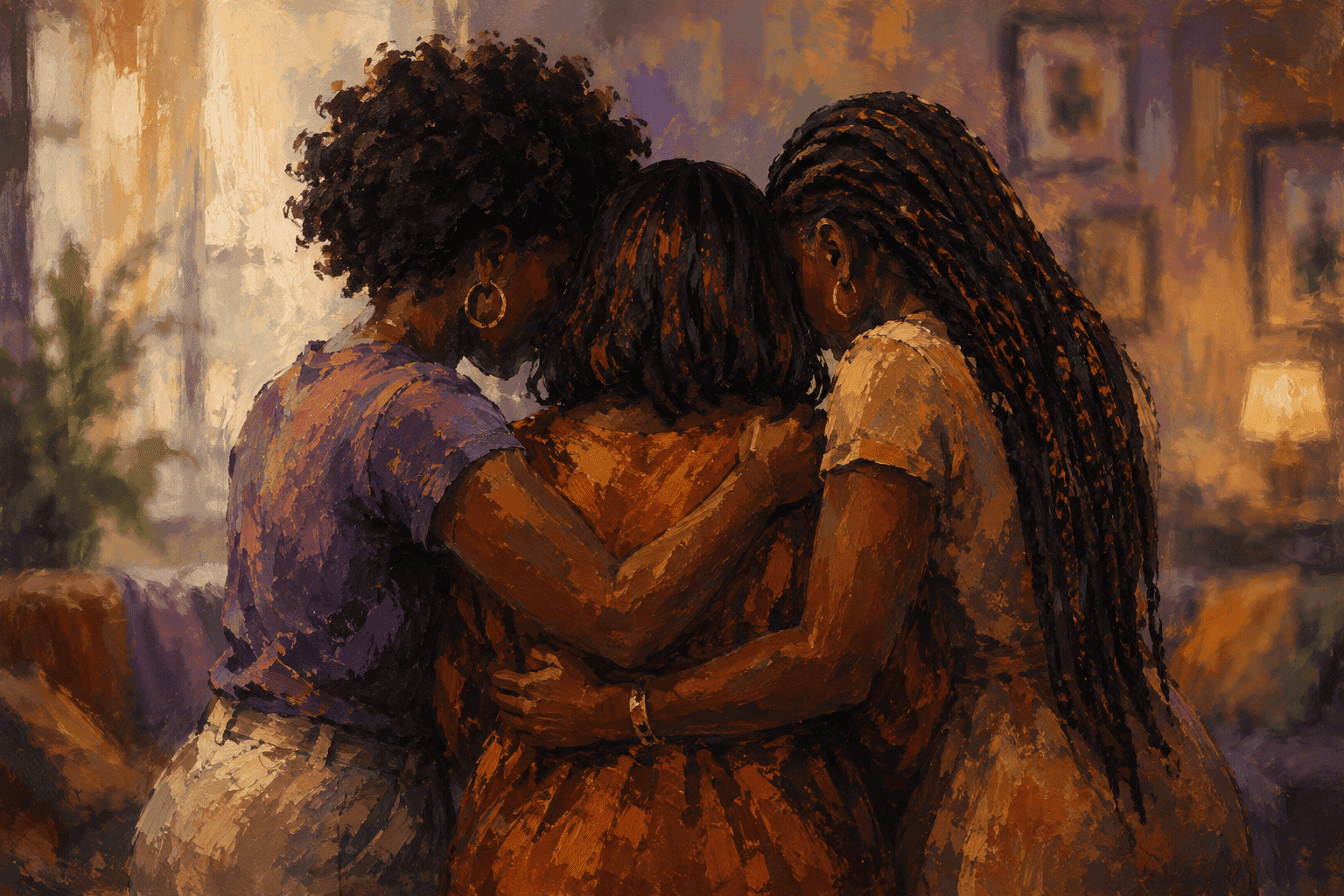
It’s a cold July Friday. The clinic is a hive of activity as usual. A group of three distraught sisters join the waiting line.
“We’d like to see Dr Muthoni,” one of them tells the receptionist.
“Did you book an appointment?”
“No, but it’s important that we see him,” another says.
“Do you have a medical emergency?” Asks the receptionist curiously.
“No…Yes. It’s complicated,” one of the women responds.
“Most of the people in the queue have an appointment. If you’d like, you can wait for the doctor to see them and maybe he could attend to you. Alternatively, kindly book an appointment for another day,” said the receptionist as she called on the next person in the queue.
The receptionist, however, made a mental note to inform the good doctor of the weird group of women who wanted to speak to him.
It was almost lunchtime, and the day didn’t slow down at the clinic. The three women left briefly to find something to eat and then came back. They still looked undecided on what they were doing. One caught a glimpse of Dr Muthoni and signalled the others. The youngest-looking of them tried to catch up with him, but he moved around too quickly for him to notice her.
Dr Muthoni finally clocked out at 5 p.m. The women were outside waiting to ambush him. The receptionist had mentioned that a strange trio had been lurking around, but she thought there was more to it than just seeking his services.
“Doctor! Doctor!” said one of the women.
Dr Muthoni didn’t hear her.
“Peter,” shouted the other one.
Dr Muthoni turned. People around the clinic hardly referred to him by his first name.
“Yes.”
The trio froze.
“Can I help you?” Dr Muthoni asked.
“Yes. We’d like to talk to you about a rather sensitive matter,” one of them finally said.
The next thirty minutes felt like hours to Dr Muthoni. They went back to his office, where they finally told him who they were and the purpose of their visit.
“We know this is much to take in, but he doesn’t have much time, so please think about it so that we can run the tests and hopefully make the transplant arrangements as soon as we can,” said the eldest of the women.
Dr Muthoni didn’t know whether to call his wife or mother first. He then decided to rush home.
He was visibly shaken. Peter’s wife couldn’t quite decide whether he was angrier or more shocked. After narrating the events to his wife, they asked his mother to go to their house.
“They did what?” His mother yelled after hearing the news.
“They said dialysis isn’t working anymore and he needs a new kidney. His other children are not a match, and one of them is sick. They think I could be a match,” Peter told his mother.
“I forbid you! You will not risk your life for that man!” Screamed his mother.
“Mum, maybe it’s time we talk about what really happened,” Dr Muthoni told his mother.
“Those women who came to see you are your father’s sisters. I worked at the same place as him as a secretary, but his sisters thought his family had pedigree and I wasn’t worthy to be his wife. He should have fought harder for us, but he didn’t; he married the woman they approved of, leaving me pregnant and jobless.”
After a lengthy discussion, Dr Muthoni’s mother left them. Peter looked deep in thought.
“What are you going to do?” His wife asked.
“You know I love being called Dr Muthoni now, but that wasn’t always the case. I was teased so much in primary school and a bit in high school. New teachers always expected to see a girl when they saw the name Muthoni, and my classmates told me, “Hata hauna baba,” during banter. Before Mum was more financially stable, even her own family was mean to us. They blamed her for messing around with a wealthy family’s son and getting pregnant. The teasing finally died down when my mother became part of the few parents with cars.”
“I had no idea it had been that bad. Did she ever tell you anything about your father?” Asked his wife.
“When the teasing was too much, I started acting out, and I remember one evening when I incessantly asked about him, and she broke down crying. It had been a hard month, and she was working multiple jobs just to make sure I didn’t lack anything. I’d never seen her like that. I stopped asking about him,” said Peter.
“I don’t think he deserves your help, but I have to ask: do you think you could live with yourself if he died and you could have helped?” Asked his wife.
“I don’t know, but I’ll take the test as I decide,” said Dr Muthoni.
He tossed and turned in bed, thinking about his father. Memories that he’d long buried came crashing at him. It had taken him many years to get over the teasing for having a female surname. When he finally appreciated his mother’s contribution to his success, he began to feel like having her name was a way of honouring her. It also helped that he met more people with female surnames.
Along the way, he’d met good men who served as father figures, and he eventually stopped wondering about his biological father. Then the aunties popped out of nowhere with a huge request.
“He is still your father,” one of the aunties had said.
He was seething in anger as they made their case, wondering where they had been all his life. Yet, he wasn’t rude to them and took time to think through the matter. The following day, he made a few calls and went to get tested.
Even as he took the tests, he wondered what to do if he was a match. Part of him didn’t know how to turn down a sick person, but his feelings got complicated when he thought of him as his deadbeat father. The surgery came with permanent life changes.
“Would they have looked for me had they not needed a kidney?” Dr Muthoni asked.
“Probably not, but we can’t know for sure,” said his wife.
“What if I inherit his condition and later have kidney issues?” Peter asked.
“The tests will give us a better picture,” his wife told him.
On Monday morning, he got a call early in the morning informing him that his father had passed away. The results came back later that day. Dr Muthoni was a match. The first and only time he met his father was in a casket, and he wondered if they’d have come to him earlier, things would have been different and if he’d have made the choice to donate an organ to someone who’d abandoned him his entire life.
Check out more stories
Dating As A Single Mum Has Made Me Very Sensitive About Men Questioning My Parenting Skills
She Asked Me To Pay Her Rent And Child’s School Fees On The First Date
A Shocking Secret Revealed During Her Father’s Funeral Changes Her Life


Comments
No comments yet. Be the first to share your thoughts.