
What began as a routine land inspection on Sunday, October 11, quickly turned into a sobering confrontation with environmental degradation for the directors of Realta Investment Limited.
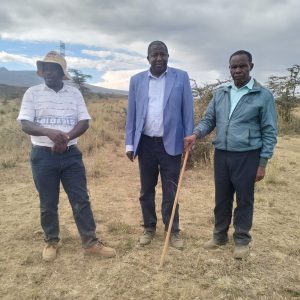
Leaving Kikuyu town early that morning, the four directors traveled to the Zambezi area of Mai Mahiu in Naivasha North to locate the beacons of a five-acre parcel they purchased in 2017.
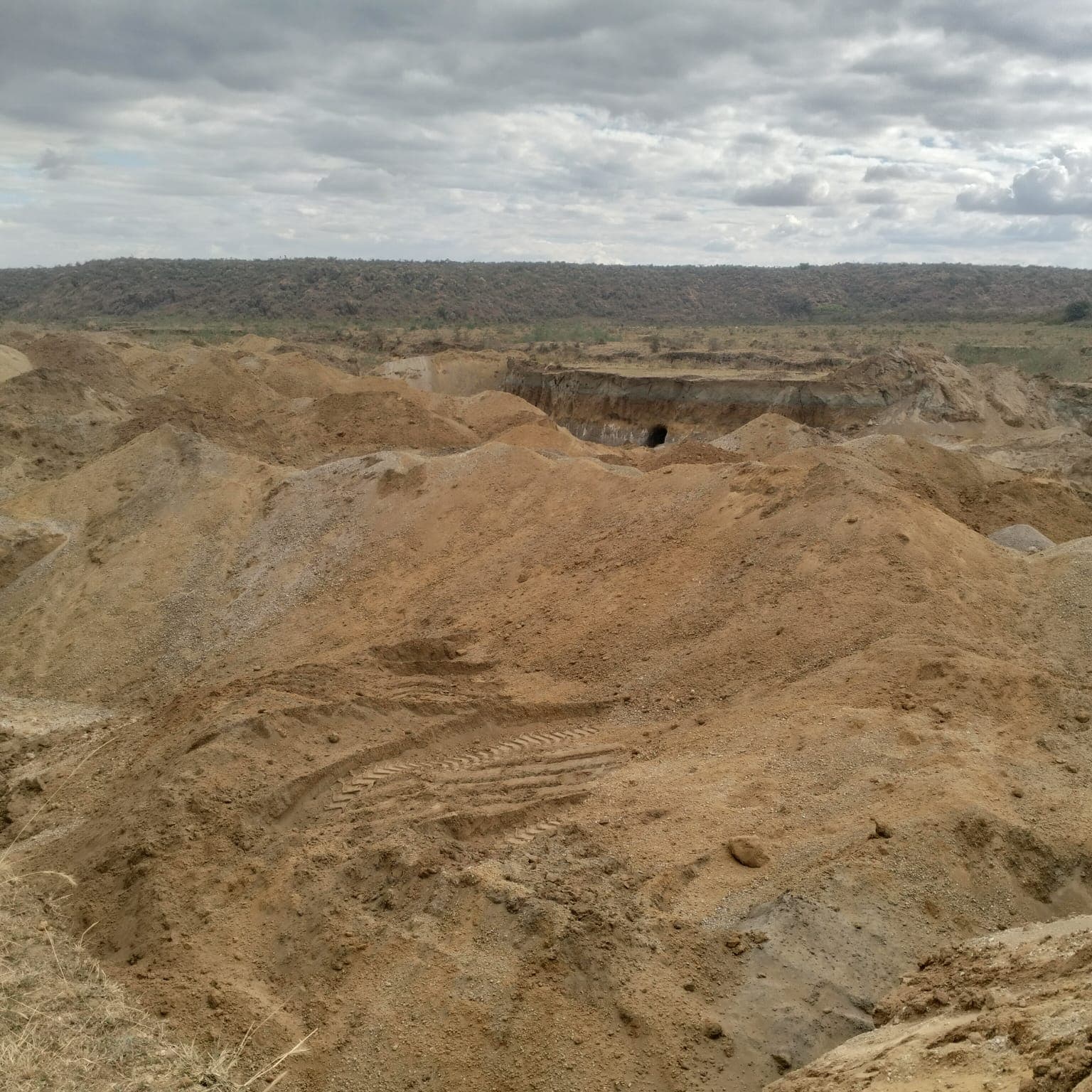
They discovered their property was heavily threatened by aggressive, unregulated open heavy digging, raising immediate concerns over the environmental and human costs of the trade.
“I first heard about this land-degrading activity two years ago, but it wasn’t extensive back then,” said Dr. Kihoro Magu, a shareholder of Realta and a human resource professional. “Coming here was very much a fact-finding mission to see what was happening on the ground.”
What Dr. Magu and his colleagues witnessed was a heavy-duty commercial operation that involves giant yellow excavators and powerful tractors turning up the earth, digging pits as deep as 10 meters. A fleet of commercial lorries shuttled back and forth, loading and transporting a lightweight, highly sought-after volcanic soil component known locally only as “famas” or “pamas”.
“Famas” is a local expression for pumice, volcanic ash, and fine aggregate sand. Situated on the floor of the Great Rift Valley near Mount Longonot, the geology of Mai Mahiu is characterized by not only loose, but also highly erodible volcanic silt. Since pumice is lightweight, inexpensive to extract, and good for manufacturing building blocks or blending into cement, it has become a premium commodity in Kenya’s booming construction sector.
Over the years, digging up of famas was in small-scale, an artisanal work that entailed using hoes and mattocks. But it has now transformed into a highly organized, lucrative commercial enterprise. Today, a spot check in Ruaka reveals that a single lorry-load of famas is being sold at a premium price of Ksh 25,000.
During the site visit, Dr. Magu photographed a broken-down Isuzu FVR 90 lorry parked directly adjacent to Realta’s Investment land, heavily loaded with the extracted material.
“This is a bad sign,” Dr. Magu said. “We have found extensive mining of famas encroaching on our parcel, and we have now agreed to fence what belongs to us.”
Rainy seasons
The extraction strategy relies heavily on the geography of the area. Residents say that during rainy seasons, the loose volcanic soil naturally forms deep river gullies. Excavators drive commercial lorries straight into these natural chasms, often cutting deep into private lands, to scoop out the sand and pumice.
Environmental advocates and residents warn that the consequences of such an unregulated extraction would be catastrophic, especially in the long term.
According to reports from environmental organizations like Greenpeace, excavators frequently dig past safe boundaries, eating directly into private agricultural and grazing land. The practice destabilizes the gully walls, thereby causing entire acres of fertile land to collapse into the pits.
Removal of the volcanic silt also destroys the natural water-retaining capacity of the riverbeds. When heavy rains hit the Rift Valley escarpment, runoff accelerates violently through the empty, wide pits, triggering flash floods that deposit thick layers of silt over public roads and residential houses.
A spot check by this writer reveals that residents are watching the destruction with a mix of anger and helplessness. Steve Lemiso, who has lived in the Zambezi area of Mai Mahiu for over 20 years near the KETRACO power lines, expressed deep concern over the permanent alteration of the landscape.
“We don’t know the people who are digging the land,” Lemiso said. “I don’t know what the government says but I believe restoration of the already damaged land will be incredibly difficult.”
Newton Mbari, a land administration and real estate expert, echoed these fears, warning fellow land investors in the Mai Mahiu area of the long-term devaluation of their assets
“What will you do with such a piece of land after such massive excavations? That land will be completely useless in the end. We need to take urgent action,” Mr. Mbari says.
A Regulatory Black Hole
Rapid growth of famas trade has created a complex, often volatile local economy involving youth groups, transport industry cartels, and accomplices private landowners.
Lemiso says there are times clashes erupt because of the collection of what he calls “cess”, which is all of local transit fees, and access rights to expansive properties like the neighboring Kedong Ranch.
Whenever local resistance or authorities mount pressure, informal networks of lookouts quickly signal the site, causing miners and operators to vanish into thin air. Lemiso also said that residents remain entirely in the dark regarding the legality of the heavy machinery moving through their large tracts of land in Mai Mahiu.
It remains unverified whether the miners have the required environmental impact assessments or commercial mining licenses, as the primary responsibility for identifying and auditing these operators rests with the government.
Due to the acute risks posed to human life and the environment, the National Environment Management Authority (NEMA) and the Nakuru County Government have repeatedly issued bans and suspended unlicensed quarrying operations in Mai Mahiu. But enforcement on the ground seems to paint a picture of a game of cat-and-mouse.
Despite official push to stop the trend, enforcement gaps persist, and illicit, heavy digging continues unabated under the cover of darkness, leaving land buyers to defend their investments alone.



Comments
No comments yet. Be the first to share your thoughts.