
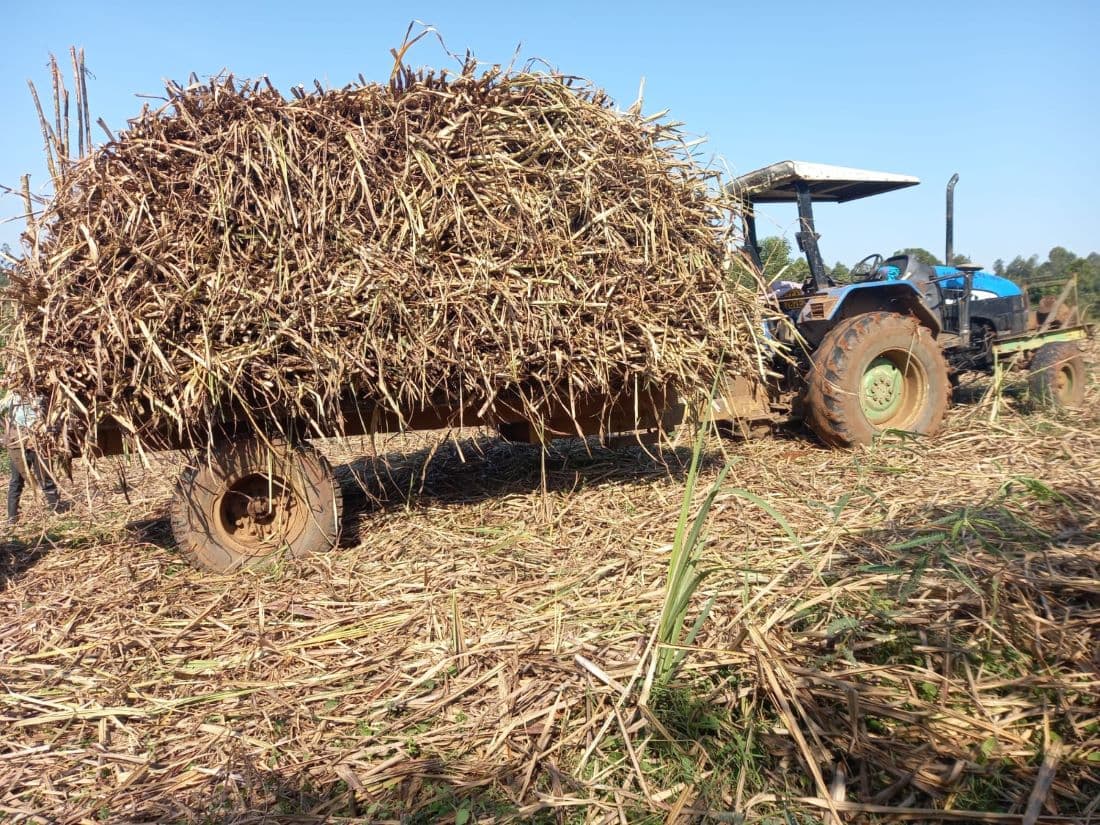
Sugarcane farmers are beginning to see improved returns as government interventions in the sugar industry drive down input costs, revive factories and increase cane production across the country.
In Teso South, farmer Violet Otwane says the cost of fertiliser has dropped significantly, with a 50-kilogramme bag now retailing at about Sh2,500, down from as much as Sh7,000.
The lower input costs, coupled with improved cane prices, have strengthened prospects for farmers returning to sugarcane production as the sector undergoes reforms.
National sugar production has also recorded a significant increase, rising from 472,773 tonnes in 2022 to 815,454 tonnes. The area under sugarcane has expanded by 19.4 per cent to 715,693 acres.
The reforms have also been supported by the Sugar Act, 2024, which re-established the Kenya Sugar Board and introduced a new legal framework for regulation and development of the industry.
Factories revived through private investment
The government has moved to revive state-owned sugar factories through private investment, with Nzoia, Chemelil, Sony and Muhoroni sugar mills leased to private operators for 30 years.
The leases are aimed at injecting capital into the mills, rehabilitating ageing facilities, improving operations, restoring cane intake and increasing factory capacity utilisation.
The revival of the mills has coincided with increased cane deliveries and improved earnings for farmers.
Cane farmers earned an estimated Sh33.5 billion in the seven months to July, with deliveries rising to 5.94 million tonnes from 4.12 million tonnes during a comparable period.
Estimated farmer earnings increased by 52.3 per cent, while the average cane price rose to Sh5,643 per tonne from Sh5,343.
Sugar production rises
Higher cane deliveries have translated into increased domestic sugar production.
Output reached 528,874 tonnes in the seven months to July, representing a 44.5 per cent increase from 366,007 tonnes recorded during the same period a year earlier.
Cane deliveries reached 998,000 tonnes by June before climbing to a record 1.01 million tonnes in July.
Sugar production in July alone stood at 91,022 tonnes, more than double the 42,255 tonnes recorded in July 2025.
The increase in domestic production has also begun to reflect in consumer prices, with the average retail price of sugar falling by 3.1 per cent to Sh167.02 per kilogramme from Sh172.36 over the comparable seven-month period.
Bura project set to expand production
Further growth is expected from the Bura Irrigation Scheme in Tana River, where a 50,000-acre sugarcane estate is being developed.
The project is expected to produce 1.2 million tonnes of cane annually and 120,000 tonnes of sugar. It is also projected to generate about 13 million litres of ethanol and 25 megawatts of electricity from bagasse.
The development is expected to create 3,000 direct jobs while providing a ready market for more than 10,000 smallholder farmers.
Farmers interviewed have acknowledged improvements in fertiliser costs, factory operations and payment timelines.
They are, however, calling for further interventions to address harvesting, transportation and other production costs, saying lower expenses across the value chain would help ensure that stronger sector performance translates into better net returns at farm level.
The developments point to a sugar industry recording increased cane deliveries, stronger farmer earnings, higher domestic production, expanding acreage and renewed factory activity.
The focus now shifts to sustaining the recovery and ensuring that the gains from increased production and investment translate into improved incomes for farmers.
>>> Why Kenya Has Reduced Sugarcane Price From Ksh5,750 to Ksh5,500 per Tonne



Comments
No comments yet. Be the first to share your thoughts.