
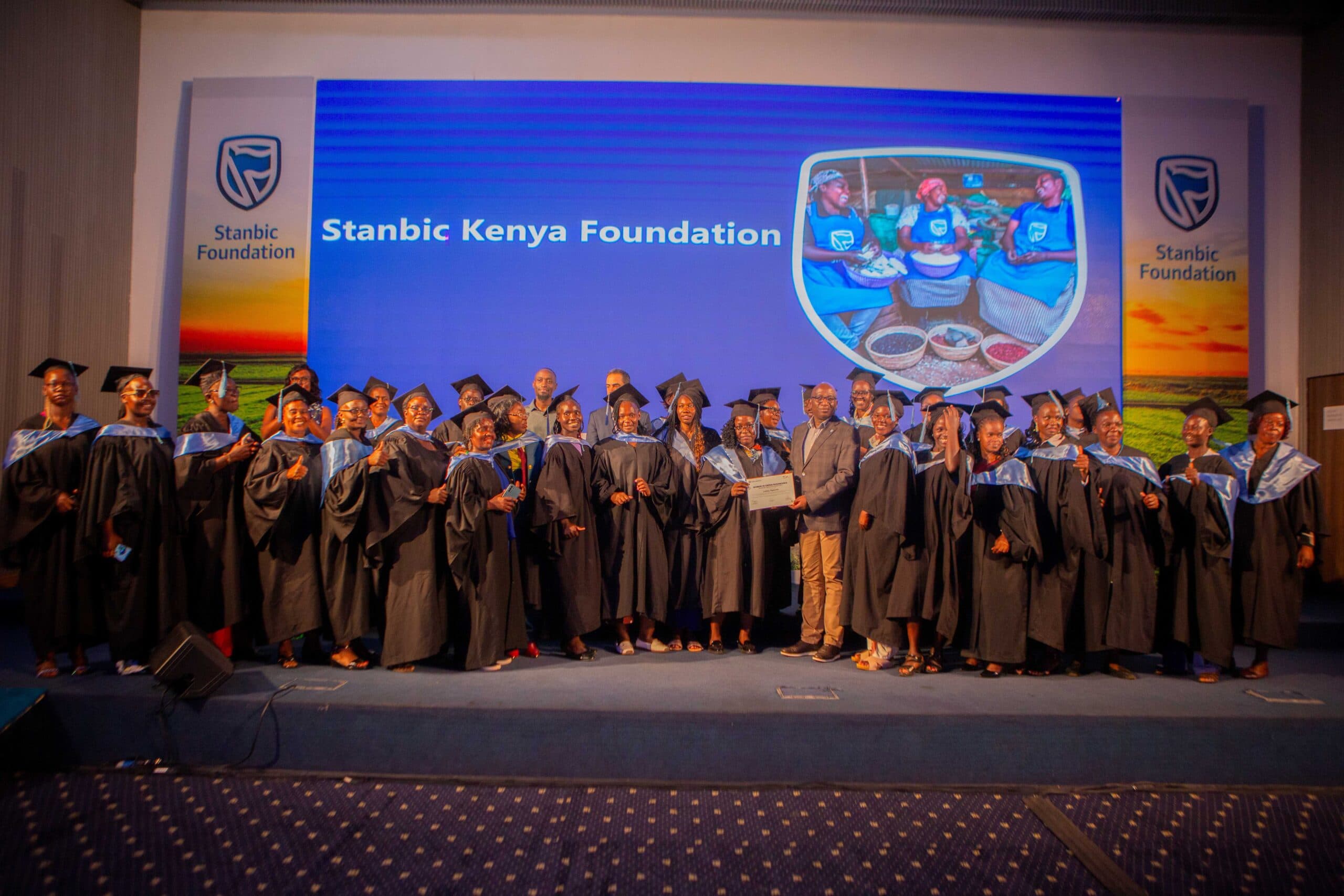
Stanbic Kenya Foundation, in partnership with the Deutsche Gesellschaft für Internationale Zusammenarbeit (GIZ), has graduated 351 entrepreneurs from the Women Employment for the Green Transformation (WE4D) programme.
The WE4D initiative focuses on driving enterprise growth, inclusive job creation, and climate-conscious business practices across the region.
The graduating cohort spans ten Western Kenya counties: Kisumu, Kericho, Kisii, Nyamira, Homa Bay, Uasin Gishu, Bungoma, Busia, Kakamega, and Vihiga.
The cohort represents a wide range of green and sustainable industries. Agriculture and agro-processing accounted for the largest share of participants, alongside emerging ventures in:
- Aquaculture and climate-smart farming
- Circular economy and waste valorisation
- Sustainable manufacturing and natural health solutions
- Eco-conscious tourism
Speaking at the graduation, Michael Mutiga, Chief Executive of Stanbic Bank Kenya and South Sudan, highlighted the strategic role of youth and women-led enterprises in long-term economic resilience:
“This programme demonstrates how entrepreneurship can become a practical engine for sustainable development. By helping women- and youth-led businesses raise productivity, adopt climate-conscious practices and become investment-ready, we are supporting decent jobs, stronger local value chains and more resilient county economies.”
Mercy Githanji, Executive Director and Head of the Stanbic Foundation, reinforced the commitment to post-graduation support and market access:
“At Stanbic Kenya Foundation, we help create the conditions for entrepreneurs to succeed through economic empowerment, financial and digital inclusion, and climate resilience. As we celebrate this graduation, our focus now is on helping SMEs access markets, financing, technical expertise and growth opportunities to scale sustainably.”
The WE4D programme addresses key operational barriers facing Micro, Small, and Medium Enterprises (MSMEs) in Kenya. Graduates reported substantial operational advancements, including:
- Business Formalisation: Enhanced financial record-keeping, improved corporate governance, compliance tracking, and structured staff management.
- Commercial Growth: Direct access to new supply contracts, export opportunities, customer bases, and strategic industry network linkages.
- Operational Expansion: Integration of value-addition practices, climate-smart technologies, and sustainable supply chains that drive immediate employment creation.
The WE4D initiative is commissioned by the German Federal Ministry for Economic Cooperation and Development (BMZ) and co-funded by the European Union (EU) and the Norwegian Government.
Comments
No comments yet. Be the first to share your thoughts.