
Every major commercial bank operating today offers an online banking portal. Whether dealing with Equity, KCB, Standard Chartered, or NCBA, customers can sit at a desk, open any modern browser, review ledgers, set up standing orders, and execute high-value transactions.
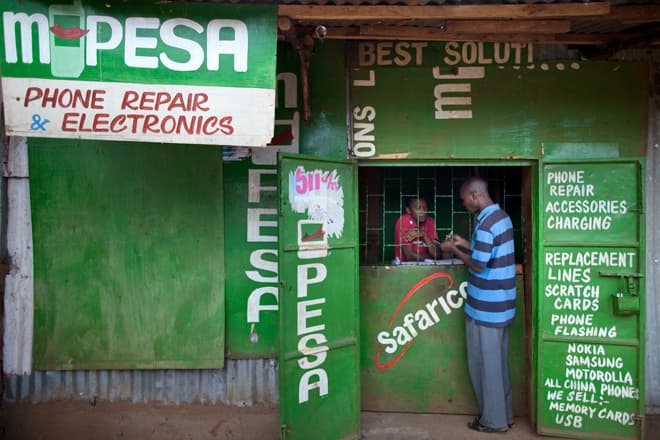
Yet M-PESA, the undeniable spine of Kenya’s consumer economy, remains locked inside the phone.
For corporate clients and merchants, Safaricom has long recognized that mobile screens are inadequate. The M-PESA Business Portal and the Daraja developer gateway exist precisely because managing finances on a handset is impractical at scale. For individual users, however, the ecosystem stops at the SIM card and the smartphone app. If commercial banks can safely deliver web platforms to millions of retail clients, there is little reason for M-PESA to remain mobile-only.
The primary flaw in a mobile-exclusive model is hardware dependency. When a smartphone runs out of battery, breaks, or is stolen, the user is instantly cut off from their primary store of value.
In an emergency, borrowing a laptop should be enough to log in, get a cab, send urgent funds, or freeze the account before fraudsters can strike. Instead, victims of phone theft currently face a bureaucratic waiting game: finding an open agent, buying a replacement SIM card, completing a physical swap, and waiting for activation. A browser-based portal with a rapid lock switch would protect user balances long before an attacker can bypass a handset PIN.
M-PESA has evolved from a simple peer-to-peer money transfer product into a comprehensive financial ecosystem. Confining multi-asset portfolios to a small mobile screen degrades the user experience.
Why web?
1. Portfolio visibility
Products like the Ziidi money market fund are built for wealth accumulation. Monitoring daily compound interest, reading yield curves, and analyzing performance over several years is awkward on a handset. A wide desktop layout allows investors to see their holdings in full clarity, complete with interactive charts and one-click PDF tax reports.
2. Cross-border flows
Managing links to external services such as PayPal, Western Union, or virtual Visa cards requires constant app-switching and copy-pasting reference codes. A desktop hub centralizes these gateways on one screen, simplifying reconciliations for freelancers and digital businesses.
3. E-commerce
Checking out on a computer often feels disjointed. A shopper selects an item in a browser, triggers an STK push, waits for the phone prompt, enters a PIN, and waits for the browser to sync. A direct web login or on-screen QR authorization eliminates this back-and-forth entirely.
What about security?
The historical objection to a consumer web portal is fraud. SIM-toolkit architecture relies on the physical SIM as a hardware security module, whereas open browsers introduce risks like credential harvesting, phishing clones, and session hijacking.
These threats are real, but they are already solved problems in modern software engineering:
1. Session handshakes
Rather than relying on simple phone numbers and static PINs, a web portal can implement dynamic QR pairing, similar to WhatsApp Web or Signal Desktop. A quick scan from the biometrically secured mobile app authenticates the browser session securely.
2. Passkeys and WebAuthn
Modern computers feature dedicated hardware security chips, fingerprint sensors, and facial recognition. Users can register trusted personal laptops directly with FIDO2 protocols, cutting out easily intercepted SMS OTPs.
3. Graduated permissions
Safaricom could deploy a tiered authorization model. A standard browser session could allow read-only access to view balances, track Ziidi returns, and download official statements. Any outbound transfer would require secondary authorization, either via hardware passkey or a time-sensitive mobile prompt.
M-PESA laid the groundwork for mobile money across the globe, bringing M-PESA to the desktop is the natural progression of modern digital banking.


Comments
No comments yet. Be the first to share your thoughts.