
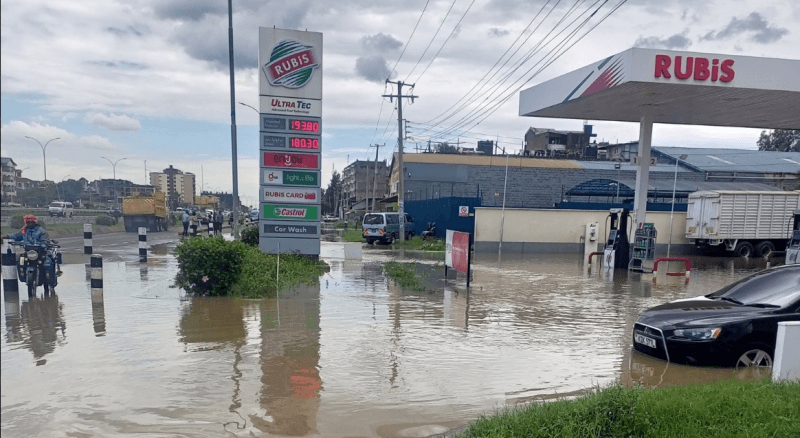
NAIROBI, Kenya, Oct 5 – Kenyan households and businesses have been urged to take immediate steps to reduce their exposure to flooding ahead of the October-December rainfall season, with insurers warning that basic preparedness could significantly limit damage from increasingly frequent extreme weather events.
Britam General Insurance CEO James Mbithi said households, businesses and motorists should not wait for heavy rains to begin before assessing the risks around their homes, premises and vehicles.
He said flooding has become an increasingly persistent risk in Kenya, driven not only by heavier rainfall associated with climate change but also by inadequate drainage, rapid construction and expanding urban settlements.
“Flooding is becoming a big issue in Kenya,” Mbithi said, noting that some of the country’s drainage systems are increasingly being tested by the volume of water generated during heavy rainfall.
With government agencies and county authorities already urging Kenyans to prepare for the October-December rains, Mbithi said the first line of defence should be early preparation rather than waiting for insurance to compensate for losses after a disaster.
For households, he urged residents to inspect and clear gutters and drainage channels, repair leaking roofs and identify points through which floodwater could enter their homes.
Residents in flood-prone areas should also assess the roads and drainage systems around their homes and estates and take steps to ensure water can flow away from buildings.
“Preparation in terms of clearing drainages, clearing gutters, ensuring that the buildings, the premises that they are occupying first are at a place where they can withstand an amount of rainfall that is higher than probably what we experienced during the short rains,” Mbithi said.
He said such preventive measures could reduce the extent of damage when heavy rainfall occurs.
For businesses, Mbithi said preparedness should begin with identifying vulnerable areas within their premises and protecting stock, equipment and other assets from floodwater.
He advised businesses in flood-prone locations to elevate stock using pallets or shelves rather than keeping goods directly on the floor.
Businesses should also inspect drainage around their premises, clear gutters and water channels, and assess the condition of roofs, walls and other structures before the rains intensify.
Mbithi further urged businesses to strengthen continuity plans and back up critical data to ensure they can resume operations quickly if flooding disrupts their premises.
“Just ensuring that their stock is not stored on the ground,” he said, advising businesses to raise stock above floor level in preparation for possible flooding.
Motorists told to plan journeys around weather
Motorists are among those most exposed when heavy rains flood roads, and traffic grinds to a halt.
Mbithi urged drivers to check weather forecasts before starting journeys and consider how expected rainfall could affect their routes.
He said drivers should avoid attempting to cross flooded roads and prioritise their safety if they encounter rising water.
“If you are caught in water that is near three-quarters of your tyres, switch off your engine,” he advised.
He also urged motorists to keep emergency contacts readily available, including rescue services, in case they become stranded.
Prepare first, insure against the remaining risk
Mbithi said insurance should complement preparedness rather than replace it.
He urged households and businesses that already have insurance to review their policies before the rains and establish whether their current cover remains sufficient.
This is particularly important for businesses that have expanded, acquired additional stock or increased the value of their assets since taking out their policies.
“Maybe you bought that cover when your business was much smaller. This is a time actually to up the cover limit,” he said.
Britam says its home, motor and business insurance products provide cover against flood-related losses, subject to the terms and conditions of individual policies.
The insurer paid more than Sh290 million in flood-related claims in 2024, according to Mbithi, highlighting the financial impact that extreme rainfall can have on households, motorists and businesses.
Safety comes before the claim
Mbithi said people caught in floods should first move to safety and seek assistance before thinking about making an insurance claim.
“Safety first,” he said, urging those affected to move to safer locations and contact emergency responders.
Once the situation is safe, policyholders can notify their insurer and provide the documentation and evidence required to assess the loss.
For businesses, this includes maintaining records of stock and assets and documenting the circumstances surrounding the loss.
Mbithi said early preparation also makes the recovery process easier because businesses and households are better positioned to demonstrate the extent of their losses.
“We cannot be prepared 100 per cent’
While acknowledging increased public awareness and government preparedness campaigns, Mbithi said it would be difficult to eliminate flood risk entirely.
He said the objective should instead be to reduce exposure before the rains arrive and ensure that risks that cannot be prevented are financially protected.
“As to whether it’s sufficient or not, we will know that at the point that the rains come,” he said. “But I think with a good effort in preparation we are halfway into safety and reducing the risk.”
For Mbithi, the message ahead of the October-December rains is therefore straightforward: households and businesses should inspect, repair, clear, move and insure before the rain starts.
“The El Niño and the risk of flooding might be very unpredictable, but your protection as a customer should not be,” he said.

Comments
No comments yet. Be the first to share your thoughts.