
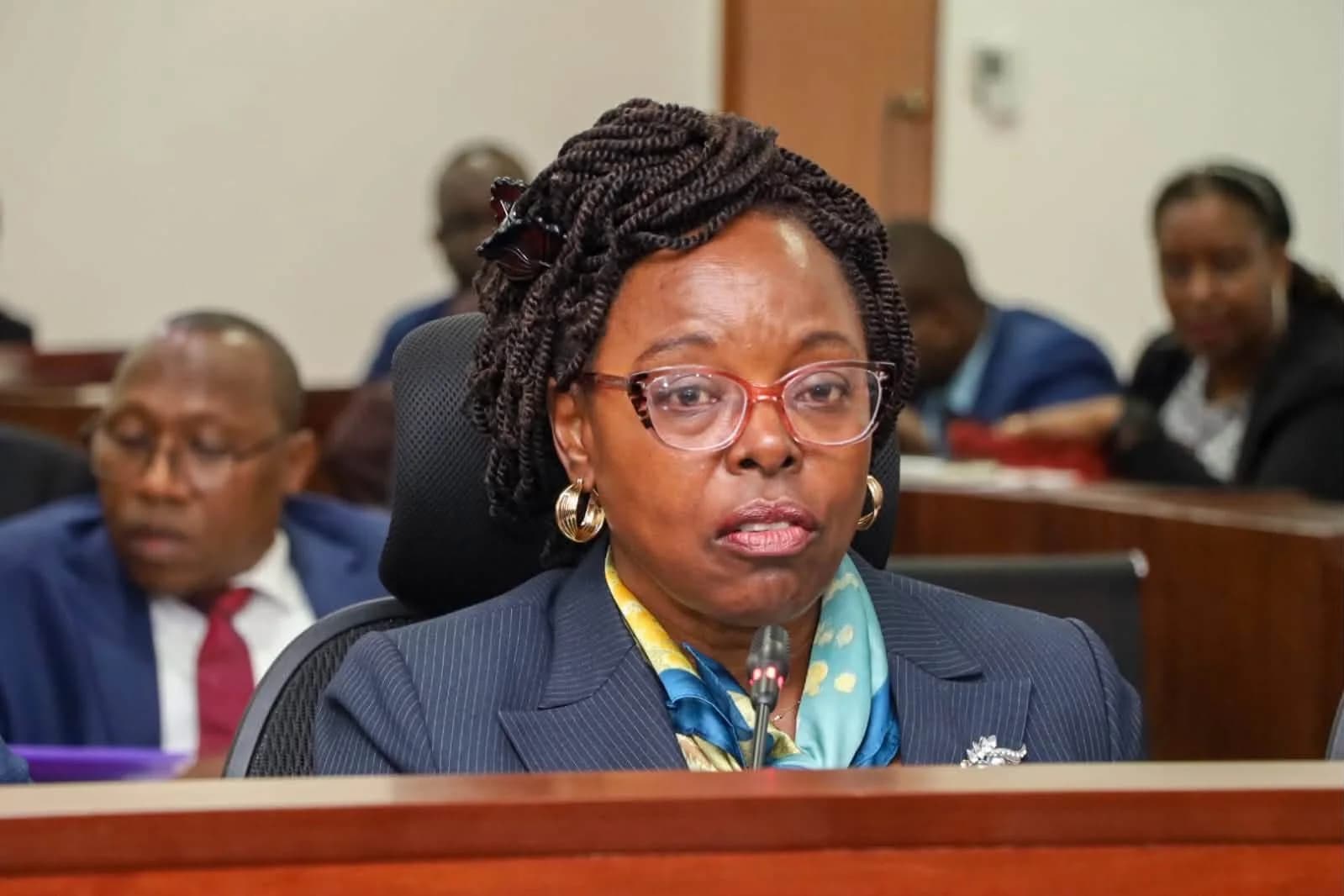
Controller of Budget flags financial risks in County Retirement Scheme Bill

The proposed law seeks to establish a defined contribution retirement scheme for eligible county government employees and state officers.
The Controller of Budget (CoB), Margaret Nyakang’o, has warned that the proposed County Governments Retirement Scheme Bill, 2026, could place an additional financial burden on county governments, citing their high wage bills, outstanding salary arrears and statutory deductions amounting to Sh100.24 billion.
Appearing before the Departmental Committee on Finance and National Planning, Nyakang’o called for a clear assessment of the Bill's financial impact and an independent audit of existing liabilities before they are transferred to the proposed scheme.
Nyakang’o said counties spent Sh235.96 billion on employee compensation in the 2025/26 financial year, accounting for about 42 per cent of their receipts against the statutory limit of 35 per cent.
She warned that the proposed 15 per cent employer contribution could add about Sh35 billion in annual expenditure, requiring Parliament to establish whether counties could sustain the additional cost.
"A money Bill of this magnitude must state its costed fiscal impact,” she said.
The CoB further cautioned against transferring unverified debts from existing retirement funds to the new scheme without a valuation or special audit by the Auditor General.
Latest Stories
- Yanga become first team to reach CAF Champions League group stage
- Pope Leo will not need further cancer treatment — Vatican
- PHP vulnerabilities: Government issues urgent cybersecurity warning to all state agencies
- Experimental sound-wave therapy could help patients whose schizophrenia resists medication
"As of June 30, 2026, counties reported Sh100.24 billion in outstanding salary arrears and statutory deductions. Vesting unverified liabilities into the new scheme without valuation or a special audit by the Auditor-General risks carrying them forward unfunded,” she said.
She also called for personal accountability for accounting officers who deliberately fail to remit statutory deductions, arguing that penalties imposed on county governments ultimately affect residents.
"Fines paid by a county penalise residents rather than the officers at fault. Where a county sponsor defaults, liability for willful non-remittance must attach to the responsible accounting officer,” Nyakang’o said.
Committee members, led by Molo MP Kuria Kimani, raised concerns over the unpaid deductions and proposed that penalties and interest charged on delayed remittances be reduced to reasonable levels.
Turkana South MP John Ariko questioned the controls in place to ensure statutory deductions were paid after salaries were processed.
“What controls does the CoB have in place to address the non-payment of these statutory deductions? When you authorise payment, you authorise the gross figure, but the truth is that statutory deductions are not being remitted,” Ariko said.
Butula MP Joseph Oyula also sought to know what the government was doing to address the problem.
In response, Nyakang’o said integrating the Human Resource System with the Integrated Financial Management Information System (IFMIS) was intended to link salary payments with the remittance of statutory deductions. However, she noted that the measure had not cleared historical arrears.
Kimani said the law should balance accountability with the need to protect residents from penalties arising from delayed county funding.
“How do we have this law achieve a balance by ensuring that it does not punish the county government as a corporate body when remittances are not made on time, and fines and penalties accrue, because that will disadvantage the county residents? On the other hand, the law should not unfairly punish the accounting officer for a crime that they are not responsible for, for instance, in a case where county funds disbursement delays,” he noted.
Committee Vice Chairperson Benjamin Langat asked how university administrators who had failed to remit statutory deductions were being held accountable.
“What measures has the government taken on university administrators who have failed to remit statutory deductions over the years? Do you charge the officer in charge?” he posed.
Langat proposed that counties could begin operating under the new law while historical arrears were handled separately.
The Council of Governors (CoG) and the Local Authorities Provident Fund (LAPFUND) called for the proposed scheme to succeed LAPFUND legally, preserving its assets, liabilities and employment arrangements.
Nyeri Governor Kahiga Mutahi and Bungoma Governor Kenneth Lusaka, representing the CoG, also proposed a 31 per cent gratuity for county attorneys, solicitors, governors' staff, chief officers and county secretaries serving outside permanent and pensionable terms.
The County Assemblies Forum called for the consolidation of LAPFUND, LAPTRUST and the County Pension Fund, while seeking protection of MCAs' existing 31 per cent employer gratuity and lifetime medical cover for retired MCAs and their spouses.
The Retirement Benefits Authority proposed limiting the Board of Trustees to nine members, appointing an independent professional as chairperson and removing Clause 7(g) to allow retirees to choose their preferred annuity providers.
Meanwhile, the Salaries and Remuneration Commission (SRC) called for pensionable emoluments to be defined as basic salary excluding allowances and urged Parliament to combine Bills dealing with county employees' retirement benefits.
The proposed law seeks to establish a defined contribution retirement scheme for eligible county government employees and state officers, with provisions for governance, financial management, compliance, dispute resolution and the transfer of existing funds and members.

Comments
No comments yet. Be the first to share your thoughts.