
A student enrolment that never happened, a government loan that was never meant for the applicant and a bank account waiting to receive the money.
This is the structure of a multimillion-dollar student financial aid fraud that has brought Kenyan nationals into the spotlight of a major American criminal investigation.
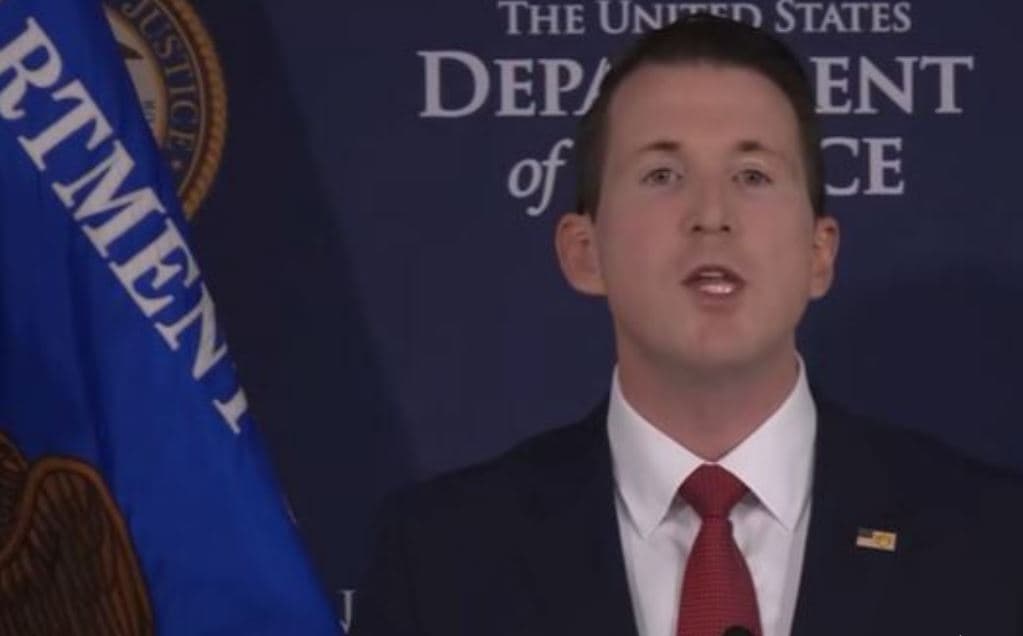
The US Department of Justice is investigating a network accused of stealing personal information belonging to American citizens and using it to create fake college students who qualified for government-funded financial assistance.
The operation, known as Operation Ghostbusters, has exposed how fraudsters manipulated America’s student aid system to obtain money intended for people pursuing higher education.
The wider investigation estimates losses of more than $200 million, with several cases involving individuals accused of working with associates in Kenya.
How the ghost student scheme worked
The scheme began with stolen personal information.
According to investigators, the suspects obtained identities belonging to American citizens and used the information to submit fraudulent applications through the Free Application for Federal Student Aid (FAFSA) system.
The applications allowed criminals to enrol what authorities described as ghost students in colleges and universities.
These were not genuine students seeking education. In several cases, the individuals whose identities had been stolen were unaware that applications had been submitted in their names.
Once the applications were approved and financial aid was disbursed, the money was redirected to bank accounts controlled by the suspects and their associates.
Some fraudsters went further by ensuring that their fictitious students appeared to remain active in the institutions.
The Justice Department says criminals used artificial intelligence to complete required coursework and maintain the appearance that the fake students were participating in their classes.
This allowed the alleged fraud to continue beyond the initial enrolment and financial aid approval.
Investigators say the scheme exploited Americans who had never attended college, making it difficult for some victims to immediately discover that their identities had been used.
Some victims reportedly held only high school diplomas and were shocked to learn that they had supposedly enrolled in colleges hundreds of miles away.
How the money reached Kenya
Investigators say the operation relied on people who received the money through American financial institutions before transferring it to overseas associates.
One of the cases under investigation involves three defendants in New Jersey: Mabed Patricia Utate-Alberto, Patricia Arisleydi Perez and George Arturo Alfau Mendez.
They are accused of working with individuals in Kenya to obtain more than $1 million in federal student aid.
According to the criminal complaint, the three allegedly received money through American bank accounts before transferring the proceeds overseas, after retaining their share.
The funds were allegedly sent to co-conspirators in Kenya associated with a purported safari company.
All three defendants have been arrested, while investigators say two alleged Kenyan co-conspirators are being pursued as the case develops.
Another case involves a Kenyan national indicted in Virginia over a scheme that generated approximately $1.44 million in fraudulent student aid deposits.
The defendant received more than 700 payments through several bank accounts and subsequently conducted thousands of wire transfers and money service transactions.
At least $1.3 million was transferred to accounts in the United States and Kenya.
Kenyan national accused of keeping 30 per cent
In Nebraska, prosecutors have charged Kenyan citizen Francis Mogambi with five counts of theft of government money and five counts of aggravated identity theft.
The indictment alleges that Mogambi worked with associates in Kenya between November 2025 and May 2026 to steal American identities and use them to obtain student financial assistance.
He allegedly retained 30 per cent of the money and sent the remainder to his associates.
Court documents also indicate that Mogambi discussed receiving $2,000 a week and needing a business through which he could cash larger cheques without paying taxes.
He was arrested and detained pending trial.
FBI estimates losses could be much higher
The investigation, which began after American colleges identified suspicious financial aid applications in 2021, has expanded across several states.
The FBI has identified more than $32 million in losses from similar ghost student schemes, while the Justice Department estimates that the wider fraud exceeds $200 million.
Investigators have also identified more than 830,000 potentially fraudulent student aid identification records associated with nearly $130 million.
The investigation has brought together American agencies and Kenyan law enforcement authorities, including the Directorate of Criminal Investigations, Asset Recovery Agency and Office of the Director of Public Prosecutions.
Authorities are continuing to trace the money and identify additional individuals who may have participated in the scheme.
The charges against the named suspects remain allegations. They are presumed innocent until proven guilty in court.


Comments
No comments yet. Be the first to share your thoughts.