
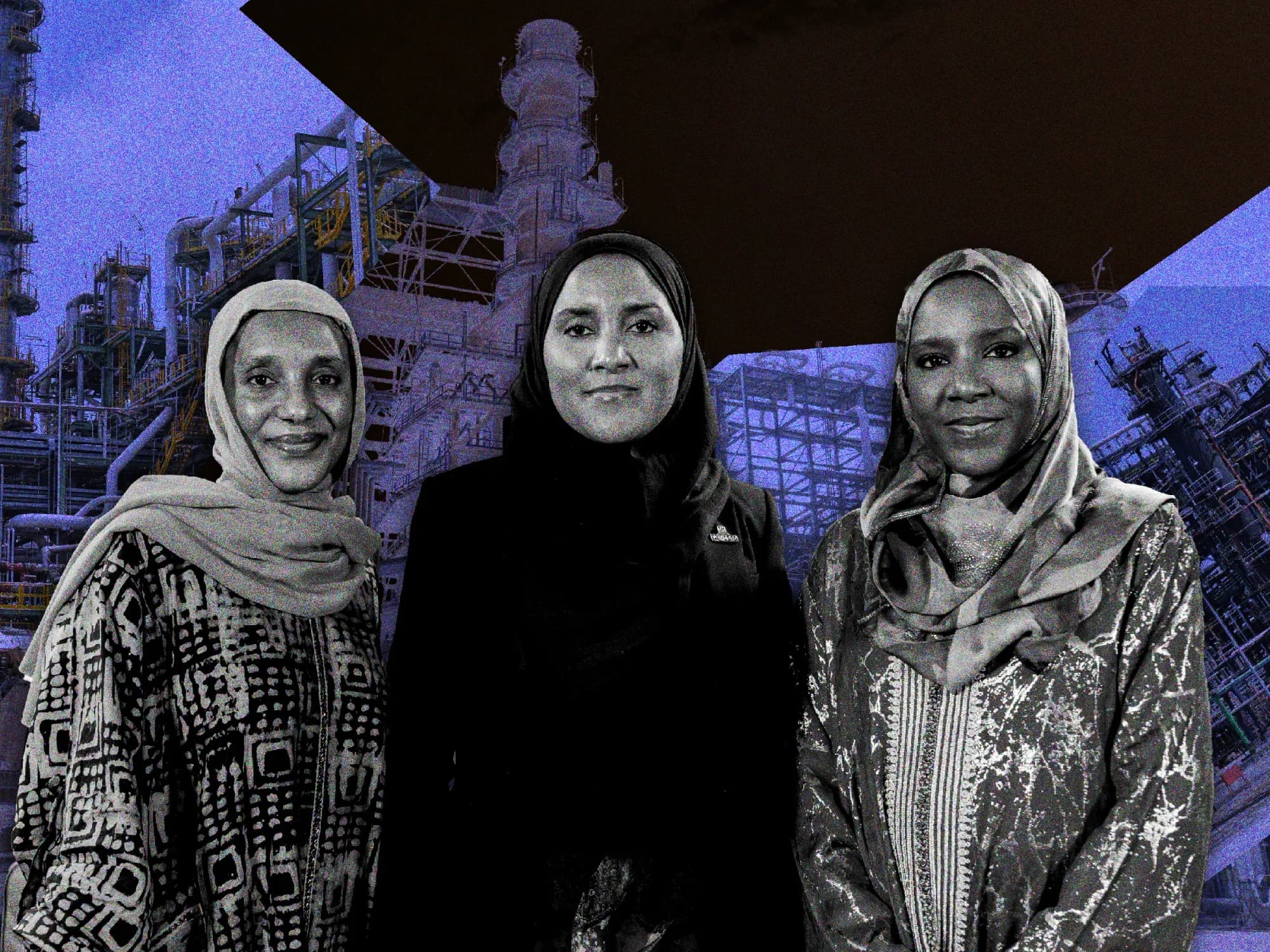
When Africa’s richest industrialist, Aliko Dangote, looks at the future of his multi-billion-dollar empire, he doesn’t see just balance sheets or megaprojects—he sees a legacy anchored by his three daughters.
As the Nigerian billionaire charts a course toward a staggering $58 billion (approx. Ksh7.56 trillion) net worth, anchored by a landmark public listing of his colossal oil refinery, a quiet yet seismic restructuring is underway. Dangote is preparing to hand over the reins of his cement, food, and refining behemoth to his daughters: Mariya, Halima, and Fatima.
For East African business watchers tracking corporate governance and generational wealth transfer on the continent, the Dangote transition offers a masterclass in modernizing family-owned business empires.
Breaking Tradition in the Boardroom
The handover is as culturally significant as it is financially monumental. Operating out of a deeply conservative corporate and social landscape in Northern Nigeria, the elevation of the three sisters marks a definitive shift away from traditional patriarchal succession models.
Fatima Wali-Abdurrahman, a board member of Dangote Industries Ltd., notes that few patriarchs within their community would willingly vest such immense operational responsibility in their daughters. Yet, rather than placing the burden of the entire conglomerate onto a single successor, Dangote has carved out distinct pillars of power tailored to his daughters’ individual strengths.
Mariya Dangote (47): Overseeing commercial strategy across the group’s flagship cement, sugar, salt, and food businesses. Mariya, who sits on the board of Dangote Cement, has been vocal about challenging local paradigms. In interviews, she noted how cultural expectations often attempt to box women into housekeeping roles, making her high-profile corporate ascent a powerful symbol of change.
Halima Dangote (42): Managing the family’s investment office out of Dubai. Halima acts as the chief guardian of the family’s multigenerational wealth, coordinating financial advisers, capital allocation, and long-term asset growth.
Fatima Dangote (40): A trained lawyer who leads corporate communications alongside critical operational responsibilities covering fertilizer, energy sales, and procurement.
Speaking on the dynamic, Fatima emphasized that the sisters are not locked in a race for the top title. “As sisters, we want to have control of different aspects of the business. We all have our strengths, so we are focused on where we feel we are the strongest,” she told Bloomberg.
A Ksh13 Trillion Horizon and the Refinery IPO
This executive restructuring coincides with a pivotal growth phase. The Dangote Group is chasing an aggressive ambition to build a $100 billion industrial giant by 2030 (roughly Ksh13 trillion).
At the center of this expansion is the monumental Dangote Petroleum Refinery and Petrochemicals, an asset that has drawn global attention and driven the billionaire’s wealth toward the $58 billion threshold. With the refinery scaling up its public capital strategy—including expanding its Initial Public Offering (IPO) campaigns across African markets and pursuing secondary listings for Dangote Cement on international bourses like London—the conglomerate is shedding its closed-door image for a more globally scrutinized, institutionalized framework.
Mariya has been quick to clarify that while her father is optimizing his workload, retirement isn’t quite immediate. “He doesn’t want to be in day-to-day chairmanship of all the businesses,” she explained. “He has no plans to step down, but he is positioning us to steer the ship forward.”
Lessons for East African Family Businesses
For entrepreneurs and corporate leaders in Africa, where generational transition remains one of the leading hurdles for family-owned enterprises, the Dangote playbook highlights three crucial takeaways:
Functional Fragmentation Over Single-Headed Succession: Dividing a vast empire into specialized domains based on individual competencies reduces succession friction.
Institutionalization Before the Exit: Pairing family leadership with public listings, international capital markets, and strict corporate governance safeguards the business against political and economic shocks.
Challenging Precedents: Embracing progressive internal talent policies unlocks vital leadership capital that traditional gatekeeping often leaves untapped.
As Aliko Dangote engineers his final frontier, the success of Mariya, Halima, and Fatima will not only secure a $58 billion dynasty. It will redefine what African corporate leadership looks like for the next generation.


Comments
No comments yet. Be the first to share your thoughts.