

Kenya is becoming an increasingly attractive market for South African wine producers, with export earnings climbing 6% to US$8.3 million in the 2025/26 financial year, even as shipment volumes declined by 4% to 3.4 million litres.
The divergence between export value and volume points to an evolving trade relationship, where higher-value wine exports are becoming increasingly important to South Africa’s commercial interests in Kenya. For an industry increasingly competing on provenance, quality and consumer experience, Kenya presents an opportunity that extends beyond moving bottles off retail shelves.
That opportunity was on display in Nairobi from October 30 to November 1, 2026, when Wines of South Africa (WoSA), in partnership with Artcaffé Market, brought together 20 South African wine brands for a three-day consumer activation at Artcaffé Rhapsody Road. The experience combined guided tastings, educational masterclasses and direct engagement with wine representatives, giving consumers an opportunity to explore South Africa’s diverse wine portfolio while introducing producers to a market with growing interest in premium beverage experiences.
According to Wines of South Africa, the organisation has trained more than 3,000 Kenyans through physical introductory wine courses over the years. Its free online Level 1 and Level 2 programmes have also reached thousands of wine enthusiasts across Kenya and other African markets. The investment in wine education reflects a broader market-development strategy: cultivating informed consumers while equipping hospitality professionals and aspiring sommeliers with the knowledge to participate in the industry.
The business of premiumisation
Speaking during the Nairobi activation, Matome Mbatha, Africa Market Manager at Wines of South Africa, identified Kenya as one of the organisation’s strategic African markets, citing increasing consumer knowledge, purchasing power and demand for premium selections.
“Kenya is one of our key strategic markets because we are seeing growth not just in volumes but also in value. We are currently exporting approximately 3.4 million litres into the Kenyan market. We are also seeing price points increase, which tells us that consumers are increasingly purchasing wines at the higher end of the market. This presents significant opportunities for premium wine brands,” Mbatha said.
According to the latest figures from South African Wine Industry Information and Systems (SAWIS), South African wine exports to Kenya generated approximately US$8.3 million, representing an average export value of US$2.45 per litre.
The figures suggest an opportunity for producers to prioritise value creation rather than volume alone. However, export values do not necessarily translate directly into retail prices or consumer spending, with distribution costs, taxation and retailer margins also influencing what Kenyan consumers ultimately pay.
For South African producers, the challenge is to convert growing market visibility into sustained consumer demand.
Pinotage, provenance and the African wine identity
One of South Africa’s strongest differentiators is its wine heritage, particularly its indigenous grape variety, Pinotage. Developed in South Africa, Pinotage offers producers an opportunity to distinguish their portfolio in an increasingly competitive international wine market.
“South African wine is African wine, and that gives it a unique identity. We also have Pinotage, an indigenous South African grape variety that distinguishes our offering. Our wine regions, particularly the Western Cape, have diverse soils, climates and terroirs that contribute to the complexity and diversity of the wines we produce,” Mbatha said.
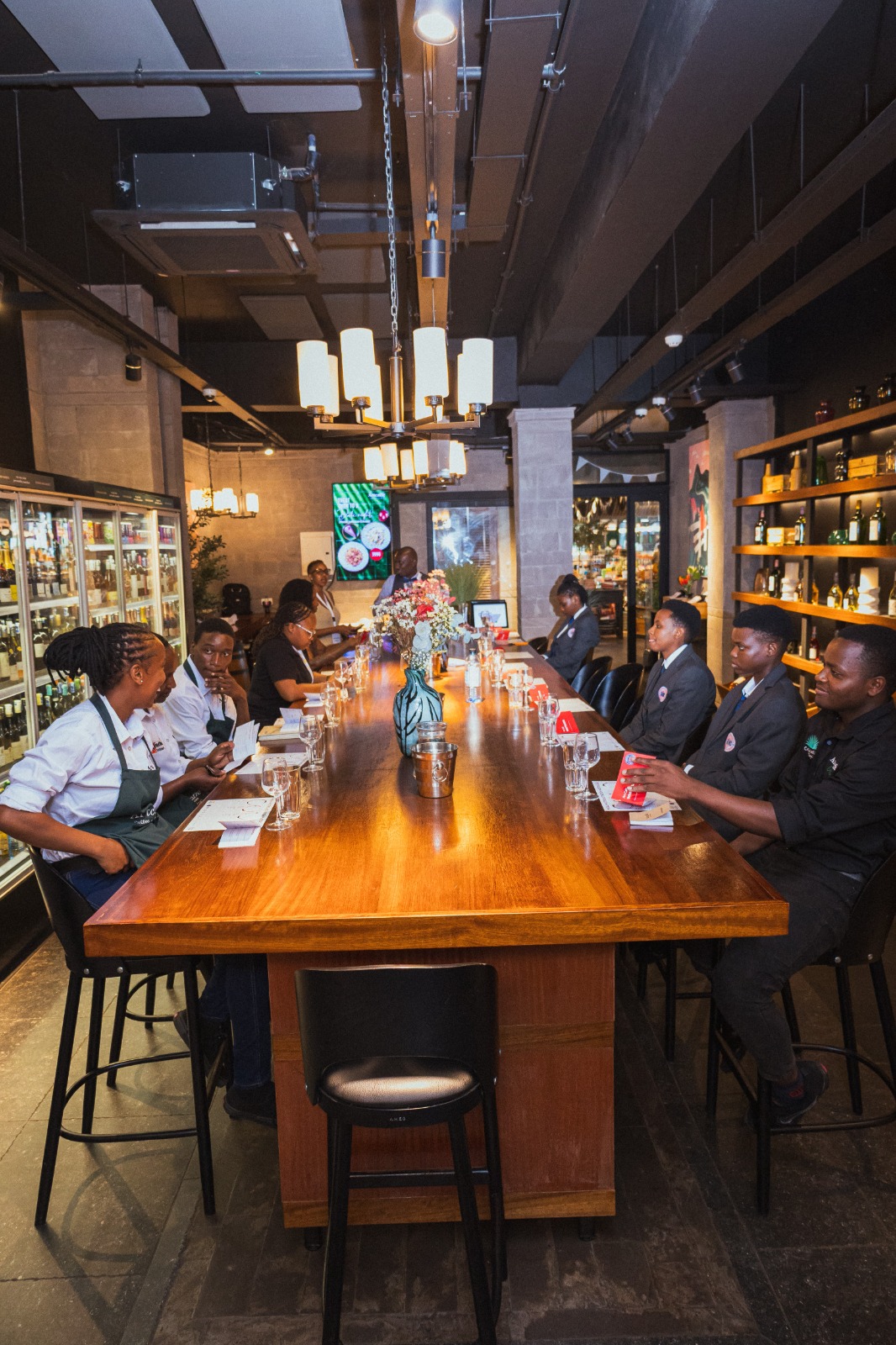
The Nairobi activation placed varieties including Pinotage and Chenin Blanc alongside Cap Classique, South Africa’s traditional-method sparkling wine category. The selection reflects the breadth of South African winemaking, from accessible everyday labels to more premium offerings designed for consumers interested in exploring different wine styles and occasions.
Sylvia Karanja, founder of S & S Atelier and East Africa Lead for Wines of South Africa, said Kenyan consumers were becoming increasingly curious about wine varieties, premium selections and immersive tasting experiences. “South African wine offers far more than affordability. Our wines reflect diverse regions, distinctive terroir and generations of winemaking expertise. They span everything from accessible everyday favourites to complex, premium wines, so there’s quality and character to discover at every price point,” Karanja said.
She added that introducing Cap Classique to more Kenyan consumers could create another opportunity for South African producers to expand their presence in the local sparkling wine segment.
Artcaffé, hospitality and the distribution advantage
For international wine producers, market entry is only part of the commercial equation. Distribution, visibility and access to the right consumer segments are equally important. The partnership with Artcaffé Market demonstrates how established retail and hospitality networks can provide producers with opportunities to showcase their brands, introduce new products and engage consumers directly.
Participating estates, brands and local partners included Wine Routes, KWAL, Meridian Wines Kenya, De Vries Premium Wines, Vergelegen, Kanonkop Wine Estate, Diemersfontein Wine & Country Estate and Quoin Rock Wine Estate, among others. East Africa Glassware Mart partnered with the activation as its glassware provider.
For Diemersfontein Wine & Country Estate, which has maintained a presence in Kenya for more than a decade, the market represents an established commercial relationship with opportunities for further growth. Prince Mtaro, the estate’s Brand Manager, said its Pinotage had become increasingly recognisable among Kenyan consumers, with the brand securing visibility across established hospitality and travel channels. “You will find our wines in Kenya Airways Business Class, Artcaffé and some of the country’s prominent hotels. It has been quite a journey, and we are excited about the market,” Mtaro said.
Diemersfontein has built a distinctive identity around its Pinotage portfolio, particularly its signature coffee-and-chocolate flavour profile. Mtaro recommended the estate’s Original Pinotage to consumers discovering the brand for the first time, describing it as a defining expression of its winemaking identity.
The estate is looking to strengthen its Kenyan presence over the next two to three years by expanding its consumer base and building greater brand recognition.
Wine education as a market-building strategy
Beyond retail visibility, WoSA is placing consumer education at the centre of its long-term market-development ambitions. Its introductory physical courses have trained more than 3,000 Kenyans, while free online Level 1 and Level 2 programmes provide additional opportunities for consumers and hospitality professionals to develop their wine knowledge.
The Nairobi activation also incorporated engagement with students from hospitality and culinary institutions, recognizing the role of professional training in strengthening Kenya’s food, beverage and hospitality industries.
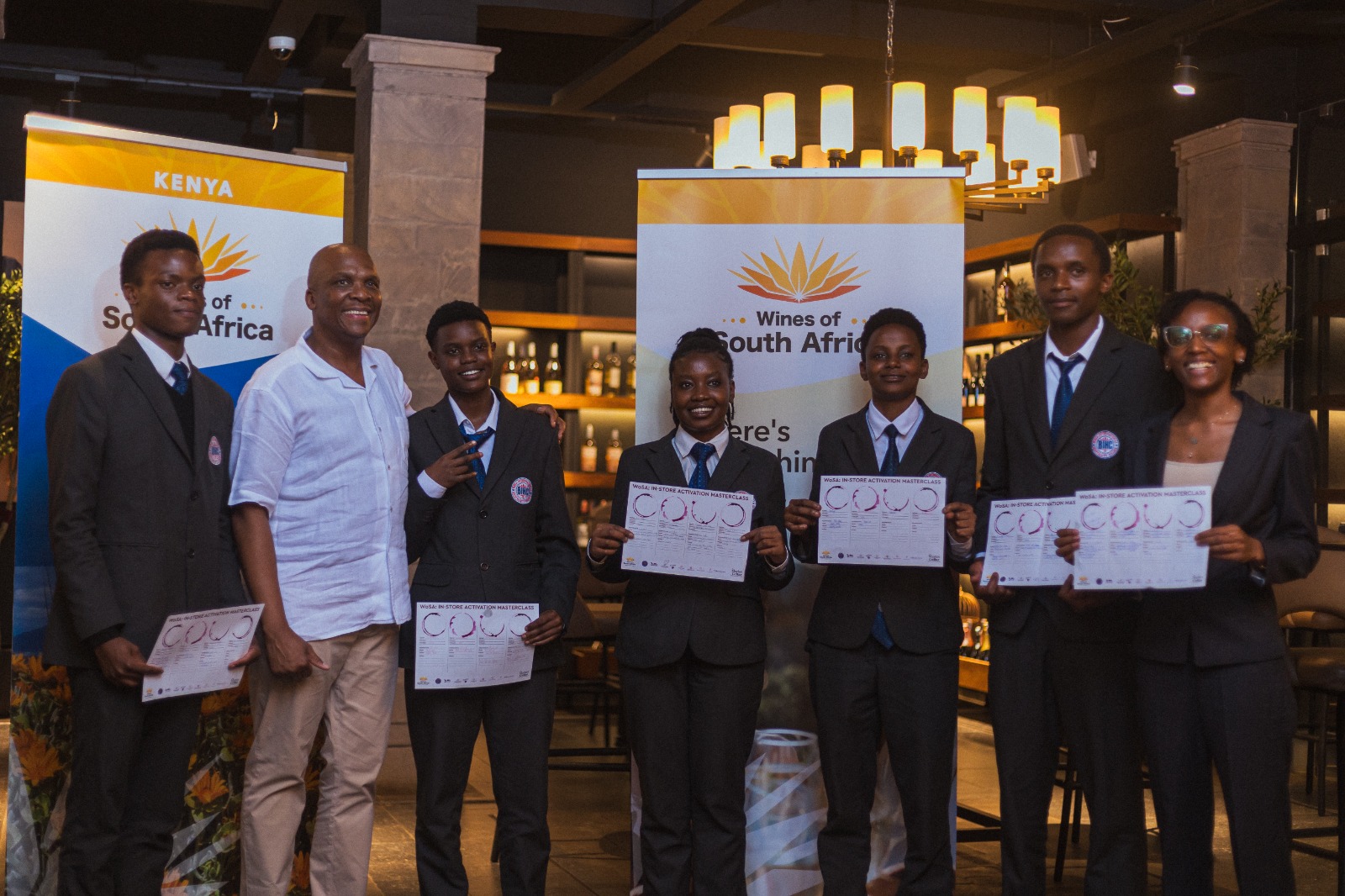
For restaurants, hotels and other hospitality businesses, wine knowledge can contribute to more informed service, better food-pairing recommendations and more engaging customer experiences. Mbatha said educating consumers and industry professionals was essential to building a stronger culture of wine appreciation, while also emphasising responsible alcohol consumption.
The organisation’s approach reflects an important commercial reality: a premium product needs an informed market capable of understanding its quality, identity and value.
Beyond the bottle: Tourism and cultural exchange
The commercial relationship between Kenya and South Africa also presents opportunities beyond wine distribution. WoSA sees potential in strengthening tourism and cultural exchanges, particularly by encouraging more Kenyan travellers to explore South Africa’s wine-producing regions while building relationships between the two countries’ hospitality and tourism sectors.
For South African wine estates, this creates an opportunity to connect their products with destination experiences, regional heritage and food tourism. As Kenya’s wine market continues to evolve, the competition for consumer attention will increasingly involve more than price and availability. Provenance, product differentiation, education and the experience surrounding a brand will all influence how producers build lasting market relationships.
South Africa’s US$8.3 million export performance provides a useful measure of its existing foothold. The next commercial test will be whether investment in consumer education, retail partnerships and premium positioning can translate into sustained growth. For the country’s wine producers, Kenya is becoming more than an export destination. It is a market in which the business of wine appreciation is steadily taking shape.



Comments
No comments yet. Be the first to share your thoughts.