
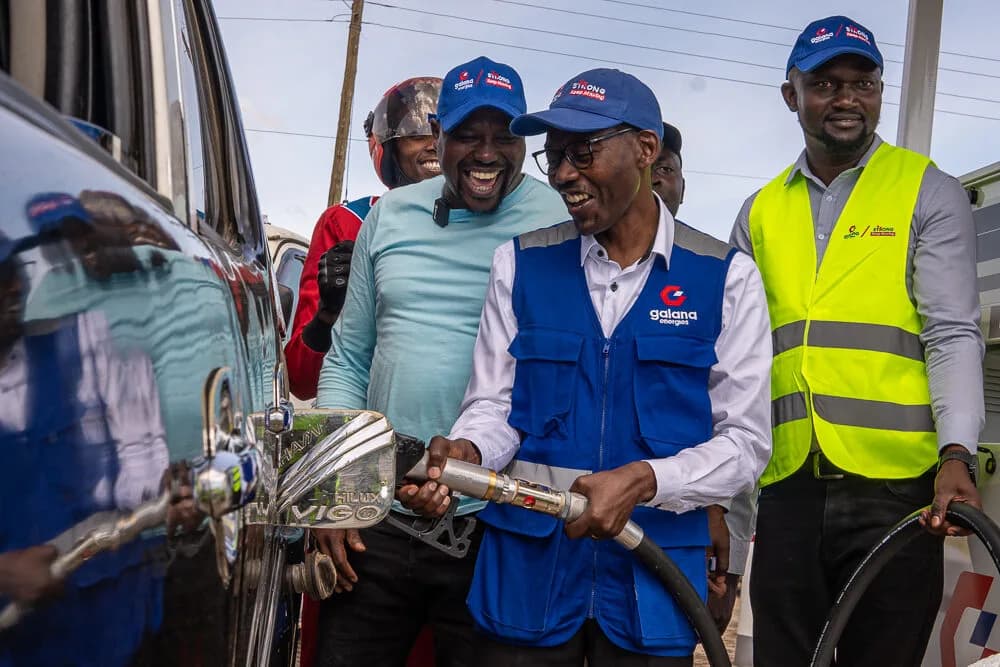
NAIROBI, Kenya, Sept 24 – Kenya’s fuel stations are increasingly becoming more than places to buy petrol and diesel, with businesses offering LPG, vehicle repairs and other services emerging around the outlets as motorists spend more time and money at the sites.
The shift is changing the role of service stations in local economies, particularly in growing towns and residential areas where consumers can access several essential services during a single visit.
Oil marketer Galana Energies, which has operated in Kenya for 26 years, provides one example of the changing model.
The company now has more than 90 service stations across the country, with some supporting businesses that operate beyond the traditional fuel business.
In Oloitoktok, for instance, a dealer linked to the network has focused on improving access to liquefied petroleum gas (LPG), giving households another source of cooking energy closer to where they live.
“At Galana Energies, we believe that when individual journeys move forward, Kenya moves forward,” said its CEO Anthony Munyasia.
“Every Galana station has a Kenya around it,” the company said, pointing to businesses and workers whose livelihoods are linked to activities around its retail outlets.
Fuel stations are also creating space for vehicle-related businesses. In Ruaka, mechanics operating around one of Galana’s stations have used the location to develop their skills and earn an income from motorists.
The expansion of these services reflects a broader change in the economics of fuel retailing.
With motorists able to choose from numerous oil marketers, companies are increasingly relying on their station networks not only to sell fuel but also to attract customers through additional products and services.
For consumers, the model can reduce the number of separate trips needed to obtain cooking gas or vehicle services. For small businesses, the steady flow of motorists can provide access to a wider customer base.
The economic activity around stations can extend to employment and skills development.
Galana said its foundation currently supports more than 134 students, while businesses operating around its outlets provide opportunities for workers such as mechanics and LPG dealers.
The model, however, does not mean every fuel station has the same economic footprint. The number of businesses supported depends on location, customer traffic, available space and the services offered.
Galana’s expansion comes as Kenya’s downstream petroleum sector remains competitive, with oil marketers continuing to expand their retail footprints and diversify the products available to consumers.
The growing mix of fuel, cooking gas, vehicle services and other commercial activity points to an increasingly familiar feature of Kenya’s urban and rural landscape: the filling station is becoming a convenient stop for much more than filling a tank.



Comments
No comments yet. Be the first to share your thoughts.