
Access to land, financing and decision-making positions in agricultural sector have been identified as key challenges facing women in agriculture in Kenya
A section of stakeholders during a two-day workshop in Nyeri to commemorate the International Year of the Woman Farmer /WANGESHI WANG'ONDU

The government is now calling for stronger partnerships among stakeholders to address these challenges and enhance women's economic empowerment in the sector.
Speaking from the Kenya School of Agriculture in Nyeri, during the commemoration of the International Year of the Woman Farmer, Elizabeth Yegon, Head of the Gender Unit at the Ministry of Agriculture, revealed that women account for 53 per cent of the country's farming population despite the barriers they face.
According to the Ministry official, the United Nations declared 2026 the International Year of the Woman Farmer in recognition of the critical role women farmers play in promoting food security.
Yegon said the government is at the forefront of empowering women farmers through capacity-building initiatives, grants and the development of supportive infrastructure, including improved markets where they can sell their produce and grow their businesses.
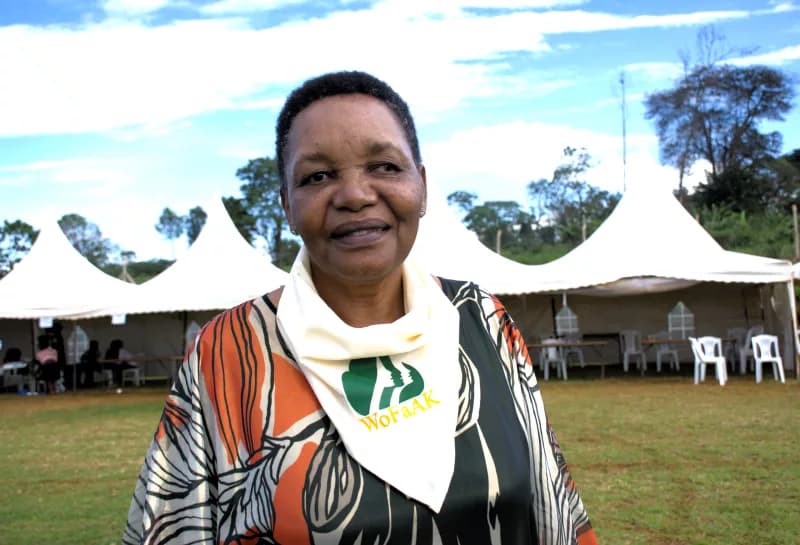
Additionally, she noted that her department was strengthening partnerships with organizations supporting women farmers, including the Women Farmers Association of Kenya (WoFaAK), which organised the two-day workshop.
“We provide capacity building and targeted support for women-led enterprises, including grants through various projects. The government has also invested in markets across the country, making some more gender-friendly by providing solar-powered charging facilities and lactating rooms for proper childcare services to enable women to conduct their businesses while taking care of their children.”
During the two-day workshop women farmers visited various clinics where they learn on how to improve their farming practices as well as
“One of the clinics focuses on legal issues, providing farmers with free legal information and assistance. Other organisations are offering training on the bean value chain and the various products that can be developed from beans. Farmers have also been given an opportunity to exhibit their products and showcase the services they offer,” she said.
Yegon also commended women farmers for embracing modern technology through the launch of the Digi Shamba app, which provides them with real-time agricultural information to support their farming activities.
“One of the farmer organisations that we have really partnered with also is the Women Farmers Association of Kenya and today they have been able to actually launch the app, which they have been able to come up with in collaboration with ILRI. That app is able to give farmers information, “she said.
Daphne Muchai, Founder and Executive Director of the Women Farmers Association of Kenya (WoFAAK), praised the Digi Shamba app for its critical role in enhancing access to information particualary on agricultural extension services among farmers.
“WoFAAK, in partnership with other stakeholders, developed an app to provide extension services to farmers. Through the app, farmers can ask questions in English and Kiswahili via text messages or voice queries and receive answers. We know that one of the major challenges facing women is marketing. We are therefore encouraging women to form groups and marketing cooperatives to sell their produce collectively and strengthen their bargaining power.”
She cited some of their members who have joined the Murang’a Avocado Cooperative as a perfect example of farmers who have benefited from improved sales of their produce.
She added that the association would continue introducing more programs and producing more information on the app previously having featured livestock research and effective soil fertility and management.
“We realised 85 per cent of farmers do not have adequate information. The information is available, but reaching every individual farmer remains a challenge. As women, we are also embracing information systems, and we are happy that our members are no longer being left behind.”
She also called for greater representation of women in leadership across various sectors, including politics, urging men to support and champion women’s leadership.
“We have male champions of women’s leadership, and we appreciate their support through education, training and promoting women’s leadership, especially at the group level. We want to see this extended beyond groups to the political arena, where men can encourage and support women to take up leadership positions,” she said.
“Progress has been made, we are yet to achieve the 50-50 representation we desire. Leadership should be based on ability, not gender, with men and women working side by side in driving transformation.”
Beatrice Wanja, a local farmer, praised the initiative, saying it had improved her farming practices and enabled her to transition from subsistence to commercial farming.
She also lauded the capacity-building programmes, including training, extension services and participation in trade fairs and exhibitions, saying they had equipped her and her peer farmers with better skills and market access.
She added that the networking opportunities had helped farmers secure reliable markets for their produce, promoting financial independence among women and reducing their vulnerability to gender-based violence linked to economic dependence.
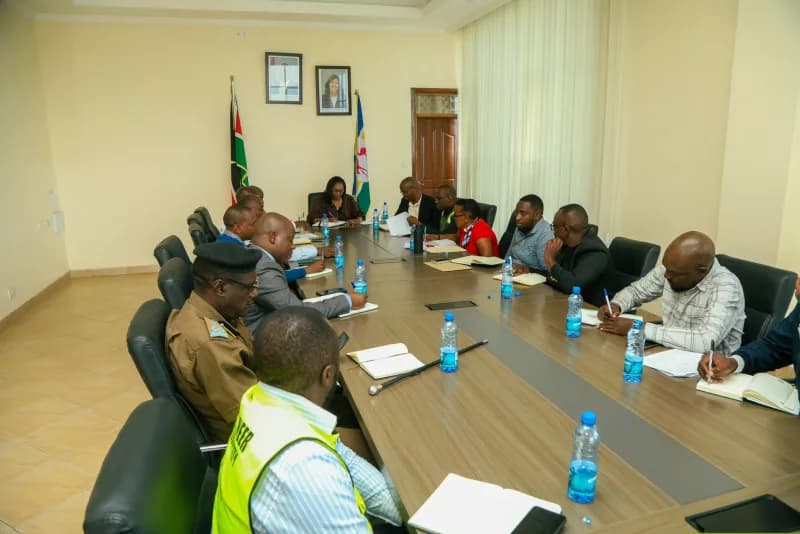
Elizabeth Yegon, head of the Gender Unit at the Ministry of Agriculture receives a memorandum from a group farmer on areas the government can improve /HANDOUT


Comments
No comments yet. Be the first to share your thoughts.