
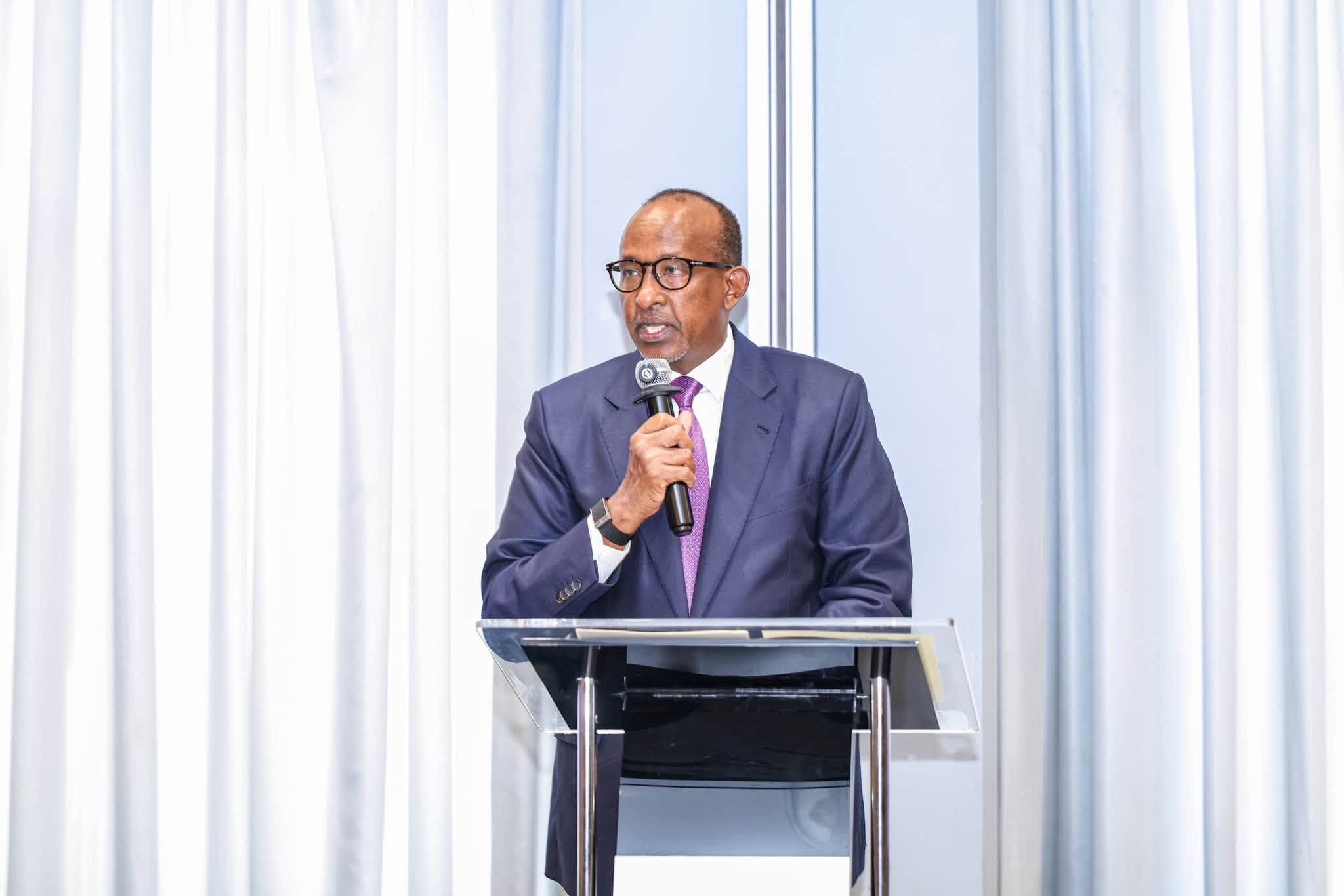
Cabinet Secretary (CS) for Health Aden Duale has reaffirmed that advancing Kenya’s Universal Health Coverage (UHC) agenda requires not only policy reforms but also strategic partnerships, efficient resource utilization, and a relentless focus on results.
The CS made these remarks during a high-level engagement with a World Bank delegation led by Ronald Mutasa, a lead health specialist with the World Bank, to strengthen implementation of the Building Resilient and Responsive Health Systems (BREHS) Project and the Kenya Health Emergency Preparedness, Response and Resilience (KHEPRR) Project, two critical investments in the transformation and resilience of Kenya’s health system.
Notably, the discussions centred on accelerating project implementation, resolving operational bottlenecks and ensuring that available resources translate into tangible improvements in healthcare delivery.
With emerging regional public health threats underscoring the need for preparedness and resilience, the meeting emphasised the urgency of deploying resources efficiently and directing investments towards interventions with the greatest impact on the health and well-being of Kenyans.
Speaking at the engagement, Duale reiterated the Government’s commitment to translating ongoing health sector reforms into measurable outcomes, building on the progress made through the Social Health Authority (SHA), which has onboarded over 33 million Kenyans.
He further emphasised that investment in health must extend beyond service delivery to support Kenya’s broader economic transformation under the Bottom-Up Economic Transformation Agenda (BETA), including employment creation, local manufacturing, workforce development, and digital innovation.
Importantly, a key priority was strengthening alignment between development partner support and the Government’s health sector priorities through the One Plan, One Budget, One Monitoring and Evaluation Framework.
“This coordinated approach is essential to improving implementation efficiency, strengthening health financing, and accelerating the delivery of digital health solutions and other priority interventions under the two projects,” affirmed the CS.
Additionally, the meeting also explored opportunities to enhance the capacity and sustainability of health facilities through the Facility Improvement Financing (FIF) framework.
To this regard, Duale reaffirmed the importance of safeguarding public resources through transparent financial management, prudent expenditure and strong accountability mechanisms, while leveraging partnerships under Sustainable Development Goal 17 to expand access to quality healthcare.
To sustain implementation momentum, the engagement called for stronger coordination between the national and county governments, transparent fund flows, consistent procurement reporting, and the timely resolution of implementation challenges.
“These measures are critical to ensuring that project resources are utilised effectively and that intended beneficiaries experience meaningful improvements in healthcare access and quality,” stressed the CS.
The meeting brought together Principal Secretaries Dr. Ouma Oluga (Medical Services) and Ms. Mary Muthoni (Public Health and Professional Standards); Director-General for Health Dr. Patrick Amoth; Social Health Authority (SHA) Chief Executive Officer Dr. Mercy Mwangangi; representatives of the National Treasury, county governments and implementing partners, alongside other distinguished leaders.
The Ministry of Health, meanwhile, continues to prioritise results-driven partnerships and coordinated implementation to build a resilient, responsive, and sustainable health system that delivers quality healthcare for all Kenyans.
by Michael Omondi


Comments
No comments yet. Be the first to share your thoughts.