
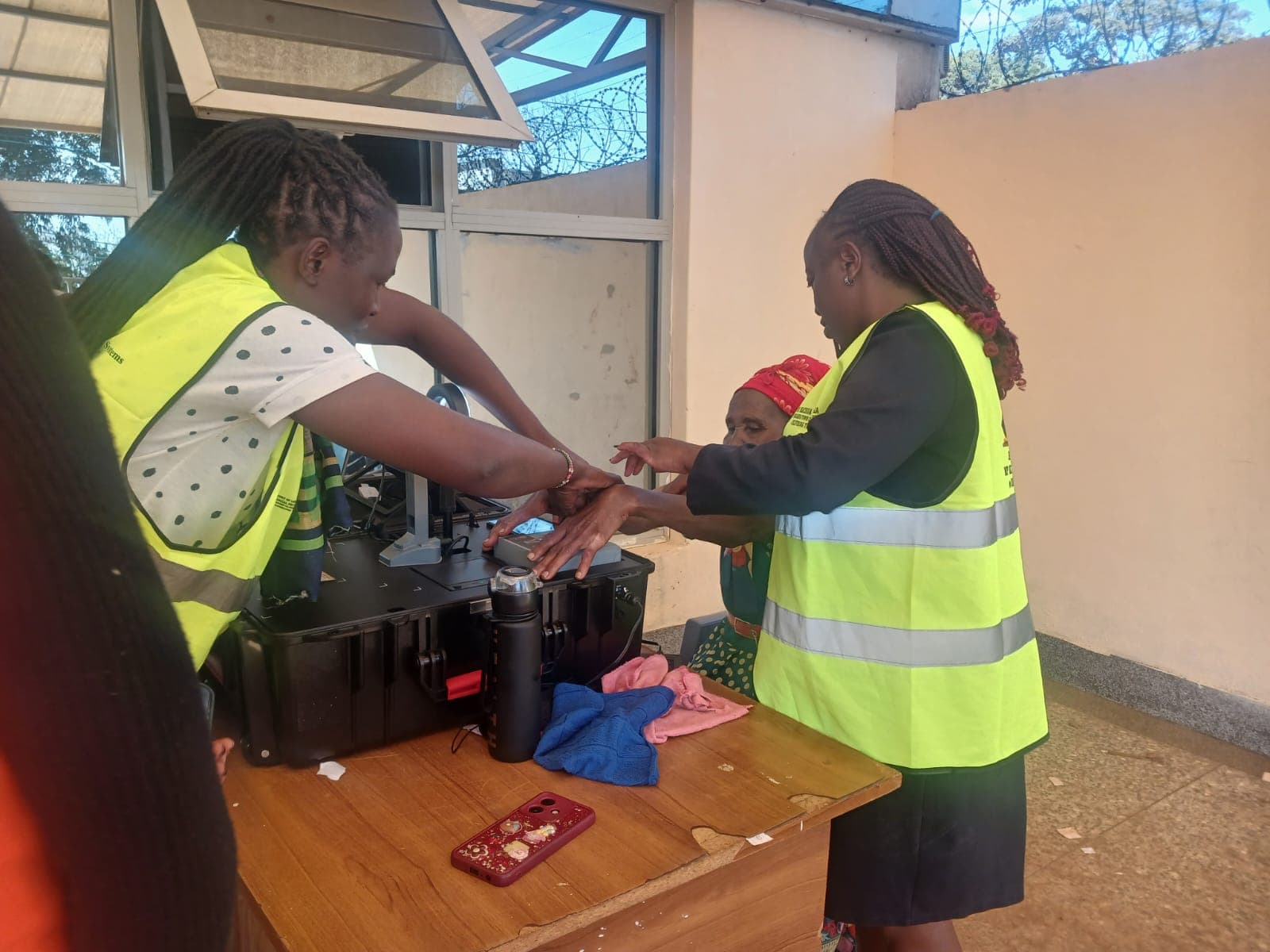
Kiambu Sub-County has embarked on a 30-day verification exercise targeting elderly persons and persons with severe disabilities (PWDs) enrolled in the Inua Jamii Cash Transfer Programme to establish their eligibility and update the beneficiaries’ payroll.
Monicah Wanjiru, 76, who has benefited from the programme, says the monthly stipend has become an important source of support as age has made it difficult for her to work on her farm as she did in her younger years.
“When I got the message we were being called, I did not waste any time because I do not want to lose out on this money that I get every month,” Wanjiru said.
The ‘Proof of life’ exercise, which commenced on September 21, 2026, requires elderly beneficiaries aged 70 and above to present themselves physically with their original national identity cards, while caregivers of beneficiaries with severe disabilities are required to appear for verification on their behalf.
It forms part of the first phase of a nationwide verification exercise covering 33 counties, with subsequent phases expected to be rolled out at a later date.
Speaking in Kiambu, Sub-County Social Development Officer Dinah Juma said the exercise was necessary to eliminate deceased beneficiaries who remained on the government payroll following the last verification exercise in 2021.
“In Kiambu Sub-County currently we have about 3,000 Inua Jamii beneficiaries. We have 2,776 elderly beneficiaries and 224 persons with severe disabilities receiving KSh2,000 monthly under the programme,” Juma began.
Juma warned that beneficiaries who fail to undergo verification within the stipulated period risk being automatically removed from the payroll, urging them to take advantage of the exercise to retain their benefits.
“Our department has partnered with churches, the National Government Administrative Officers (NGAO) and beneficiary welfare committees to sensitize beneficiaries about the exercise. The Deputy County Commissioner is engaging assistant county commissioners, chiefs and sub-chiefs to ensure the information reaches beneficiaries at the grassroots level,” the officer explained.
Juma noted that the exercise takes less than two minutes per beneficiary, with officers using alternative verification methods in cases where fingerprint recognition proves difficult. This has been especially for beneficiaries coming from far distances to participate in the exercise.
The Social Protection Office has been conducting the exercise at its Kiambu Town offices but will introduce mobile verification services in different areas, beginning with Ndumberi, which has the highest number of beneficiaries in the sub-county.
“This outreach will enable elderly persons to access the service closer to their homes, reducing the challenges associated with travelling to the sub-county headquarters,” the officer added.
The verification exercise follows the Government’s wider efforts to strengthen accountability in the Inua Jamii programme after concerns over payments to deceased beneficiaries.
In May 2026, Principal Secretary for Social Protection Joseph Motari said the biometric proof-of-life exercise was intended to ensure that only eligible beneficiaries continued receiving support.
“The exercise is aimed at confirming that all registered beneficiaries are alive and physically present in order to continue receiving cash transfers,” Motari said during the launch of the pilot exercise in Kajiado County.
The Inua Jamii Cash Transfer Programme was expanded in 2017 following a presidential directive to cover Kenyans aged 70 and above, establishing the age threshold for the programme.
by Winjoy Makena and Grace Naishoo


Comments
No comments yet. Be the first to share your thoughts.