
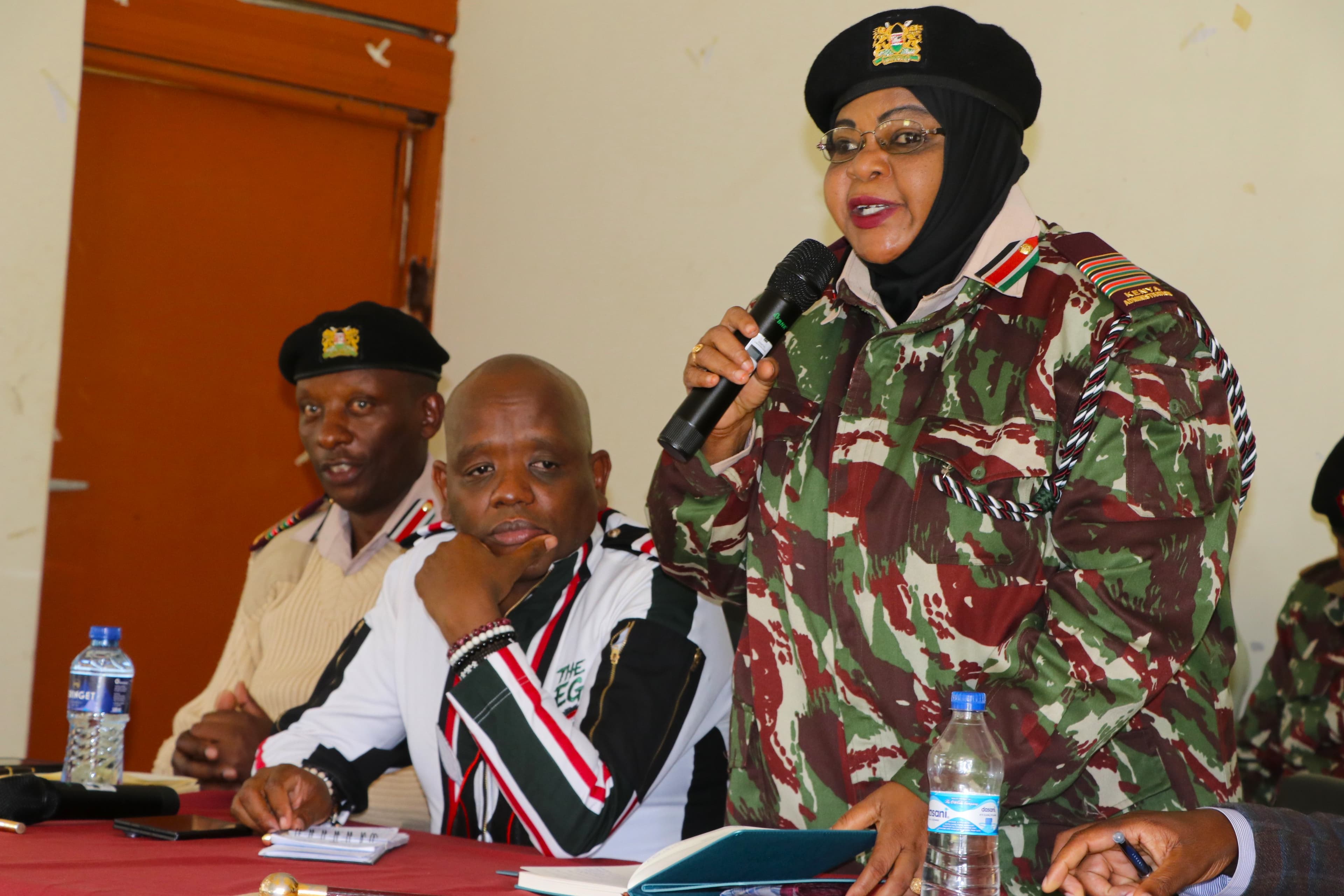
Security agencies and other stakeholders in Kirinyaga County have launched a two-week Rapid Results Initiative (RRI) to combat illicit brews, counterfeit alcoholic products and drug abuse in the county.
The initiative brings together National Government Administration Officers (NGAOs), police, the National Authority for the Campaign Against Alcohol and Drug Abuse (NACADA), Kenya Revenue Authority (KRA), Kenya Bureau of Standards (KEBS), Anti-Counterfeit Authority, the county government and community representatives.
The exercise will be spearheaded by Kirinyaga County Commissioner Shufaa Omar Mwijuma and Head of Presidential Special Projects Dennis Itumbi.
Speaking during the launch at Gichugu Youth Empowerment Centre, Mwijuma said the initiative followed a directive from President William Ruto and would involve coordinated operations targeting manufacturers, distributors and sellers of illicit alcohol.
She said the two-week operation would go beyond routine enforcement by employing intelligence-led operations to identify and apprehend manufacturers and illicit brewers.
“It will be serious and well-coordinated and will be a model to other counties,” Mwijuma said.
She urged chiefs and assistant chiefs to provide timely intelligence on illicit alcohol outlets and manufacturers, while calling for greater media involvement in creating public awareness about the dangers associated with illicit and counterfeit alcohol.
The county commissioner also raised concern over the licensing of bars located near residential areas and schools, saying their proximity creates challenges for security officers during enforcement operations.
Mwijuma further revealed that some bars in the county allegedly host strippers, particularly on Fridays, while others reportedly do so daily, warning that such activities would not be allowed.
“Unless I am not the county commissioner of Kirinyaga, those strippers I will not allow. We are gathering more intelligence and I will be there,” she warned.
Itumbi said authorities would not negotiate with bars found operating illegally and directed chiefs to map alcohol outlets in their respective areas.
He said the mapped outlets would be subjected to enforcement action if found violating the law.
Itumbi also called for a review of existing laws governing the alcohol sector, saying some regulations needed to be examined to address the changing nature of the illicit alcohol trade.
He warned parents against sending children to purchase alcohol and pledged to mobilise additional vehicles to support security teams during the operation.
Amos Warui, NACADA Deputy Director for Compliance, identified second-generation alcohol as one of the major challenges facing the fight against illicit alcohol.
He said some bar owners display genuine alcoholic brands to customers while allegedly keeping counterfeit products in back rooms.
Warui urged consumers to demand Electronic Tax Register (ETR) receipts when purchasing alcoholic drinks as one way of establishing whether products had entered the market legally.
He also encouraged consumers to use the Soma Label application to verify the authenticity of alcoholic products, questioning how a product whose factory production cost could be Sh150 could be sold for less than Sh100.
Warui called for greater public participation in decisions concerning alcohol regulation, saying meetings often involved mainly bar owners while ordinary residents were left out.
He proposed greater involvement of NGAO officers in mobilising residents to participate in such forums and contribute to decisions on the regulation of the number and location of bars.
Warui further urged the Government to support the establishment of Government Chemist facilities in the regions to reduce the time and cost involved in testing suspected counterfeit products.
He also called on the county government to regulate alcohol distribution by allowing deliveries only between 6am and 6pm and requiring distributors to use branded vehicles.
He said the measures would help curb the movement of suspected counterfeit alcoholic products at night.
Members of the security team also raised concerns over delays in the issuance of licences by the county government, saying some applicants wait for up to six months after inspection before receiving licences.
They said the delays create enforcement difficulties when premises are later found operating outside the conditions under which they were approved.
by Mutai Kipng’etich


Comments
No comments yet. Be the first to share your thoughts.