
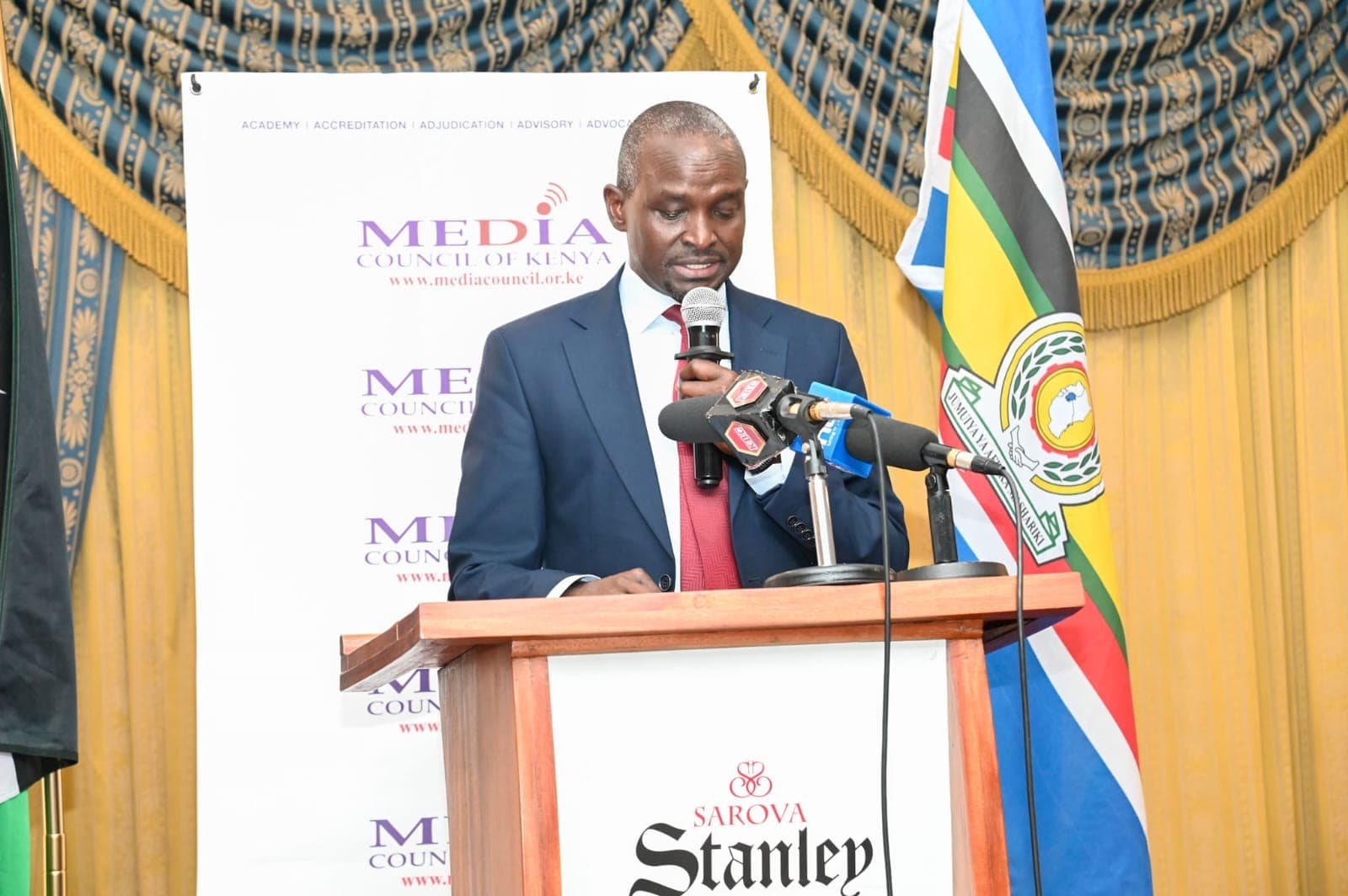
Stakeholders in the media, governance and electoral sectors have called for timely, accurate, and accessible information as Kenya prepares for the 2027 General Election.
The stakeholders noted that misinformation, disinformation and manipulated content, including artificial intelligence-generated material, posed a growing challenge to public trust and could undermine informed participation in democratic processes.
In addition, the stakeholders encouraged public institutions to proactively provide information instead of waiting for citizens to make formal requests.
Speaking in Nairobi during celebrations to mark the International Day for Universal Access to Information, Nora Mbagathi, Executive Director of the Katiba Institute reiterated that access to information was a constitutional right and should be made available to citizens in an easy and accessible manner.
“It is our right to get the information in an easy and accessible way. It is our information. It is our right,” she emphasized, urging public bodies to take responsibility for providing information to citizens.
Concurrently, Kenya Union of Journalists Secretary General, Eric Oduor observed that the achievement of the right to access information followed years of advocacy and should be protected as part of the country’s constitutional freedoms.
Oduor pointed out that Article 35 of the Constitution and the subsequent access to information legislation had strengthened citizens’ ability to demand accountability from public institutions.
Equally, Executive Director at Transparency International Kenya Sheila Masinde highlighted that access to accurate information was essential in promoting transparency, accountability, and informed public participation.
She insisted that institutions should ensure information was not only available but also accurate, timely and disseminated through channels accessible to the public.
In his remarks, the Independent, Electoral and Boundaries Commission (IEBC) Chairperson Erastus Ethekon, in a speech read on his behalf by Director; Legal Services at IEBC Chrispine Owiye, said the electoral agency recognizes the importance of accurate information, particularly as the country heads towards the 2027 General Election.
Ethekon mentioned that institutions, the media, and civil society should work together to counter misinformation and disinformation and ensure citizens receive verified information.
Meanwhile, John Cox Lorionokou, Registrar, in the Office of the Registrar of Political Parties disclosed that the office had established several platforms to facilitate access to information on political parties and related processes.
He outlined that the platforms included the Integrated Political Party Management System, e-Citizen, the office website, public email, WhatsApp, and social media platforms.
Additionally, Lorionokou reported that the office also operates 13 regional offices and resource centres where members of the public can obtain information.
He therefore urged journalists to seek clarification from the Registrar of Political Parties whenever they require information relating to political parties, registration or electoral processes.
“Information pertaining to our processes has to be properly interpreted, especially on political and electoral processes,” he advised.
On the other hand, Media Council of Kenya Chairman Maina Muiruri maintained that the media had a critical responsibility to ensure that information reaching the public was properly verified.
Muiruri stressed that journalists and media organizations must maintain professional standards and protect public trust by ensuring that information published or broadcasted was credible.
On his part, Commission on Administrative Justice Chairperson Charles Dulo said institutions should move beyond merely complying with legal requirements and make access to information part of their everyday responsibilities.
Dulo called for stronger information-management systems, clear procedures for sharing information, and proactive disclosure by public institutions.
He added that information should also be packaged in formats that were accessible and comprehensive to all citizens.
Ultimately, the stakeholders reaffirmed that the media, civil society organizations, public institutions, and other duty bearers must work together to uphold information integrity and strengthen public confidence as the country approaches the 2027 General Election.
by Aron Kinyamasyo
Comments
No comments yet. Be the first to share your thoughts.