
Lakes Baringo, Bogoria face ecological threat as distance shrinks to seven kilometres

The potential connection between the two lakes could have far-reaching effects on their surrounding ecosystems, with the rising waters already causing extensive flooding.
Lake Baringo and Lake Bogoria are facing the threat of a possible merger as rising water levels continue to narrow the distance between the two lakes, prompting the government to launch emergency interventions to restore natural drainage systems and prevent further ecological damage.
According to technical assessments presented during an inspection of the ongoing works in Baringo County, the distance separating the two lakes has reduced from approximately 22 kilometres a decade ago to just seven kilometres, raising concerns over the possible mixing of their freshwater and alkaline ecosystems.
The potential connection between the two lakes could have far-reaching effects on their surrounding ecosystems, with the rising waters already causing extensive flooding, submerging agricultural land, displacing communities and destroying infrastructure.
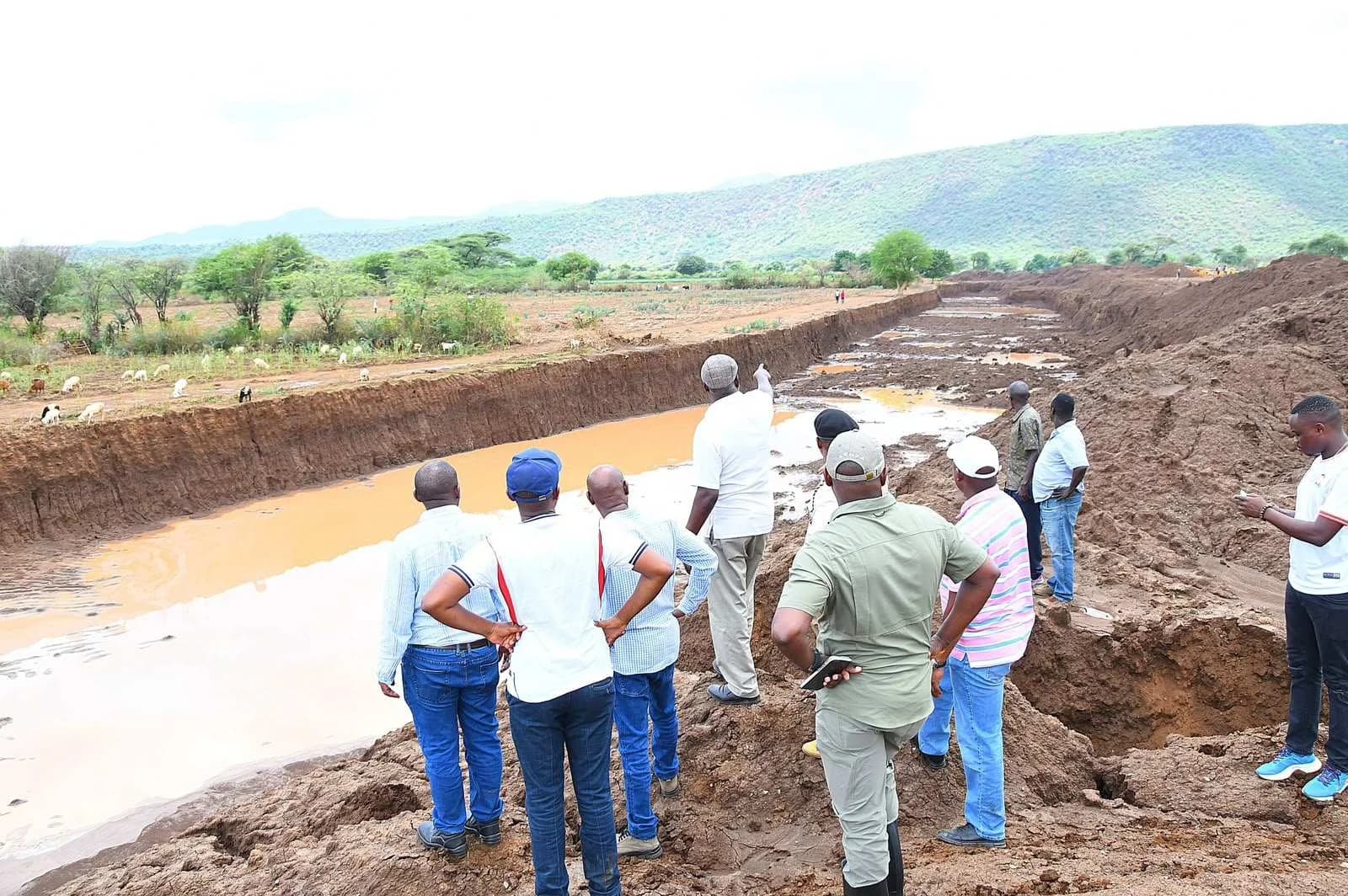
Irrigation Principal Secretary Ephantus Kimotho inspected the ongoing emergency interventions on Saturday as the government intensified efforts to address the situation ahead of the predicted El Niño rains.
Data presented during the technical briefing showed that Lake Baringo’s water volume has increased by an estimated 1.4 to 1.9 billion cubic metres since 2010, while its water level has risen by approximately 12 to 14 metres.
Before 2010, the lake’s surface area fluctuated between 108 and 130 square kilometres during dry and wet seasons. However, by 2026, its water level had risen from approximately 972 metres to 984 metres above mean sea level, altering the surrounding landscape and increasing pressure on neighbouring communities and ecosystems.
Latest Stories
- Protein may help identify breast cancers resistant to targeted drugs - study
- African countries face rising economic risks: six ways they can navigate global uncertainty
- How African universities can drive social change beyond teaching and research
- Smuggling, power, profit: Irregular migration out of eastern Libya
Kimotho said the government had developed a phased intervention programme covering immediate, medium-term and long-term measures following public participation and technical assessments by a multidisciplinary team of engineers.
“The immediate response focuses on restoring Rivers Loboi and Waseges to their original drainage courses through river training, desilting, removal of accumulated sediments and rehabilitation of river channels,” he said.
Technical assessments have identified changes in river drainage patterns and increased water inflows as factors contributing to the rising water levels in Lake Bogoria. Restoring the natural drainage pathways is expected to improve water movement into the lake, reduce further ecological disturbance and protect surrounding communities.
The PS also inspected ongoing drainage channel works aimed at improving the movement and management of excess water around the affected areas, including facilitating the controlled movement of water from Lake Baringo.
Beyond the emergency response, the government is considering long-term investments in water storage facilities, irrigation infrastructure, canals and check dams to turn the region’s water challenges into an economic opportunity.
Preliminary assessments have identified the potential to develop approximately 250,000 acres for irrigation, with an initial target of 100,000 acres, subject to detailed feasibility studies.
The proposed programme is expected to increase agricultural production and food supply, support livestock development, create employment opportunities and improve household incomes in a region where many residents depend on livestock keeping and small-scale farming.
Kimotho commended the technical teams overseeing the interventions, noting that the ongoing works had already created employment opportunities for residents.
More than 96 residents have been engaged in activities such as river clearance, excavation, plant operation and other construction-related work.


Comments
No comments yet. Be the first to share your thoughts.