
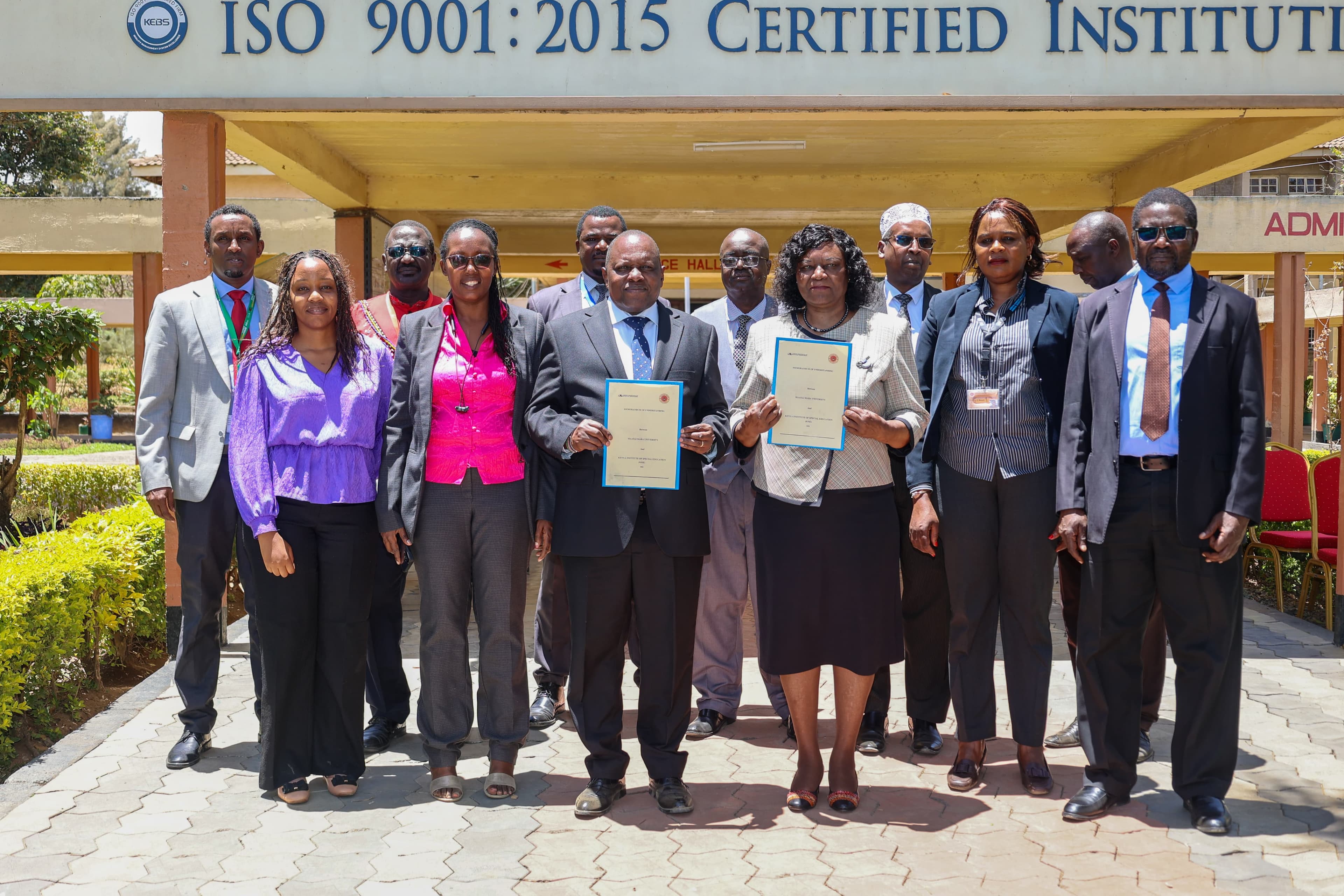
Maasai Mara University has signed a Memorandum of Understanding (MoU) with the Kenya Institute of Special Education (KISE) to strengthen special needs education, research, innovation and the development of practical solutions for learners with disabilities.
The varsity’s Vice-Chancellor, Prof. Peninah Aloo-Obudho urged industry leaders, institutions of higher learning, Technical and Vocational Education Training Institutions, State agencies, county governments, technology firms and development partners to prioritize the inclusion of the persons with disabilities (PWDs) in innovation hubs and ongoing digital transformation efforts.
Prof. Obudho warned that failure to act risks deepening existing inequalities. “It is very important that we have innovations by PWDs encouraged, supported and funded. If we leave them out, then we are leaving them behind and not aligning with the 2030 development agenda of leaving no one behind,” she stated.
The VC said rapid technological advancements are reshaping economies and societies, saying that the PWD community should not be left out.
She added that despite rapid growth in digital services, many PWDs in Kenya continue to face challenges accessing education, employment opportunities, banking services and government platforms due to inaccessible technologies and digital products.
“We are coming together with KISE to see how we can through our special needs laboratory collaborate and help businesses, governments, NGOs and international organizations enhance innovations by persons with disabilities,” the Vice Chancellor pointed out.
She challenged governments, investors and technology companies to support innovations by PWDs through funding, procurement opportunities and policy reforms.
Prof. Obudho called on Kenyan universities, TVETs and polytechnics to create an innovation ecosystem to support people with disabilities (PWDs).
She commended KISE for its commitment to the initiative, noting that special needs education presents significant opportunities for research, innovation, capacity building, and community impact.
She observed that the partnership with KISE aligns with the Government’s commitment to ensuring that no child is discriminated against or denied quality education due to a lack of appropriate learning aids, assistive devices, or support systems.
Prof. Obudho described the MoU as a new chapter in the institutions’ efforts to develop practical and innovative solutions that respond to the diverse needs of learners with disabilities.
She underscored the importance of supporting technological innovation for PWDs through public-private partnerships, local manufacturing hubs and artificial intelligence initiatives.
Prof. Obudho called for the realization of disability inclusion for visual impairment, hearing impairment, motor disabilities, and cognitive disabilities on both public and private digital platforms.
She pledged that Maasai Mara University would remain committed to embedding disability inclusion and access by persons with disabilities to information.
In addition to that they would support laws and programs put in place to promote and protect the rights of persons with disability.
KISE was represented by its Chief Executive Officer, Dr. Norman Kiogora. The signing ceremony was witnessed by Mr. Alfred Nyabochwa, Deputy Legal Officer, alongside members of the University’s senior management.
Dr. Kiogora commended Maasai Mara University for its commitment to supporting students with special needs.
He encouraged the University to pursue innovative solutions in assistive devices and technologies and to undertake needs assessments to identify and address the specific challenges faced by learners with disabilities.
As an immediate outcome of the MoU, KISE will send a team of specialists to Maasai Mara University to undertake a comprehensive needs assessment of learners with disabilities. The assessment will guide the provision of appropriate learning and assistive aids, including hearing aids, wheelchairs, crutches, and white canes.
The initiative will also support joint research, training, knowledge sharing, and the development of assistive technologies aimed at advancing inclusive education.
The initiative was spearheaded by Dr. Naftali Rop, Chairperson, Department of Special Needs and Early Childhood Education, under the guidance and support of the Vice-Chancellor.
Prof. Aloys Osano, the University’s Deputy VC for Research, Innovation and Outreach, noted that the MoU marks another step in Maasai Mara University’s commitment to inclusion, innovation, research, and community engagement, with a focus on promoting equitable access to quality education for learners with disabilities.
Also present during the signing ceremony included Prof. Beatrice Manyasi, Acting Deputy VC (Academic and Student Affairs), Dr. Fredrick Otieno (Registrar, Academics), Dr. Edward Kateiya (Director Marketing) and other university officials.
by Emily Kadzo
Comments
No comments yet. Be the first to share your thoughts.