
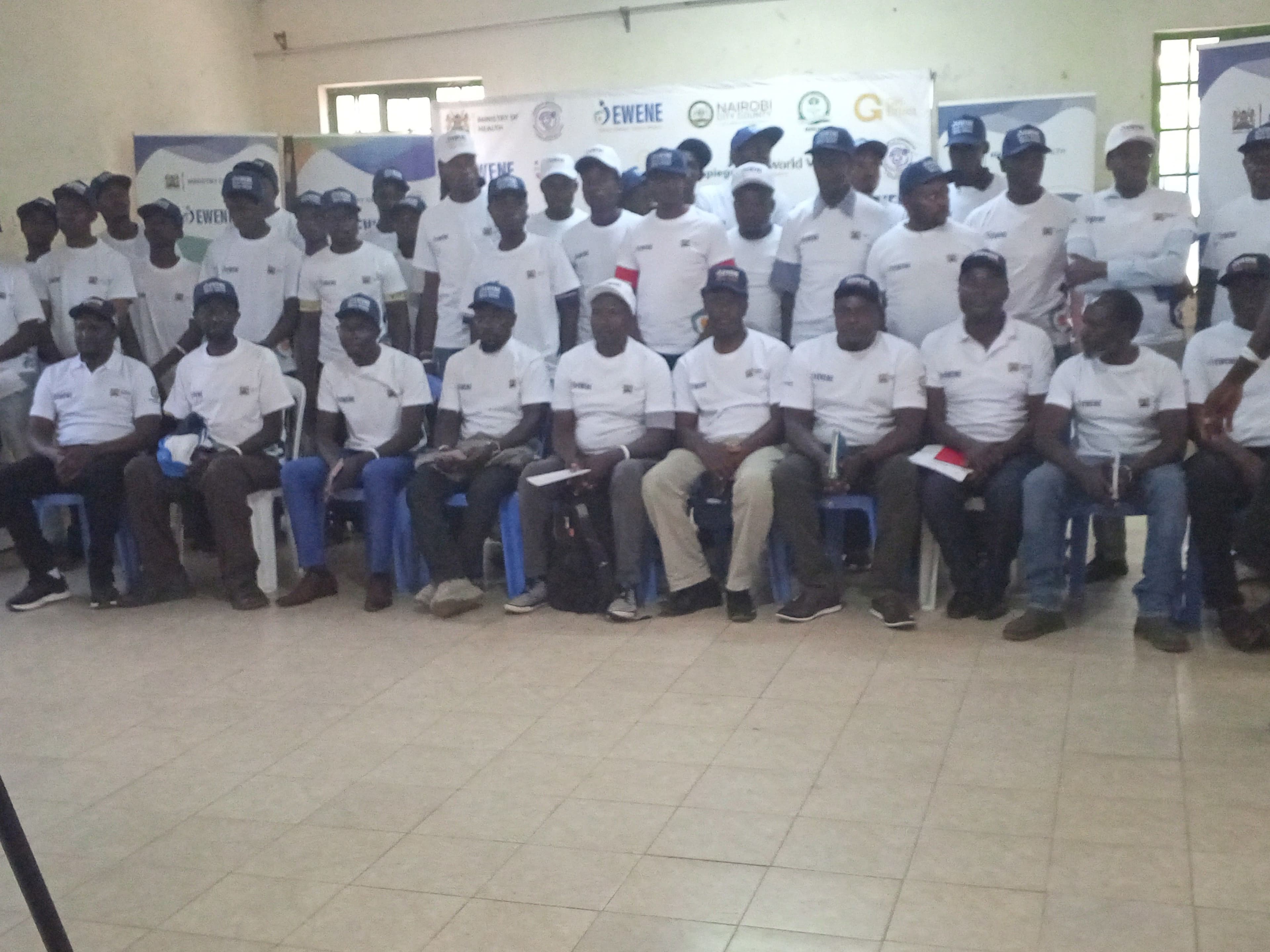
The Ministry of Health, in collaboration with Every Woman Every Newborn Everywhere (EWENE) initiative, has called on men to take a more active role in maternal and newborn healthcare to help reduce preventable deaths among mothers and babies.
The call was made during a male engagement forum held at Dandora Social Hall on Tuesday, bringing together men, healthcare professionals, county officials and community leaders to discuss the importance of male involvement throughout pregnancy, childbirth and postnatal care.
EWENE is a global initiative adopted by the Government of Kenya through the Ministry of Health to accelerate efforts towards reducing maternal and newborn deaths through improved healthcare services and community participation.
Speaking during the forum, Machozi ya Mwisho Initiative Co-founder Lawrence Omondi said the organisation was established following personal experiences with loss, including the death of his two sons, and the need to prevent other families from experiencing similar tragedies.
Omondi said the organisation had engaged nearly 100 men who had lost their partners during childbirth, identifying a significant knowledge gap among them, with many unable to explain the medical conditions, complications or danger signs that contributed to their partners’ deaths.
To address the gap, the organisation introduced Baraza la Uzi, a community-based forum that brings together expectant fathers, doctors, nurses and other healthcare professionals to discuss maternal health and allow men to ask questions and learn how to support their partners.
He said the initiative also runs Darasa la Uzazi, a virtual learning programme that educates expectant fathers on maternal healthcare beyond delivery, including postnatal care and the first 1,000 days of a child’s development.
Omondi identified financial constraints as one of the major obstacles to male involvement, particularly among men working in the informal sector who often have to choose between accompanying their partners to antenatal clinics and going to work to provide for their families.
He also cited cultural beliefs and inadequate facilities at health centres as barriers, noting that some hospitals lack sufficient space to accommodate men accompanying their partners for maternal healthcare services.
Omondi said the initiative was working with the Ministry of Health, county governments and other partners to expand awareness programmes. It currently operates in Nairobi, Siaya, Kisumu and Mombasa, with plans to reach more communities across the country.
He further raised concerns about the psychological impact of maternal and newborn deaths on fathers, noting that men who lose their partners during childbirth often experience emotional distress.
The organisation works with volunteer psychosocial support providers and partner organizations to offer support to affected men.
Meanwhile, Dandora resident Cleophas Zuma Akalakha urged fellow men to accompany their partners throughout pregnancy, childbirth and postnatal care, saying their involvement provides mothers with emotional reassurance and improves their understanding of maternal health.
A father of three, Akalakha recalled accompanying his wife to antenatal appointments and remaining by her side during the birth of their first child at Kilifi Hospital, where he helped her cope with labor pains by rubbing her back until she delivered safely.
He said the experience helped him understand the demands of childbirth and prepared him to support his wife during subsequent pregnancies.
However, he expressed concern over women who go through labor without their partners, recalling witnessing mothers crying out for their husbands and asking nurses to call them for support.
Akalakha called on healthcare facilities to create a more welcoming environment for men, citing instances where male partners are asked to wait outside labor wards or are subjected to lengthy queues when accompanying their wives to clinics.
He argued that such experiences discourage men from attending subsequent appointments, particularly when they have sacrificed working hours to accompany their partners.
He further identified traditional beliefs that confine pregnancy and childbirth responsibilities to women as another obstacle, calling for awareness programmes targeting both men and women to encourage shared responsibility in maternal healthcare.
The forum emphasised the need for stronger collaboration between healthcare providers, community leaders, families and county governments to ensure that maternal healthcare is treated as a shared responsibility.
The discussions also highlighted the importance of extending male involvement beyond delivery to include postnatal care, newborn immunization and the continued physical and emotional wellbeing of mothers and children.
by Celine Mwende



Comments
No comments yet. Be the first to share your thoughts.