
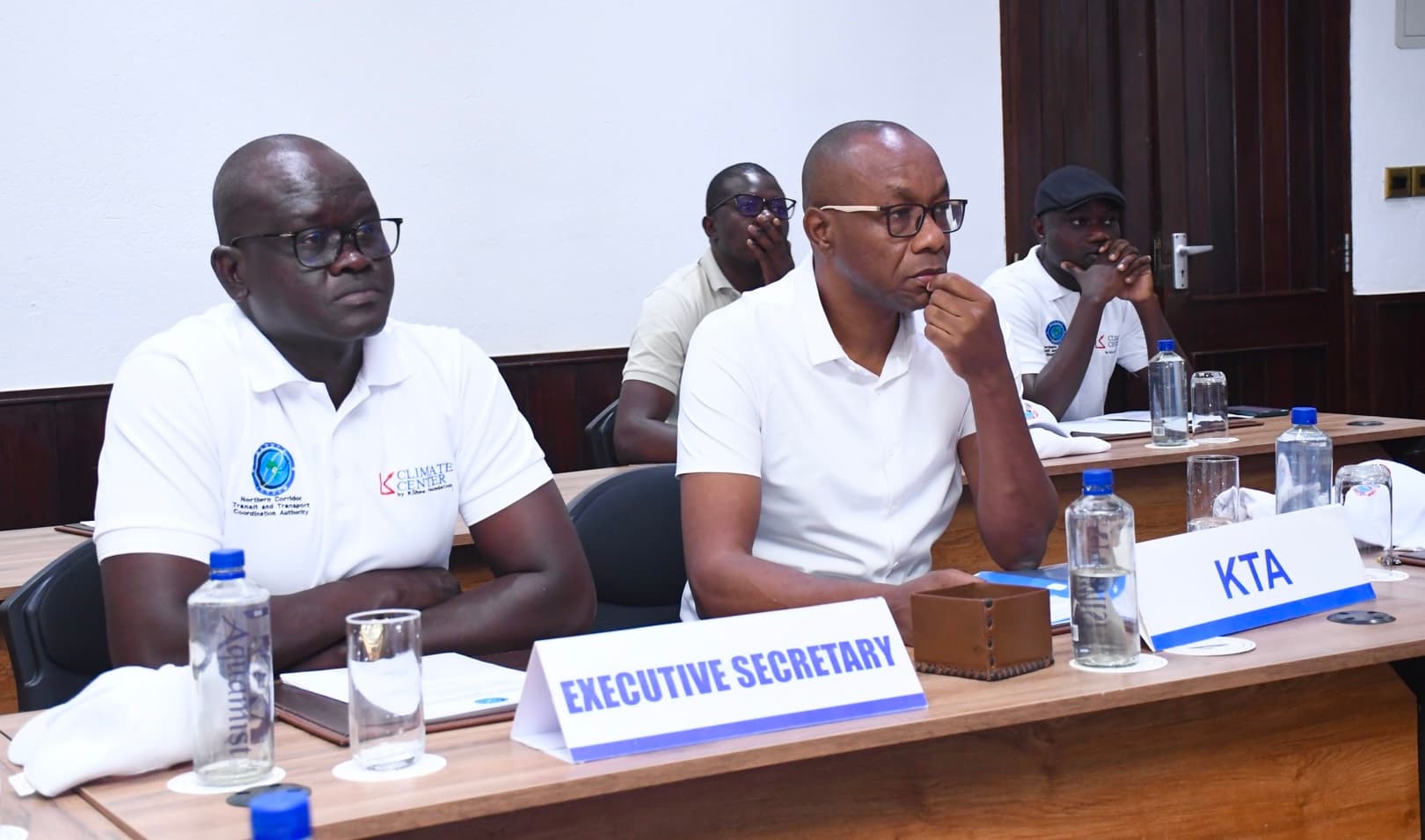
The Northern Corridor Transit and Transport Coordination Authority (NCTTCA) and the Kenya Transporters Association (KTA), have stepped-up efforts to reduce greenhouse gas emissions and improve fuel efficiency along the Northern Corridor amid rising fuel prices.
With financial support from the Kühne Climate Centre (KCC), NCTTCA has partnered with Smart Freight Centre, to train transport managers in smart freight transport management. The four-day training aims to strengthen fleet management practices, improve fuel efficiency and reduce emissions.
A fortnight ago, KTA and NCTTCA signed a Memorandum of Understanding (MoU) to promote eco-driving and sustainable freight transport in Kenya and along the Northern Corridor.
The partnership supports the implementation of the Northern Corridor Green Freight Strategy 2030, which focuses on improving fuel efficiency, reducing greenhouse gas emissions, enhancing road safety and promoting sustainable fleet management.
Under the strategy, NCTTCA is targeting a 10 per cent improvement in freight fuel efficiency, a 10 per cent reduction in carbon dioxide emissions intensity and a 12 per cent reduction in particulate matter, black carbon and nitrogen oxide emissions. It also aims to train at least 1,000 heavy commercial vehicle drivers in eco-driving by 2030.
The 2025 Northern Corridor Greenhouse Gas Emissions Baseline Report, estimates that annual greenhouse gas emissions from sections of the Northern Corridor in Kenya amount to approximately 2.59 million tonnes of carbon dioxide equivalent.
The Mombasa–Nairobi section accounted for about 1.58 million tonnes, while Nairobi–Malaba contributed 930,000 tonnes and Mau Summit–Busia approximately 84,000 tonnes.
KTA Chairman, Newton Wang’oo, said fuel remains one of the highest operating costs in road freight transport, noting that every litre saved reduces expenditure, improves fleet productivity and enhances competitiveness.
Wang’oo emphasised the need for transporters to continuously optimise fleet operations, adopt smart freight management technologies and invest in driver training.
“I can tell you fuel is costing 50–55 per cent of all the costs of a trip. 50–55%. As the prices continue to go up, usually it’s gone up by over 5 per cent; the prices continue to increase. The aspect of fuel in a transport company is rising higher and higher and higher,” he said.
He added that eco-driving can help transporters save fuel by encouraging drivers to adopt better driving habits. He proposed integrating eco-driving practices into driving school training.
Wang’oo further said transporters could save up to 150 litres of fuel on a return trip between Mombasa and Kampala, a distance of approximately 2,300 kilometres, by adopting eco-driving techniques.
“We are also helping in emissions reduction while making money through just a change of behaviour,” he said.
The KTA Chairman urged long-distance drivers to take precautions against Ebola, as they travelled through countries affected by the disease, particularly the Democratic Republic of Congo (DRC).
“For us, we are monitoring the situation. There is also insecurity in that part of DRC. It’s both Ebola and insecurity. We are just monitoring and advising our drivers on how to take care of themselves,” Wang’oo said.
“We have not yet locked down, but we really want our drivers to take care of their health. Health is more important to us than delivering cargo or making money,” he added:
NCTTCA Executive Secretary, Dr Eng. John Deng, said the training aligns with the Northern Corridor Green Freight Strategy, which seeks to reduce fuel consumption and greenhouse gas emissions.
Deng noted that freight transport plays a critical role in supporting Kenya’s trade and sustaining the livelihoods of many people. Improving efficiency in the sector, he said, would strengthen business performance, while contributing to climate change mitigation and protecting public health.
“The training is part of the capacity building of the institutions because the fleet managers are the institutions we need to support the operations on the ground,” Deng said.
Carol Mutiso, project manager at KCC, said the organisation was supporting the transition towards a climate-friendly logistics ecosystem while promoting skills development.
“We are partnering with partners like the Northern Corridor so that we can make this transition for the logistics ecosystem,” Mutiso said.
Smart Freight Centre trainer Abdool Kamdar said road freight demand was expected to double between 2015 and 2050, underscoring the need to ensure that growth did not lead to a corresponding increase in emissions.
“We have a strong responsibility to make sure that demand increase does not translate to a CO2 emissions increase,” he said.
Kamdar added that the Smart Transport Manager training was designed to reduce freight costs, simplify freight operations and minimise the sector’s negative impacts.
By Sadik Hassan

Comments
No comments yet. Be the first to share your thoughts.