
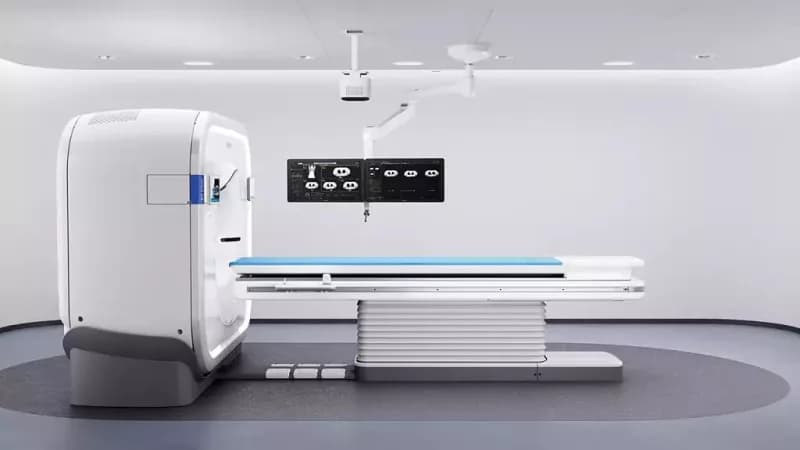
An advanced 160-slice Computed Tomography (CT) scanner that will be commissioned at Mama Lucy Kibaki Hospital in Nairobi/HANDOUT

Mama Lucy Kibaki Hospital is set to commission an advanced 160-slice Computed Tomography (CT) scanner, in a major boost to its radiology department and capacity to provide detailed medical imaging services.
The new Philips Incisive CT scanner is expected to strengthen the hospital’s diagnostic capabilities by enabling clinicians to obtain detailed images to support the detection, assessment and management of a wide range of medical conditions, helping guide treatment decisions and improve patient care.
Mama Lucy Kibaki Hospital Chief Executive Officer Dr Fredrick Obwanda said the installation was part of ongoing efforts to modernise the hospital’s diagnostic infrastructure and improve access to quality healthcare for residents of Nairobi and surrounding areas.
“The commissioning of this 160-slice CT scanner is an important milestone in strengthening our radiology department. We are investing in modern diagnostic technology to improve the quality of services we offer, support our medical teams in making informed decisions and ensure patients can access essential imaging services at our facility,” said Obwanda.
The Philips Incisive CT system incorporates artificial intelligence-powered tools designed to streamline imaging procedures, including automated patient positioning, motion-correction capabilities for cardiac imaging and real-time needle tracking to support image-guided interventional procedures.
These technologies are designed to improve workflow efficiency, enhance consistency in image acquisition and support diagnostic confidence.
The system also features patient-side gantry controls, allowing radiographers to perform many scanning operations from beside the patient, potentially reducing the time required to complete imaging procedures.
Philips says the OnPlan workflow can reduce time to results by up to 19 per cent.
The manufacturer also reports that 84 per cent of surveyed users experienced improved patient satisfaction, while 91 per cent reported greater consistency in results between users.
The system incorporates dose-management and image-quality technologies designed to help optimise radiation exposure while maintaining the image detail required for clinical assessment.
Actual radiation doses depend on the scan protocol, patient characteristics and clinical application.
Another feature is Philips’ 10-year replacement guarantee for its vMRC X-ray tube, marketed as the Tube for Life guarantee.
The provision is intended to offer long-term assurance on one of the scanner’s key components, subject to the manufacturer’s applicable terms and conditions.
Obwanda said the new equipment would strengthen the hospital’s ability to support clinicians with detailed diagnostic information while improving efficiency in the delivery of radiology services.
“Our goal is to make our services more efficient, reliable and responsive to the needs of our patients. By strengthening our diagnostic capacity through modern equipment, we are working to improve access to specialised investigations and support timely, evidence-based treatment,” he said.
The installation adds to the hospital’s ongoing efforts to upgrade its medical equipment and infrastructure as part of a broader push to improve the quality and accessibility of public healthcare services in Nairobi.
The enhanced radiology capacity is expected to support clinical assessment across various medical specialties, with CT imaging playing an important role in evaluating conditions involving the brain, chest, abdomen, blood vessels and other parts of the body, depending on the examination required.



Comments
No comments yet. Be the first to share your thoughts.