

DNA paternity tests are widely used to establish biological relationships, but under certain circumstances, they can produce misleading results.
Sample mix-ups, unusual genetic conditions and the involvement of close biological relatives can complicate the interpretation of DNA evidence.
Most properly conducted paternity tests are highly reliable, with accredited laboratories reporting accuracy rates above 99.9 per cent.
However, scientific studies have documented cases in which initial results wrongly excluded a biological father or failed to distinguish him from a close relative.
How DNA Paternity Tests Can Produce Wrong Results
A paternity test compares genetic markers a child inherits from the biological mother and father.
Laboratories examine specific regions of DNA to determine whether the alleged father is genetically consistent with being the child’s biological parent.
The Association for the Advancement of Blood and Biotherapies (AABB), which accredits relationship-testing laboratories, says accredited facilities follow quality standards designed to maintain sample traceability, validate testing procedures and reduce the risk of incorrect reporting.
However, errors can occur when samples are collected, labelled, transported or processed incorrectly.
If a sample is attributed to the wrong person, the laboratory may produce a technically accurate analysis of someone else’s DNA.
The AABB advises people who dispute their results to contact the testing facility and request a review.
According to the Kenya Ministry of Health, facilities must maintain procedures for addressing such complaints.
When a Biological Father Is Wrongly Excluded
A rare genetic condition known as tetragametic chimerism can complicate paternity testing.
It occurs when one individual has two genetically distinct populations of cells, meaning DNA obtained from different tissues may not produce identical genetic profiles.
In a study published in the European Journal of Medical Genetics in August 2023, researchers Andrei Semikhodskii, Tatiana Makarova, and Daria Sutyagina documented a case in which they initially excluded a man as a child’s biological father.
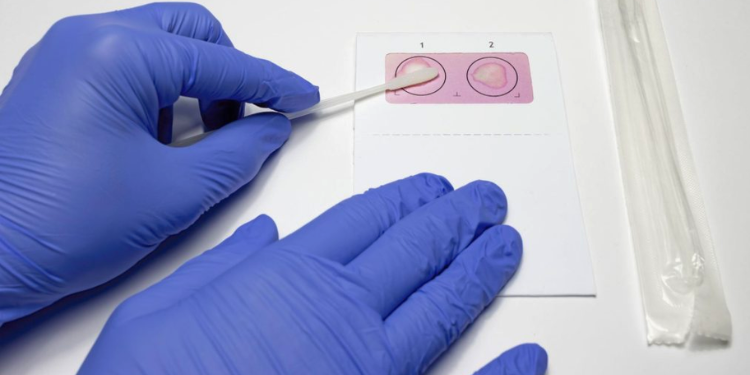
The initial analysis compared a cheek-swab sample from the child with a blood sample from the alleged father.
The results excluded paternity at six genetic markers.
Further testing using the man’s semen and samples from other tissues revealed a different picture.
The researchers found genetic evidence supporting his paternity, explaining that chimerism had complicated the initial results.
The study demonstrated how testing a different tissue and conducting further genetic analysis can resolve an apparent exclusion.
A separate case published in 2018 also documented a man whose paternity was initially excluded by repeated DNA tests.
Researchers eventually confirmed that he was the child’s biological father after investigating his genetic condition.
When a Close Relative Is Mistaken for the Father
Another challenge arises when the alleged father is a close relative of the biological father, such as a brother.
A 2013 study published in Croatian Medical Journal examined the risk of falsely identifying a close relative as a child’s father.
Researchers used 10,000 computer-simulated families to assess how genetic similarities could affect paternity conclusions.
The study found that the risk of false inclusion was highest when a sibling was presented as the father and the mother’s DNA profile was unavailable.
The researchers reported a simulated false-inclusion rate of approximately 19% in that specific scenario using 15 genetic markers.
The figure does not represent the general error rate of paternity tests.
Instead, it demonstrates how the absence of the mother’s DNA and the genetic similarity between close relatives can affect particular cases.
Including the mother’s DNA profile and examining additional genetic markers can help laboratories distinguish between possible relationships.
How to Verify a Disputed DNA Result
The AABB recommends contacting the laboratory that conducted a disputed test.
Accredited facilities follow established procedures for reviewing complaints and maintaining records linking samples to the people tested.
For legal proceedings, documented identity verification and a clear chain of custody are important because they establish who provided each sample and how it was handled.
If concerns remain, independent testing by an appropriately accredited laboratory may help resolve the dispute.
In cases involving unusual genetic findings, additional samples from different tissues or more extensive genetic analysis may be necessary.
In an interview with The Kenya Times, James Mekenye, Program Director at the Family Peace Association (FPA) Kenya, says that mandatory DNA testing at birth could create chaos and expose families to painful consequences.
“DNA testing should ideally be considered when paternity is questioned or concerns are raised by a third party, rather than being conducted routinely,” he stated.
He further observed that the decision to seek DNA testing often stems from a lack of trust between couples.
Follow our and X Account for real-time news updates.



Comments
No comments yet. Be the first to share your thoughts.