
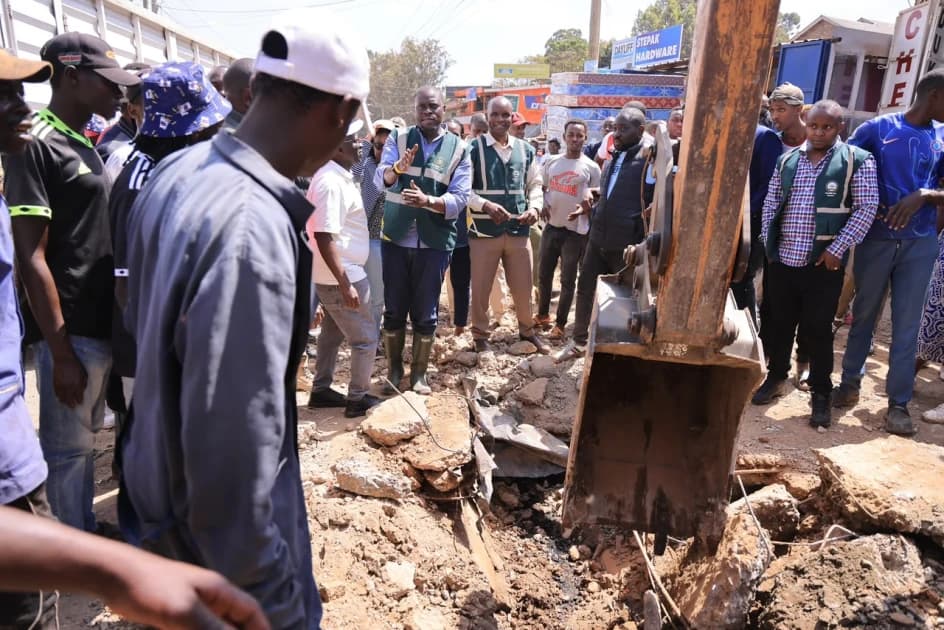
Speaking during an inspection of ongoing works, Sakaja said the county would continue removing structures encroaching on waterways to restore drainage corridors and improve the flow of stormwater.
“We are clearing every obstruction that stands in the way of our waterways. Structures built on drainage corridors cannot be allowed to compromise the safety of Nairobi residents. Where necessary, we will continue removing these structures and restoring the natural flow of water,” said Sakaja.
He said similar operations were underway in Mlango Soko and other parts of the city as the county works to clear blocked waterways and address areas prone to flooding.
“This is not just about Kawangware; similar interventions are ongoing in Mlango Soko and other parts of Nairobi. We are systematically opening up blocked waterways and strengthening our drainage network ahead of the rains,” he said.
The exercise forms part of the county’s broader flood-preparedness measures, which include clearing and desilting drainage channels, deepening and widening waterways, and deploying additional machinery to identified flood hotspots.
Sakaja later inspected ongoing flood-mitigation works in Imara Daima, Kwa Njenga and the Governor’s Road area of Embakasi South and Embakasi East, where teams are clearing and deepening drainage channels and opening up waterways.
“Our El Niño interventions are already underway across the city. We are deepening and widening drainage channels, desilting waterways and deploying machinery to identified hotspots. We will continue with urgency because these works are critical to protecting lives and property,” said Sakaja.
The works come as Nairobi steps up preparations for the anticipated heavy rains, with county engineers, contractors and other agencies working to address identified flood-prone areas.
Sakaja said the interventions would continue with urgency, with priority given to areas requiring immediate drainage improvements to enhance water flow and reduce the risk of flooding.


Comments
No comments yet. Be the first to share your thoughts.