
The Senate Public Accounts Committee has faulted Treasury Cabinet Secretary, John Mbadi, for allowing government procurement worth trillions of shillings, to continue without valid regulations.
Committee Chairperson, Moses Kajwang’ ,said the High Court nullified the procurement regulations in December last year for lack of public participation, and the Treasury and the Attorney General’s office let the appeal period lapse.
“In December last year, the High Court declared as null and void the Public Procurement and Asset Disposal Act, leaving the National and County governments to work in a void,” Kajwang’ said.
He said the government procure goods worth over Sh3 trillion every year and the lack of a valid regulation would expose public funds to irregularities and corruption related incidences, as there’s no rules to guide National and County procuring entities.
Kajwang’ regretted that public entities were buying public goods and services without regulations or proper governing laws, which would lead to lack of prosecution by the EACC due the void in law.
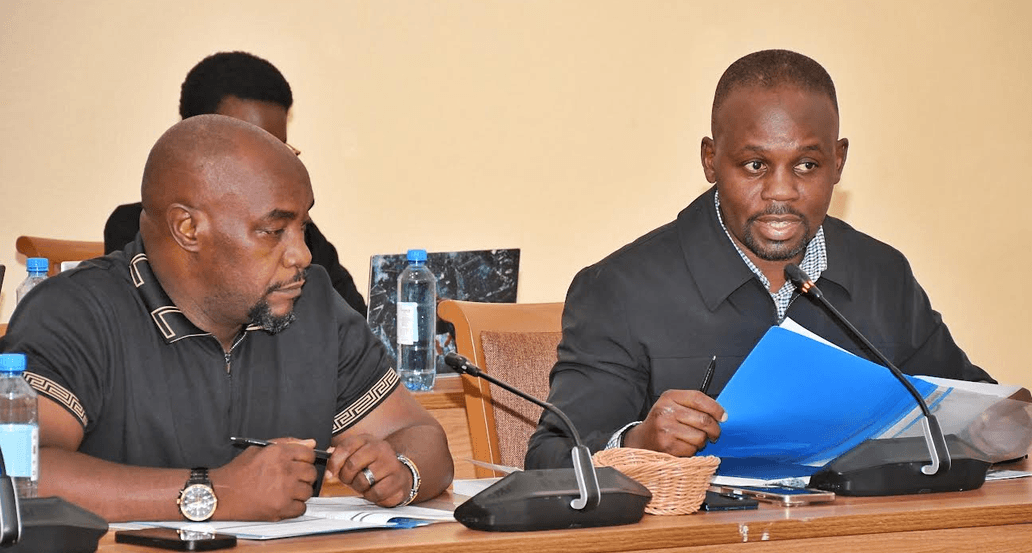
Speaking to the press in Naivasha after meeting Treasury officials, the Homa Bay Senator said, Mr Mbadi had failed to issue policy guidelines since the judgment, noting that procuring entities were, therefore, relying on the expired 2006 regulations.
Kajwang’ warned that the Electronic Government Procurement (e-GP) system, could also be declared unconstitutional, because it was built on the annulled regulations.
He criticised Mbadi’s absence from the meeting, saying the buck stops with him in the event of a procurement scandal and that the CS must respond to invitations and summons by Parliament.
Kitui Senator, Enock Wambua, said the Treasury had presided over an illegality for the last 10 months, exposing the country to corruption related scandals.
He said the impasse had left the Ethics and Anti-Corruption Commission (EACC), unable to investigate or prosecute State officers, risking massive loss of public resources.
“Somebody is deliberately not bringing up regulations to guide public procurement at a time when we are having serious public investments,” Wambua said.
Public Procurement Regulatory Authority Director General, Patrick Wanjuki, admitted that the government was operating without the regulations, while the Attorney General considered an appeal.
Wanjuki said that they had resulted in internationally recognised procurement norms in relation to procurement regulations gaps in order to procure the most required goods such as druids and other essential services.
By Erastus Gichohi and Orpah Gesare



Comments
No comments yet. Be the first to share your thoughts.