
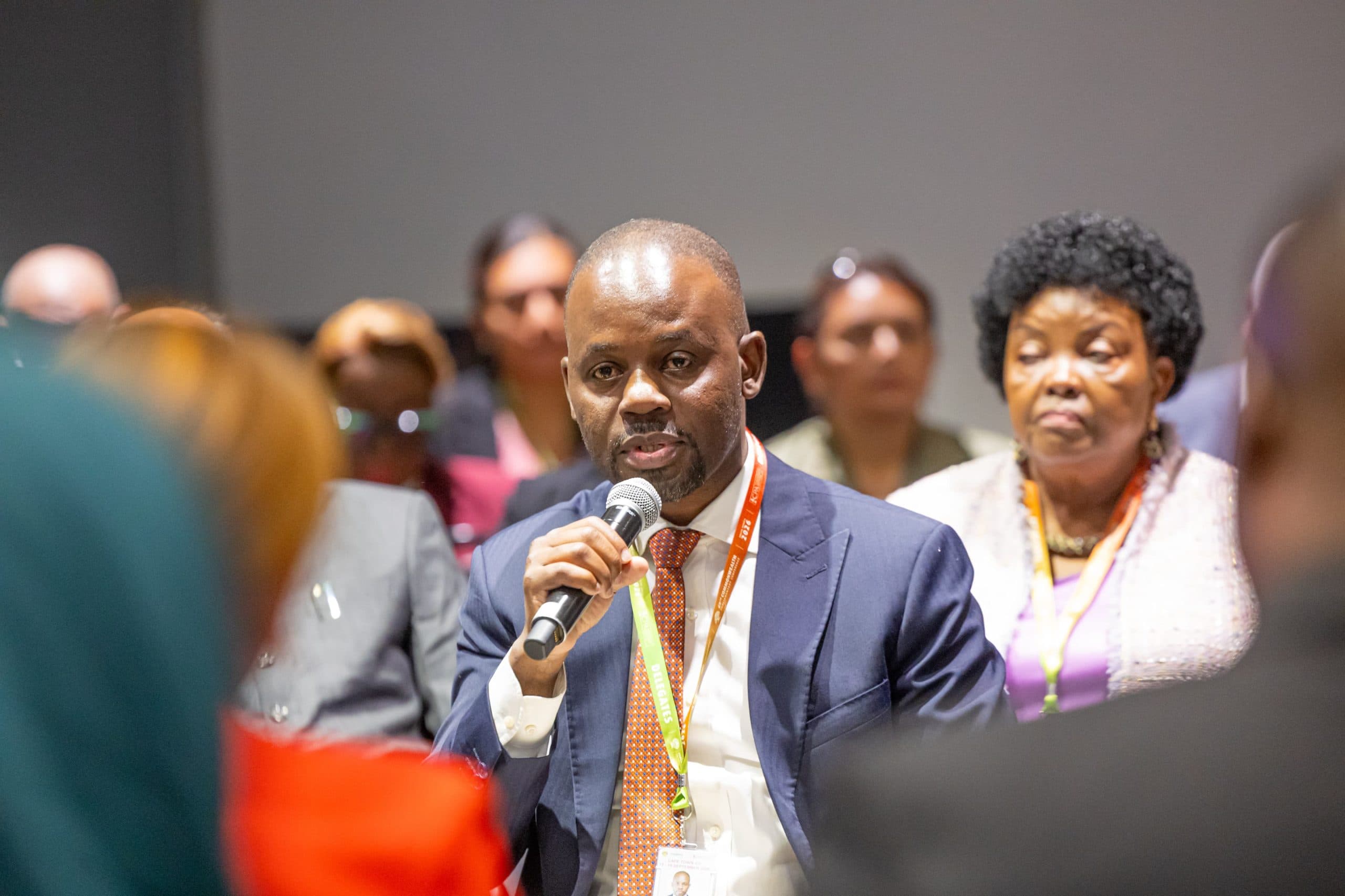
Homa Bay Senator Moses Kajwang has hailed the multi-billion World Bank-funded Financing Locally-Led Climate Action (FLLoCA) Programme as one of Kenya’s most significant climate adaptation initiatives.
He said the Ksh168 billion programme has empowered communities to respond effectively to the growing impact of climate change.
Speaking during a meeting held on the sidelines of the 69th Commonwealth Parliamentary Conference in Cape Town, South Africa, Senator Kajwang said the five-year programme that was launched in 2022 and implemented through county governments, has provided a practical framework for addressing climate-related challenges at the grassroots level.
He noted that climate change impact is often felt by local communities which continue to grapple with droughts, floods and declining agricultural productivity.
“The decision to implement the climate adaptation programme through counties was the right one because devolved units have been at the forefront of dealing with the effects of climate change and its impact on local communities,” he said.
The Senator said the programme has delivered tangible results by financing community-prioritised projects designed to mitigate the effects of climate change.
According to Kajwang, several counties have invested in climate-smart agriculture and the solarisation of value chains in response to locally identified needs.
“In the North Eastern counties, communities have invested in small-scale irrigation projects, among them construction of boreholes to provide water for food production as well as for human and livestock consumption,” he said.
Kajwang said Senate oversight of the programme had established that FLLoCA has had a significant impact, particularly among rural communities.
“Kenya has been a leader in the effective implementation of the programme. Other countries come to Kenya for benchmarking. I believe it is one of the most impactful World Bank-supported programmes in the country,” he said.
He emphasised the importance of strengthening community participation in climate action and argued that local residents should play a central role in identifying priorities and determining how climate financing is utilised.
“Empowering communities to identify and implement their own solutions makes climate interventions more responsive to local needs and strengthens resilience at the household and community levels,” he said.
The Senator, however, expressed concern that the programme is expected to conclude this year and urged the World Bank to consider extending its implementation period.
He also called for sustained investment in climate adaptation initiatives, noting that effective climate action requires close collaboration between national and county governments, development partners and local communities.


Comments
No comments yet. Be the first to share your thoughts.