
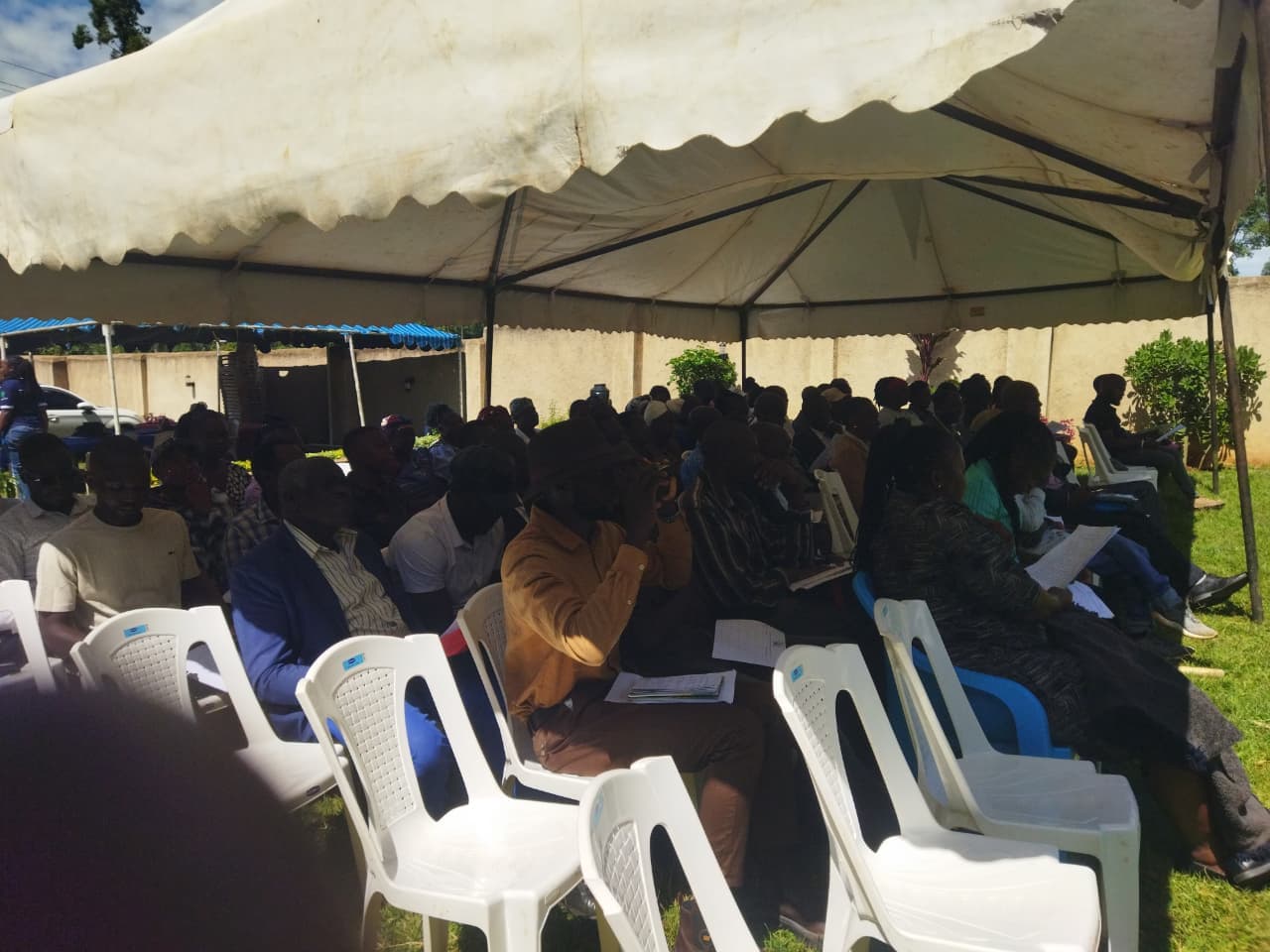
Residents of Vihiga County have called for inclusive representation, farmer education and sustainable agricultural practices during a public participation forum on the proposed Vihiga County Agroecology Bill, 2026.
The forum, organised by the County Department of Agriculture, Livestock, Fisheries and Blue Economy, was held at Enzogu Gardens in Lugaga-Wamuluma Ward and brought together farmers, traders, youth, women and persons with disabilities from Hamisi, Tiriki and Sabatia sub-counties.
A similar public participation forum was also held at Uncle Sam Hotel in Emuhaya Sub-County, bringing together residents from Luanda, Emuhaya and Vihiga sub counties to deliberate on the proposed legislation and submit their views and recommendations.
Vihiga County Director of Agriculture Daniel Otieno said the proposed legislation seeks to promote and regulate sustainable farming practices, livestock keeping, fish farming and mushroom production while protecting natural resources and improving food security.
Otieno said the Bill was necessary to address declining soil fertility, shrinking farm sizes, high agricultural input costs and unpredictable weather patterns, which continue to affect agricultural productivity in the county.
He added that the legislation would also promote the preservation of indigenous crops, local seeds and traditional farming knowledge while encouraging environmentally friendly waste management.
The Bill is anchored in the Vihiga County Agroecology Policy, 2025, and the County Agroecology Implementation Plan 2026–2031, with its legal foundation drawn from the Constitution of Kenya, 2010, and the County Governments Act, 2012.
Agricultural consultant Juma Mohammed outlined key proposals in the Bill, including the establishment of a County Agroecology Committee and Secretariat, farmer training, demonstration farms, soil testing, community seed banks, access to credit and insurance, and the introduction of a farmer-led certification system known as the Participatory Guarantee System (PGS).
He said the proposed law would also provide for quality assurance through testing laboratories and agroecology inspectors, management of agricultural waste and the appointment of Community Agroecology Promoters at ward level.
On eucalyptus management, Mohammed explained that Clause 20 proposes prohibiting the planting or retention of eucalyptus trees within eight metres of common farm boundaries, with existing trees in the restricted zone to be removed within 12 months after the Act comes into force. The county government would support farmers in replacing them with indigenous and agroforestry trees.
During the deliberations, participants proposed several amendments to strengthen the Bill.
Donald Amiane from North Maragoli Ward called for collaboration between Vihiga and neighbouring counties to encourage the adoption of similar agroecological practices across the region.
Mary Goretti, a representative of persons with disabilities from Busali Ward, proposed the inclusion of livestock officers in the County Agroecology Committee to ensure their expertise was represented.
Farmer Sammy Mugutia from Lyaduywa-Izava Ward further called for the inclusion of youth, persons with disabilities and people from different age groups in the committee to promote diverse perspectives and innovation.
Participants also urged the county government to establish agroecology training centres in technical and vocational training institutions across all sub-counties rather than relying on a single facility.
Julius Ndede from Tambua Ward called for farmer education on sustainable fish farming practices.
On eucalyptus management, Oscar Sangala, a representative of persons with disabilities, proposed reducing the 12-month removal period to three months, arguing that farmers were already aware of the county’s eucalyptus policy.
He also called for a complete ban on eucalyptus planting instead of maintaining the proposed eight-metre boundary restriction, citing concerns over the trees’ extensive root systems.
Another participant, Daniel Odanga, proposed replacing the clause advocating minimal use of synthetic agrochemicals with a complete prohibition of their use.
The public participation forum provided residents with an opportunity to shape the proposed legislation by highlighting areas requiring clarification, amendment and strengthening to ensure the bill addresses the needs and interests of farmers and other stakeholders across the county.
by Yvonne Misango and Florence Oteng’o

Comments
No comments yet. Be the first to share your thoughts.