
Community elders and gender rights stakeholders in Kilifi County have called for stronger cooperation between communities, government agencies, and the police to improve the reporting and handling of teenage pregnancies, as well as sexual and gender-based violence (SGBV) cases.
The stakeholders said enhanced communication and coordination among the various actors would help victims access timely assistance and ensure reported cases are handled effectively.
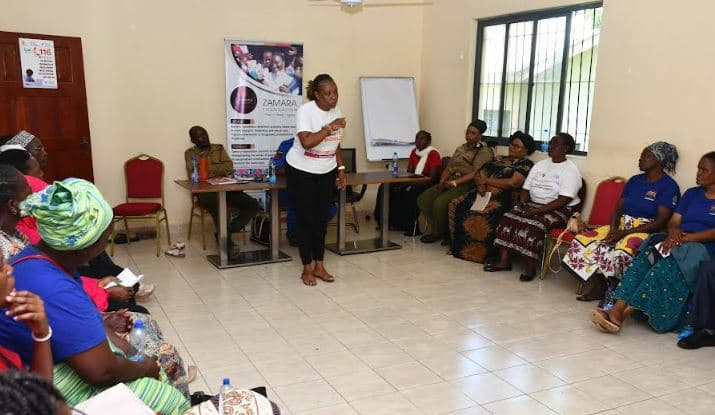
The call was made during a forum organised by Zamara Foundation in Kilifi, which brought together village elders, Nyumba Kumi elders and Community Health Promoters to discuss ways of improving the reporting and management of SGBV and teenage pregnancy cases.
Speaking to the media, Lilian Samba, an official from Zamara Foundation, an organization that focuses on the rights and welfare of the girl child, said gaps in coordination between community leaders and government agencies continued to hamper efforts to address SGBV and teenage pregnancy.
“The gaps between leaders and government make it hard to handle the cases. There is a need for cooperation between them to improve the handling of the cases,” she said.
Samba emphasised the need for community leaders and government agencies to work together in addressing cases of gender-based violence and protecting vulnerable members of society.
Alex Gharama, a village elder, said stronger cooperation between government agencies and local leaders would improve communication between communities and institutions responsible for responding to reported cases.
He said victims needed clear channels through which they could report cases, seek help, and access necessary support.
On her part, Caroline Baya, a Community Health Promoter from Kibarani, said poor coordination among community leaders and institutions involved in handling SGBV cases involving teenagers was causing delays in accessing assistance.
“There is no good relationship with the community leaders. If I receive a sexual and gender-based violence case involving a teenager, it takes a long time for the victim to be served because there is no good communication flow, perhaps from as low as the Nyumba Kumi elders, the village elders, the chief up to the police. This makes the case take time to be served,” she said.
Baya urged all actors involved in the response to SGBV cases to take their responsibilities seriously to ensure victims receive timely assistance.
Her sentiments were echoed by Moses Kiti, a Nyumba Kumi elder and chairman in Fumbini village, who said community leaders also faced challenges when working with the administration due to inadequate communication.
“It is hard for us because we do not have good communication with the administration. At times it feels as if we have no power, especially in front of people such as police officers who do not recognize us,” he said.
Hafsa Karema, a Community Health Promoter from Takaungu, said the manner in which some SGBV cases were handled did not meet the expectations of community health workers.
“The way these cases are handled, I do not expect them to be handled this way as a Community Health Promoter. I urge the police to recognize our role so that it becomes easier for us to do our work and for the community to help reduce and eventually end sexual and gender-based violence,” she said.
Police representatives at the forum acknowledged the concerns raised by the stakeholders and pledged to address them by improving communication between the police, community leaders, and other actors involved in handling SGBV cases.
They said closer cooperation with community leaders would help victims access services faster, while ensuring reported cases are followed up appropriately.
The stakeholders said the commitment would help strengthen mechanisms for reporting SGBV, improve support for victims, and enhance coordination among institutions responsible for responding to the cases.
They called for continued collaboration among communities, local leaders, government agencies, and the police as Kilifi steps up efforts to prevent and respond to sexual and gender-based violence.
The concerns come amid reports of teenage pregnancies in the county, with figures attributed to the National Syndemic Diseases Control Council indicating that 7,358 girls aged between 10 and 19 became pregnant in Kilifi last year.
By Queen Mwanzia and Stephen Mrira


Comments
No comments yet. Be the first to share your thoughts.