
Retiring from employment could leave many Kenyans facing difficult financial decisions if pension benefits fall short of their needs, with a new global assessment exposing weaknesses in the country’s ability to provide adequate retirement income.
Kenya scored 53.1 out of 100 in the 2026 Marsh CFA Institute Global Pension Index, earning a C grade in its first appearance in the annual ranking of retirement income systems.
The country’s weakest performance was in adequacy, where it scored 38.9 points and received a D grade. The category assesses whether retirement arrangements provide sufficient income to support people after they leave the workforce.
Kenya performed better in pension system integrity, scoring 76.0 points and earning a B+ grade. Its sustainability score stood at 53.0, equivalent to a C grade.
The results expose an important gap in the country’s retirement system. While Kenya recorded a stronger score for integrity, the low adequacy rating raises questions about whether pension arrangements can deliver sufficient financial support to retirees.
The findings also come as longer life expectancy increases the number of years people may spend outside formal employment, potentially stretching retirement savings over longer periods.
Longer lives demand better retirement planning
The index’s 2026 special chapter examines the effects of ageing populations on pension systems, highlighting the financial implications of people living longer.
In Kenya, life expectancy at age 65 has risen by 2.9 years since 1950, according to the report. The increase reinforces the need for retirement savings to cover longer periods without regular employment income.
For households, retirement does not bring an end to financial obligations. Food, housing, healthcare and other living expenses continue, while the ability to earn a salary may decline or disappear.
Where pension income is insufficient, retirees may need to draw down other savings, seek additional income or depend on relatives. Such arrangements can transfer part of the financial burden to younger family members who may already be paying school fees, servicing loans or saving for their own retirement.
The adequacy score does not establish how much an individual Kenyan will receive upon retirement. However, it points to a broader challenge: ensuring that pension benefits are sufficient to meet the needs of people who have spent years contributing to retirement schemes.
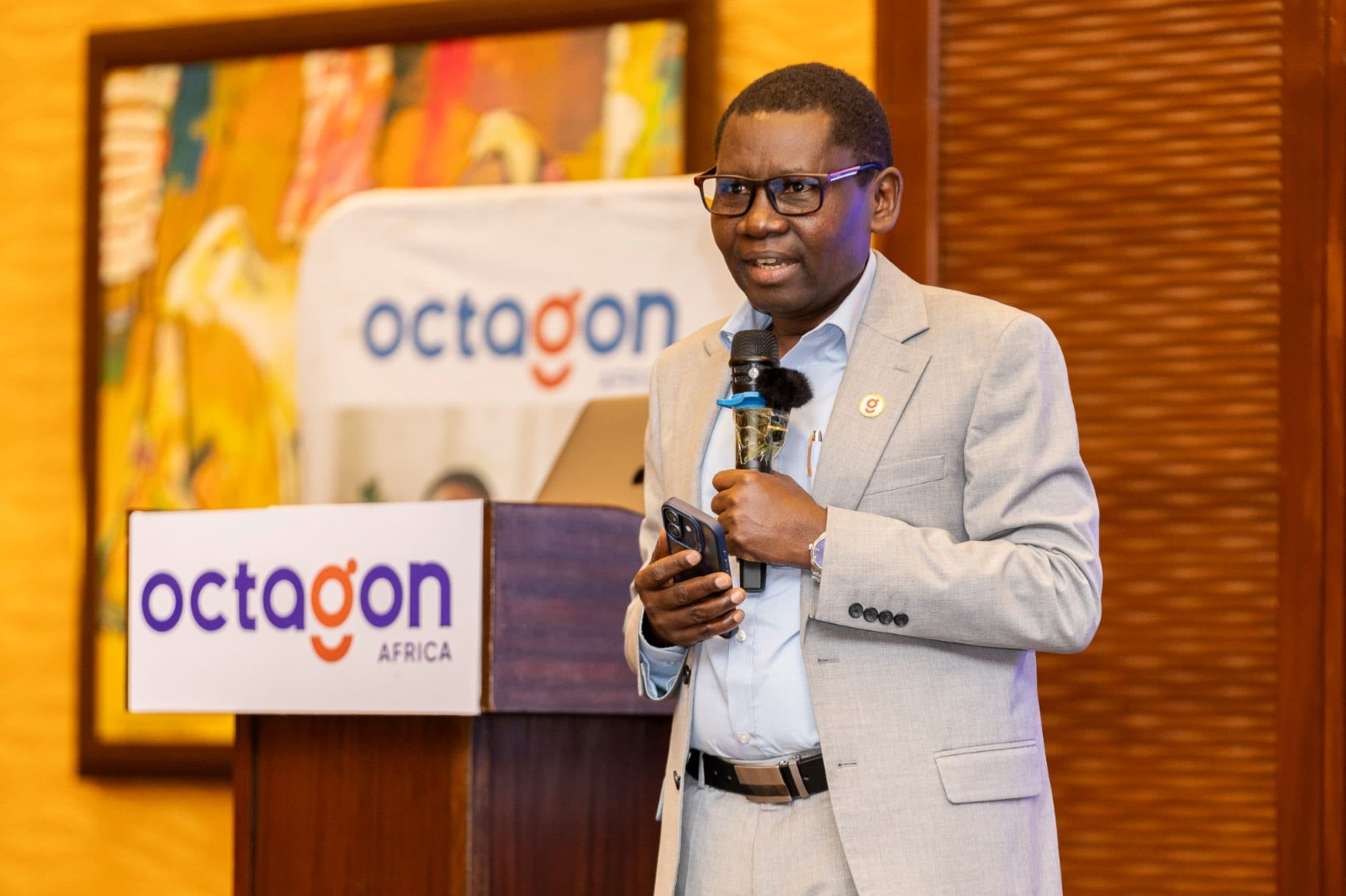
Octagon Africa Group Chief Executive Officer Fred Waswa said the country’s inclusion in the index provides an opportunity to assess the state of its retirement system.
“Kenya’s pension system continues to evolve, and the inclusion of the country into this index is an important benchmark to see where we stand and what needs to be done better,” Waswa said.
“The findings allow us to have a more informed conversation about retirement adequacy, sustainability and the long-term financial security of Kenyans.”
Governance scores higher than retirement adequacy
Kenya’s performance across the index’s three measures shows that the challenges facing the pension system are not uniform.
Its integrity score of 76.0 was considerably higher than the 38.9 recorded for adequacy. Integrity covers areas such as governance, regulation, protection and communication, while adequacy focuses on the sufficiency of retirement income.
The difference illustrates why the administration and regulation of pension schemes must be considered alongside the benefits they ultimately provide.
A pension system can have strong oversight structures, but that alone does not determine whether retirees will have enough money to meet their expenses. Retirement outcomes also depend on contributions, accumulated savings, investment returns and the benefits paid out.
Sustainability presents another concern. Kenya’s score of 53.0 reflects the need to assess whether its retirement arrangements can remain viable as demographic and economic conditions change.
The report does not prescribe a specific set of reforms for Kenya based on the overall score alone. Nevertheless, the findings provide a benchmark for policymakers, employers and pension providers examining the country’s long-term retirement preparedness.
Kenya joins 55 systems in global pension index
The 2026 assessment marks Kenya’s first inclusion in the Marsh CFA Institute Global Pension Index, which now covers 55 retirement income systems representing more than 66 per cent of the world’s population.
The Dominican Republic and Qatar were also included for the first time this year.
The index is in its 18th edition, having grown from 11 countries at its launch to 55 systems in 2026. It evaluates pension systems based on adequacy, sustainability and integrity.
Kenya’s participation was facilitated through Octagon Africa’s strategic partner Alexforbes. Octagon Africa contributed by responding to the index survey and providing data and insights on the local retirement system.
The inaugural score gives Kenya a starting point for tracking its performance against international benchmarks. Future assessments may provide a clearer picture of whether improvements in pension arrangements are translating into stronger retirement outcomes.
For now, the low adequacy score places the question of retirement income firmly in focus. As people live longer, the challenge is not simply to help Kenyans retire with savings, but to ensure those savings can support them for the years ahead.


Comments
No comments yet. Be the first to share your thoughts.