

The government is proposing a major overhaul of university financing, replacing scholarships and grants with a fully loan-funded system for some students admitted to public universities.
The scrapping of student grants follows the announcement by President Ruto of the new universal loan-based funding model for university students.
According to President Ruto, the funding model will guarantee funding for all qualified students admitted to the institutions regardless of their background.
“Going forward, any student who has passed and is placed in a college or university, each of them will get full funding for their education. It will not matter the background of any child in Kenya, but how good they are,” Ruto announced in July during an event at State House.
Under the Tertiary Education Placement and Funding Bill, 2026, the loan-based funding system will affect funding for all students admitted to public universities, colleges and Technical and Vocational Education and Training (TVET) institutions.
However, ongoing students will continue under the the existing funding structure.
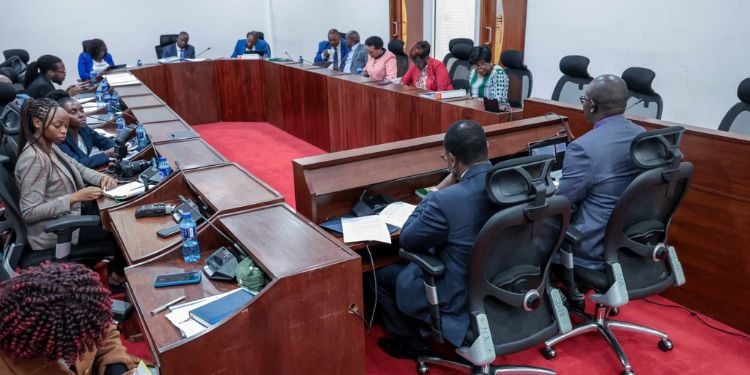
Speaking during a parliamentary session by the National Assembly’s Departmental Committee on Education on August 5, representatives of the Ministry of Education said the new model will provide for education loans to minors admitted to tertiary institutions.
Universal Funding Model Under TEFA
According to the National Assembly’s Departmental Committee, the Bill will merge the Higher Education Loans Board (HELB), the Universities Fund and the TVET Funding Board into a single institution to be known as the Tertiary Education Funding Authority (TEFA). TEFA, according to the bill, will be responsible for managing all tertiary education financing.
Education Cabinet Secretary Julius Ogamba has described the proposed authority as a one-stop institution that will guarantee access to funding for all qualified learners while covering tuition, accommodation and living expenses.
Further, Ogamba argued that the authority would also consolidate existing public bursary and scholarship schemes.
Additionally, TEFA will mobilize educational Treasury allocations, including education bonds, private capital investments and concessional financing from development partners.
“The funding authority will have the power to utilize non-traditional resource mobilization mechanisms such as education bonds and capital markets to ensure that there are adequate resources to support our students,” CS Ogamba stated.
According to the Ministry of Education, the reforms are intended to eliminate duplication among agencies.
Govt Shift from Grants to Repayable University Loans
The bill aims to move funding away from the current student-centered funding model, which combines scholarships and loans based on means testing.
The government support to students will primarily be issued as loans, replacing non-repayable grants and scholarships.
Students placed in public institutions would receive up to 100 percent funding, but the amount would be repayable after securing employment.
Among the factors that will be used during the issuing of the funds are household income, special needs status, affirmative action considerations, and program costs.
The Bill also strengthens the role of the Kenya Universities and Colleges Central Placement Service (KUCCPS) as the national placement body for all tertiary institutions.
Despite the changes in funding, admission decisions will be based on merit, qualifications, and program choices.
Student Loans Recovery
To support the revolving funding model, the Bill introduces stricter loan recovery mechanisms as civil debts.
Loan repayment is expected to begin within one year after completion of studies or shortly after securing employment.
Graduates entering formal employment will be required to disclose their loan status to employers immediately upon hiring.
Additionally, employers will be obligated to notify the funding authority, deduct loan repayments from employees’ salaries, and remit the funds within prescribed timelines.
Students who receive the funds and secure jobs in the informal sector will be required to enter structured repayment agreements outlining the mode and frequency of repayment.
To protect borrowers, deductions will be capped at a maximum of 25 percent of a beneficiary’s earnings.
HELB and Ministry officials have also proposed alternative financing measures, including securitization of the student loan book, education bonds and social impact bonds.
HELB CEO Geoffrey Monari clarified that different institutions, including TVET and university funds, will aid in the new funding model and a savings scheme that allows parents to save funds for their students.
“We will have a bond system which will be raised through the capital markets. We will have a savings scheme where the parents can save funds for their students when they go to the university,” Monari said.
Parliament Review on Education Reforms
The committee, chaired by Tinderet MP Julius Melly, met Education CS Julius Ogamba and senior ministry officials to examine the proposed legislation and assess its legal, policy and financial implications.
In addition to the funding reforms, lawmakers reviewed amendments to the Basic Education Act, the Kenya National Educational Assessment Council Act and the Kenya Institute of Curriculum Development Act ahead of the planned September 2026 intake.
Follow our and X Account for real-time news updates.

Comments
No comments yet. Be the first to share your thoughts.