
Students who receive government funding for higher education will be required to start repaying the money soon after securing a job if the proposed Tertiary Education Placement and Funding Bill, which seeks to overhaul how universities and colleges are financed, is passed.
The Bill, currently before Parliament, sets out how graduates in both formal and informal employment will repay their loans while introducing measures to protect borrowers from excessive deductions.
The bill further seeks to replace the current Student-Centred Funding Model (SCFM), which was introduced in May 2024 to allocate scholarships and loans based on a student’s level of financial need.
Under the existing model, students are assessed using a Needs Assessment Tool (NAT) before being placed into funding bands.
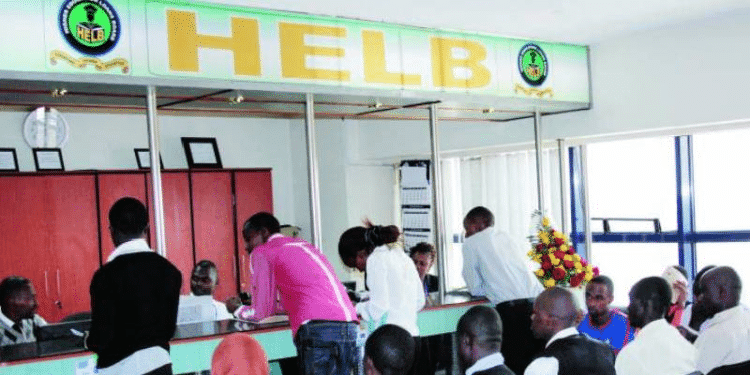
The Universities Fund then provides scholarships covering between 30 and 70 per cent of tuition costs, while the Higher Education Loans Board (HELB) finances the remaining fees and offers upkeep loans.
However, the Ministry of Education now wants to merge all tertiary education financing into a single fund that will provide students with full funding exclusively in the form of loans.
If Parliament approves the Bill, every student admitted to a public university or TVET institution would be eligible for full funding through repayable loans.
The Ministry of Education says the reforms are intended to create a predictable financing system capable of supporting the growing demand for university and college education.
Under the proposal, beneficiaries would begin repaying their loans one year after securing employment.
Employers to Deduct Loan Repayments
Graduates who secure formal employment will be required to declare their loan status to their employers immediately after getting a job.
Employers will then facilitate deductions from the employee’s salary and remit the money towards loan repayment.
The Bill proposes that loan deductions should not exceed 25 per cent of a beneficiary’s earnings, a measure intended to protect borrowers while ensuring steady repayment of government-funded loans.
Informal Workers to Sign Repayment Agreements
Graduates working in the informal sector will follow a different repayment process.
Instead of payroll deductions, they will be required to enter into repayment agreements with the proposed Higher Education Loans Authority, setting out the amount, mode and frequency of repayment.
The Bill also grants the authority powers to recover any outstanding amounts as civil debts, allowing it to pursue legal action against loan defaulters where necessary.
Unlike the current system, however, graduates who temporarily stop repaying because they are unemployed would not be penalized.
Instead, any repayment gaps or shortfalls would simply be added to the end of the loan period without attracting default charges.
Government Funding to Follow Students
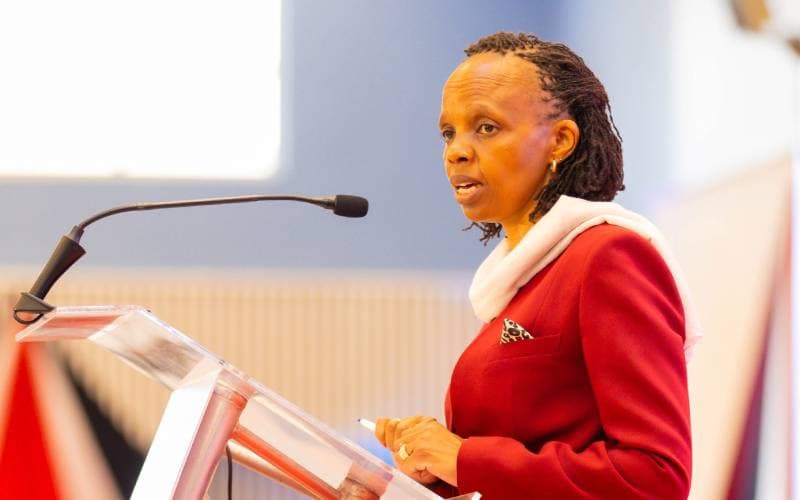
Appearing before the National Assembly’s Education Committee, Higher Education Principal Secretary Beatrice Inyangala said the proposed law guarantees every eligible Kenyan student access to funding for tuition fees and other education-related expenses.
She told MPs that beneficiaries would begin repaying the loans after completing their studies.
According to Inyangala, the reforms are intended to ease the financial burden on families while expanding access to tertiary education.
She added that government funding will follow the student rather than the institution, allowing beneficiaries to choose whether to study in public or private universities.
“The money is given to students, but the students choose whether they want to go to a public or private university. The priority here really is all Kenyan students. Even now, students who go to private universities are awarded loans to undertake their programmes in those universities,” she said.
Government Targets KSh230 Billion Funding Need
The Ministry told the committee that the proposed fund will draw its resources from government grants, borrowing through the capital markets, parents’ savings, student loan recoveries and concessional financing from development partners.
According to the ministry, the combined financing model is expected to help meet higher education funding needs projected to reach KSh230 billion.
Members of the National Assembly’s Education Committee welcomed the proposed reforms but questioned whether the financing model would generate enough resources to sustain higher education in the long term.
Responding to the concerns, Higher Education Loans Board (HELB) Chief Executive Officer Geoffrey Monari said the government had ring-fenced existing funding while identifying additional sources of revenue.
He said the current allocations include KSh56 billion, KSh30 billion allocated to the Universities Fund as scholarships, and KSh9.6 billion for TVET scholarships.
According to Monari, the available funding currently stands at about KSh94 billion, with the government seeking additional resources to increase the amount to about KSh100 billion.
“What we have done is ring-fence the current sources of income. We have KSh56 billion that was apportioned, KSh30 billion to the Universities Fund as scholarships and an additional KSh9.6 billion to TVET scholarships. If you add these amounts, you come to about KSh94 billion. After discussions, we approximated that we can get an additional amount to round it off to about KSh100 billion,” he said.
HELB Says Current Interest Rate Remains Unchanged
The proposals have also sparked debate over reports that student loan interest rates could rise under the new funding model.
However, HELB has clarified that the current interest rate for undergraduate, Technical and Vocational Education and Training (TVET) and Kenya Medical Training College (KMTC) loans remains 4 percent per annum.
The board said no changes have been made to the existing interest rate and advised students and parents to rely on official communication regarding any future changes.
Follow our and X Account for real-time news updates.


Comments
No comments yet. Be the first to share your thoughts.