

The National Assembly’s Education Committee has completed its review of proposed education reform Bills that will introduce changes to the Kenya Universities and Colleges Central Placement Service (KUCCPS) student placement and the financing of tertiary education.
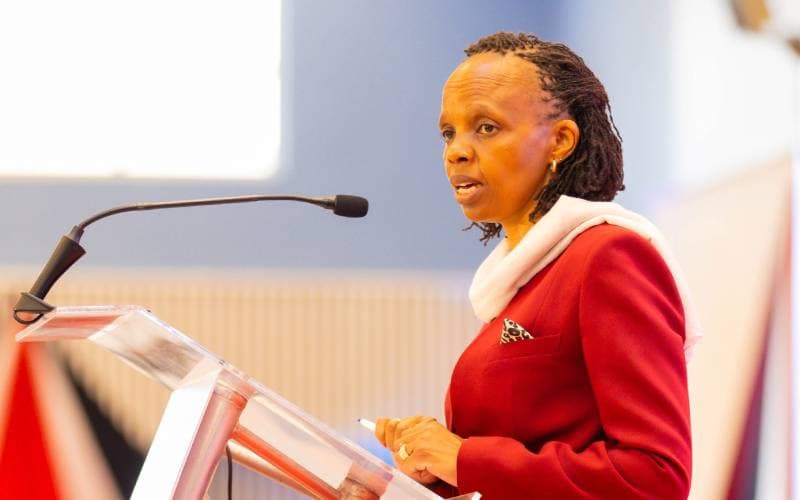
Appearing before the Committee on August 6, Principal Secretary for Higher Education Beatrice Inyangala said the proposed Tertiary Education Placement and Funding Bill will establish a comprehensive legal framework for student placement.
She noted that although KUCCPS is established under the Universities Act, it also places students in Technical and Vocational Education and Training (TVET) institutions, creating a legal gap that the proposed legislation seeks to address.
The Bill also proposes separating student placement from the allocation of financial aid to ensure admission into universities, TVET institutions and colleges is based on merit and qualifications rather than immediate funding decisions.
The proposed law also seeks to restructure higher education financing by merging the Higher Education Loans Board (HELB), the Universities Fund Board (UFB) and the TVET Funding Board (TVETFB) into a single body to be known as the Tertiary Education Funding Authority (TEFA).
“The boom is back, the loans will be awarded to students, irrespective of whether they go to a public or private university, because it is equal treatment of all students who are Kenyans,” she said.
MPs Consider Bill to Reform KUCCPS Student Placement and Funding
If enacted, TEFA will oversee the management of higher education funding, scholarships and student loans.
Inyangala further told lawmakers that the Bill introduces means testing as the basis for determining the level of financial support awarded to students and trainees.
Under the proposal, financial assistance will be determined based on factors such as a student’s financial ability, special needs, affirmative action considerations and the cost of the programme.
University Funding
Additionally, MPs were informed that the proposed KSh100 billion funding model for students will combine the current allocations to the Higher Education Loans Board (HELB), the Universities Fund and TVET scholarships.
The allocation comprises KSh56 billion for HELB, KSh30 billion for the Universities Fund and KSh9.6 billion for TVET scholarships.
However, with the higher education sector already grappling with funding shortfalls, MPs questioned how the government plans to raise the additional funds needed to sustain the expanded financing model.
Responding to the concerns, HELB Chief Executive Officer Geoffrey Monari said the authority plans to raise funds through a bond programme instead of relying on additional allocations from the Exchequer.
“We will use the bond programme to go to the commercial sector, and we will be paying coupons every quarter. The first requirement and simulation we did was that we will require an additional KSh80 million, after which we will be paying coupons every six months of KSh5 billion, making it affordable for the government. So this money is not coming from the Exchequer; it is the KSh100 billion,” Monari said.
Monari maintained that the funding model would become more sustainable over time, noting that after three years the authority expects to access concessional loans at interest rates of between 1 and 3 percent, with repayment periods of up to 30 years and a 10-year grace period.
He said the long-term financing arrangement would allow the bond programme to be retired while ensuring funding for students continues for decades.
The Bill also proposes a one-year grace period before graduates who secure employment are required to begin repaying their student loans.
Follow our WhatsApp Channel and X Account for real-time news updates.


Comments
No comments yet. Be the first to share your thoughts.