
Orma community pushes for Afaan Oromo in schools after 500 years of preserving identity

Wariyo also explained that the Orma originally lived alongside other Oromo communities in Oromia, in present-day Ethiopia, in areas including Madda Walaabuu, Odaa Roobaa and Tullaa Salgan Booranaa.
The Orma Oromo community, which settled more than 2,000 kilometres from Oromia in Kenya’s Tana River County, near the Indian Ocean coast, says it has preserved its language, culture and customs for more than 500 years, passing them down through generations.
Orma descendants say more than 540 years have passed since their ancestors left Oromia. Despite the distance and the various pressures they have faced, they say they continue to protect their language and identity. They told Addis Standard that they are still calling for Afaan Oromo to be included in Kenya’s education system.
“Although we have lived in Kenya for centuries, far from Oromia, our linguistic ties and Oromo identity have not been completely severed. However, when we ask how the younger generation has managed to preserve this identity and carry it into the present in a changing world, we realise that it has required great sacrifice," Usman Gutu, a resident of the Maro area and senior secretary of the Orma Council of Elders, told Addis Standard:
More To Read
"We live surrounded by other communities whose members speak different languages, including Swahili, English and Somali. Children learn languages other than their mother tongue at school. Strengthening their mother tongue and passing it from one generation to the next has not been easy,” Usman added.
Ali Wariyo, a member of Kenya’s National Assembly representing Garsen in Tana River County, told Addis Standard that the Orma have lived away from Oromia for more than 500 years and remain more than 2,000 kilometres from their homeland, yet have continued to preserve their culture, language and identity.
He said this had not been easy. “As we learned from our forefathers, we too have done what we can to continue speaking our language in Orma and pass our history from one generation to the next so it is not lost,” he said.
Latest Stories
- African countries could save billions by cutting air pollution and greenhouse gases at the same time
- Nominated Senator Crystal Asige joins Winnie Odinga and Jalang’o in Nairobi Senate race
- Tusker FC suffer home defeat as Singida strike puts CAF Confederation Cup hopes at risk
- Ecuadorian priest dies after giant wooden crucifix crashes down on him during live-streamed Mass
Wariyo also explained that the Orma originally lived alongside other Oromo communities in Oromia, in present-day Ethiopia, in areas including Madda Walaabuu, Odaa Roobaa and Tullaa Salgan Booranaa.
However, pastoral communities often move from one place to another in search of water and pasture. He said this was one reason the Orma might have moved away from Oromia. Other groups, including the Wardaayi, Muunyoo and Yaayyaa, also migrated, he said.
Today, he added, these other groups have largely been absorbed into other communities, with their languages and cultures fading from use. The Orma, meanwhile, have also faced considerable struggles in preserving their identity to the present day.
Former Borana Aba Geda elder Yuuba Guyyo Gobaa said the Orma’s migration from Oromia across borders to the Indian Ocean coast was associated with territorial expansion during the 16th century.
He recalled that during the tenure of the 26th Borana Aba Geda, Abbayyi Baaboo Horoo (1658–1665), the Orma migrated from Madda Walaabuu alongside Borana communities, crossed the Genale and Dawa rivers, and settled with the Borana in areas where they live today, including Borborii and Guchii Goofaa. They also grazed their livestock in Tullaa Salgan Booranaa, he said.
This history is about more than the migration of a community. It is also about language, family memories, culture and customs kept alive across generations
According to Gobaa, Abbayyi Baaboo later warned, “From now on, anyone who migrates should not go far; even if you do, do not cross that river.” Some people refused, saying, “We will go.” Those who crossed the river travelled farther away and declared “Ni Orma,” the phrase from which, according to this account, the name “Orma” originated.
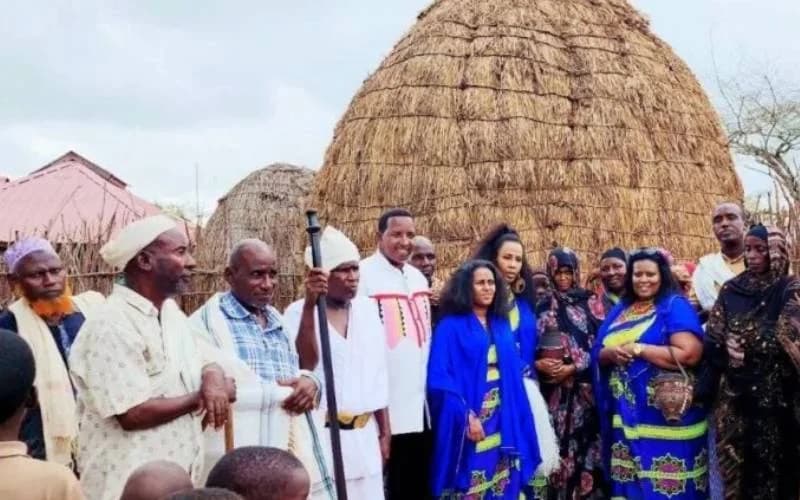
A gathering of Kenya’s Orma Community in Tana River County. (Photo: Addis Standard)Their journey, however, was not simply a matter of crossing a border. Settling in new territory, finding water and pasture, raising livestock and building community life were all important parts of the migration. The journey was not merely movement from one place to another; it also carried language, culture, pastoral knowledge and collective memory.
This history is about more than the migration of a community. It is also about language, family memories, culture and customs kept alive across generations. The Orma Oromo, many of whom live in Tana River County, continue to display elements of Oromo identity through their history, pastoral way of life and cultural practices.
Generational change, border conflicts and concerns about the future
Jaatan Diida, a researcher of Oromo culture and history, said the Orma live mainly in southeastern Kenya, particularly in Tana River County and towns such as Hola and Garsen. Their lives remain closely linked to pastoralism, farming and community relationships.
Cattle, goats and sheep play a central role in their livelihoods. The movement of livestock in search of water and pasture, particularly during the dry season, remains an important part of their history and pastoral way of life.
However, preserving a language and culture while living far from one’s homeland is not easy. Learning the languages spoken by surrounding communities and using them in education, employment and everyday life can place pressure on younger generations. Diida said this situation raises concerns about the continued use of Afaan Oromo and the transmission of the language to younger generations.
Usman Gutu said communities that migrated from Oromia and settled in different areas, including the Wardaayi, Yaayyaa and Muunyoo, some of whom moved as far as Mogadishu, Kismayo and Somaliland, have continued to take pride in their identities despite the distance from their homeland. However, he said the Orma were the only group among them to have preserved their culture and history while maintaining them in a foreign country to the present day.
Language challenges and concerns about the future of the Orma Oromo
Gutu said he feared that the community’s language and culture might not survive beyond the current generation. In Orma communities living closer to Mombasa and Lamu, children reportedly speak only English and Swahili, he told Addis Standard. Their cultural practices and various ceremonies are also conducted in Swahili.
Those living closer to Somalia also speak Somali, including in religious settings. “That is why we are asking for Afaan Oromo to be included in the education system,” he said.
Gutu also expressed concern that the community could lose its land to different parties in the future. He said the Orma’s lands along the two waterways they use, Maro and Sabaki, have increasingly been affected by territorial expansion and repeated conflicts with neighbouring pastoralist communities, including Somali and Meru groups.
He said the repeated conflicts had often deprived Orma children of schooling and resulted in livestock being stolen. He also expressed concern about major government projects being undertaken along these waterways, saying these developments had raised questions about the community’s future. He shared these concerns with Addis Standard.
Diida acknowledged that the Orma had preserved their language and culture to some extent over more than 500 years. However, he said strong religious influences had contributed to the complete breakdown of the Gada system. He added that 99 per cent of the community now follows Islam.
Preserving identity, intergenerational strain and collective support
Diida said the Orma had managed to preserve aspects of their culture to the present day. He urged Oromo communities across generations to conduct research on the Orma and called for digital media, radio programs, oral-history videos and Afaan Oromo publications to help younger generations learn about their history.
Ali Wariyo, a prominent figure in Kenyan politics and a member of Kenya’s National Assembly, has played an important role in bringing Oromo and Orma communities closer together, according to the account. Through his efforts, Oromos living in Ethiopia have increasingly come to learn about the Orma.
Wariyo recalled that, in the past, connections between the Orma and other Oromo communities in Kenya were largely maintained through the Borana. When the Orma faced conflict, land dispossession and displacement, Borana Oromo communities living near Lake Waso had supported them, he said.
He added that the growing recognition of the Orma among Oromo communities in recent years had brought him great happiness. Over the past seven years, Orma people from Tana River County have travelled more than 2,000 kilometres to attend Oromo cultural celebrations, including Irreecha and Gada ceremonies associated with the Borana and Guji communities.
The Orma community interviewed by Addis Standard in Nairobi and Tana River County said the community would be able to preserve its language, culture and land in Kenya only if it could secure a leading position in the governance of Tana River County.
They called on Oromo communities in Ethiopia and elsewhere to provide the Orma with the support they need.


Comments
No comments yet. Be the first to share your thoughts.