
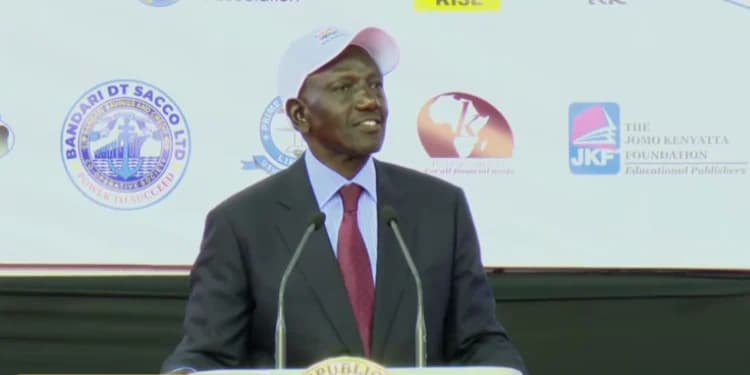
President William Ruto has announced plans the recruit 20,000 new teachers before the end of 2026 and to move 20,000 contract teachers to permanent, pensionable terms under a KSh4.9 billion plan.
Speaking during the World Teachers’ Day celebrations at Kasarani Stadium on October 5, 2026, Ruto said Kenya had previously recruited an average of 5,000 teachers annually.
Ruto said the government had recruited 100,000 teachers over the past four years, with another 20,000 set to be recruited before the end of this year.
“In the past four years, as has been said here by all the speakers, we have recruited 100,000 teachers so far, and another 20,000 will be recruited before the end of this year.”
Ruto Announces KSh4.9B Funding for 20,000 Teachers to Get Permanent Jobs in 2027
By December, Ruto said, the government will have recruited 120,000 teachers, which he described as the largest expansion of the teaching force in the country’s history in five years.
Ruto also said this year’s budget provides KSh4.9 billion to facilitate the transition of 20,000 contract teachers who have served for two years to permanent and pensionable terms.
According to Ruto, the transition of the 20,000 teachers to permanent and pensionable terms will take effect from January 2027.
“This year’s budget also provides 4.9 billion shillings to move 20,000 contract teachers who have served for two years to permanent and pensionable terms from January 2027.”
President Unveils Major Changes to Kenya’s Teaching Workforce
Ruto said the government inherited an education system facing years of unresolved challenges when it assumed office.
He identified the teacher shortage as one of the immediate challenges, saying schools were short of 116,000 teachers after recruitment failed to keep pace with growing enrolment.
Ruto also cited uncertainty surrounding the transition to Competency-Based Education, saying parents lacked clarity on where their children would proceed after Grade Six.
According to Ruto, teachers needed more support while schools were inadequately prepared, with no settled plan for where junior school would be domiciled.
He further said junior school was being introduced without the thousands of additional classrooms and laboratories required to support it.
Ruto identified chronic underfunding of public universities as another challenge, saying institutions expected to receive 80% of the cost of teaching each student were receiving about 40%.
“And fourth, years of chronic underfunding had pushed our public universities into a severe financial crisis. Universities expected to receive 80% of the cost of teaching each student were actually receiving about 40%. The resulting deficit had left 23 out of 40 public universities technically insolvent and at risk of closure. We confronted each of these challenges.”
Follow our WhatsApp Channel and X Account for real-time news updates.

Comments
No comments yet. Be the first to share your thoughts.