
NAIROBI, Kenya,Sep 15 — Universities need to treat public trust as an institutional asset and demonstrate their value through accountability, research and responsiveness to economic needs, academics and government officials have said.
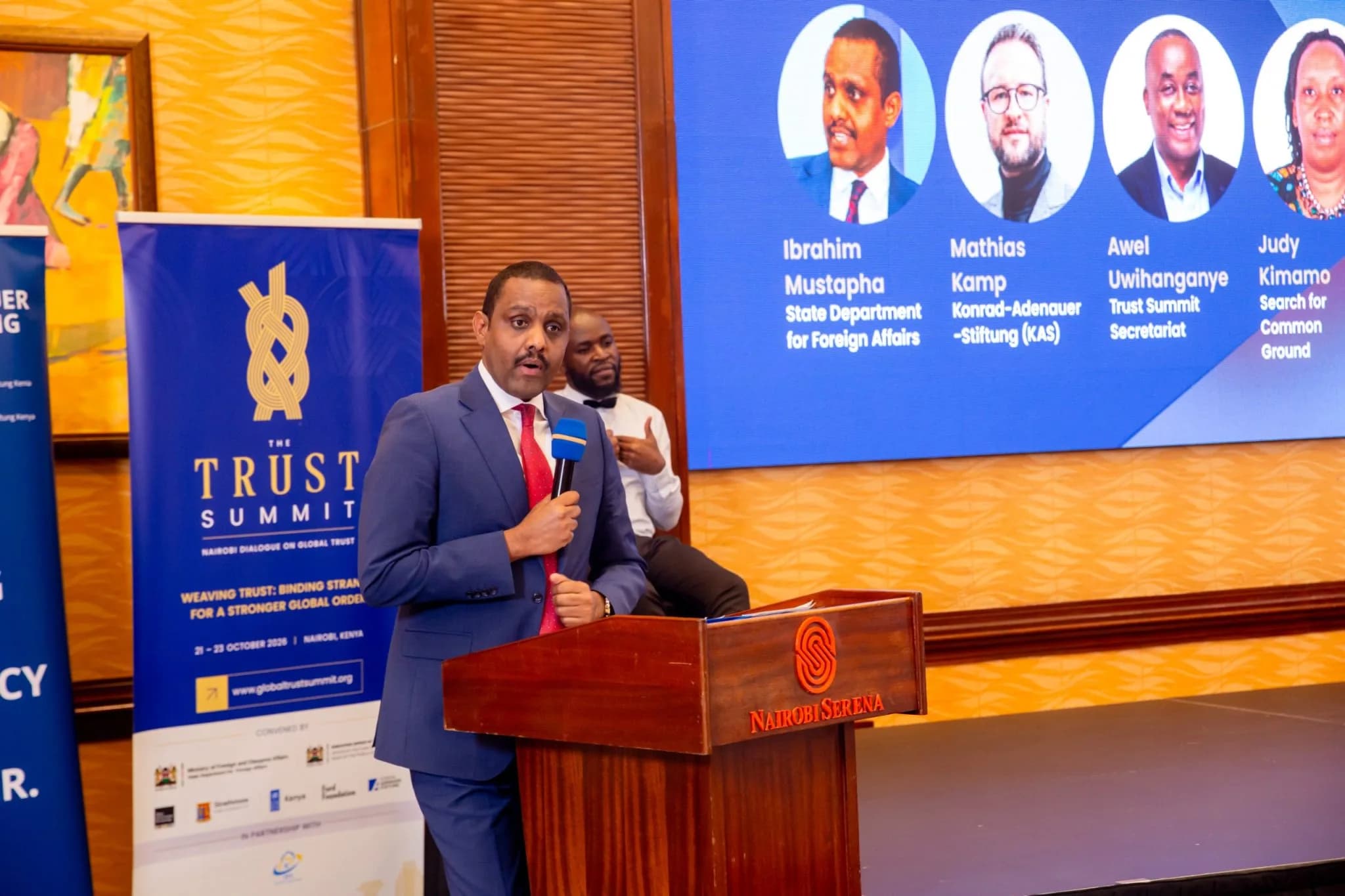
The call emerged from a roundtable on restoring trust in academia and the knowledge economy convened by Strathmore University and the State Department for Foreign Affairs on Tuesday ahead of the Trust Summit scheduled for October.
Speakers argued that declining confidence in universities should not be addressed solely through public relations, but through stronger systems, transparent decision-making and research that responds to challenges facing businesses, governments and communities.
Prof Gilbert Kokwaro, Director of the Institute of Healthcare Management at Strathmore University Business School, said universities should consider trust alongside financial, physical, intellectual and human capital.
“Trust is earned. It is not received. A university does not receive trust because it is prestigious. It earns trust through the integrity of its scholarship, the quality of its relationships, the fairness of its decisions, and the transparency with which it uses its authority and its resources.”
“Trust is ultimately earned through conduct. Institutions build it by producing reliable knowledge, maintaining high standards, responding to societal needs and being accountable for the quality and impact of their work,” said Dr Korir Sing’Oei, Principal Secretary, State Department for Foreign Affairs, in remarks delivered on his behalf.
The discussion also highlighted a mismatch between higher education output and labour-market demand.
Prof Sarah Ssali, First Deputy Vice Chancellor for Academic Affairs at Makerere University, said graduate employment figures should not be used alone to determine the value of university education, arguing that wider economic conditions influence employment outcomes.
“In Uganda, we graduate around 40,000 students per year across all universities, public and private, but only 700 jobs are being created per year,” she said, adding that the problem reflected a mismatch between demand and supply rather than necessarily the value of degrees.
Strathmore University Vice Chancellor Dr Vincent Ogutu challenged researchers to focus on unresolved problems in industry and communities and demonstrate measurable value.
The issue has wider implications for the knowledge economy as universities compete for students, research funding, industry partnerships and public confidence.
A 2025 study published in Nature Human Behaviour, involving nearly 72,000 respondents across 68 countries, found a gap between perceptions of scientists’ competence and their willingness to listen to wider public views.
The Nairobi discussions will feed into the Information Integrity and Trust in the Digital Age agenda of the Trust Summit, scheduled for October 21–23, 2026.
![Senior Schools Offering Music, Theatre and Dance [LIST]](/_next/image?url=https%3A%2F%2Fstorage.googleapis.com%2Ferrands-mwendaa.firebasestorage.app%2Fimages%2Ff5182a4640dda57644734a47a2f698c39395141d.jpg&w=3840&q=75)

Comments
No comments yet. Be the first to share your thoughts.