

East African universities have been urged to prioritize training lecturers, students and institutional systems before investing heavily in artificial intelligence (AI), with Education Sub-Saharan Africa (ESSA) Chief Executive Officer Dr Pauline Essah warning that technology alone will not transform higher education.
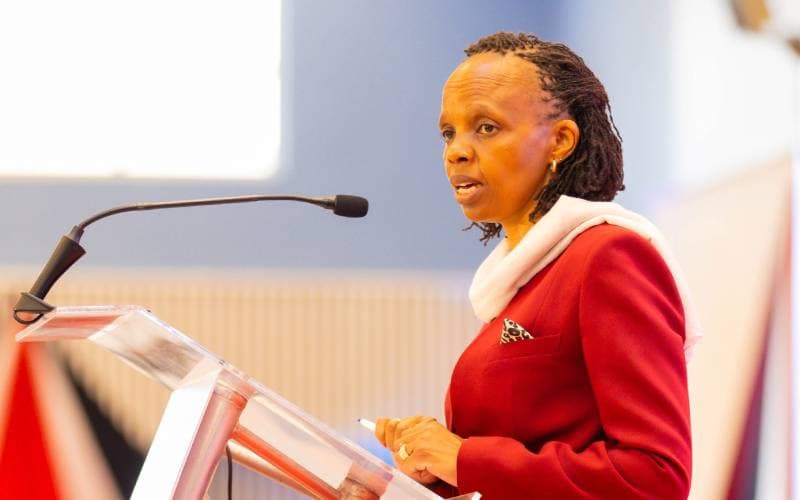
Speaking during the second day of the 17th Inter-University Council for East Africa (IUCEA) Annual Conference, Dr Essah said universities risk wasting resources on AI if they fail to prepare the people expected to use the technology.
“The transformation gap is not access to AI. It is readiness to use it well,” she said.
Her remarks came a day after IUCEA launched its 2026–2031 Strategic Plan and the Regional AI Network of Universities, initiatives aimed at accelerating responsible AI adoption across higher education institutions in East Africa.
East African Universities Risk Wasting AI Investments
Dr Essah challenged universities to rethink what meaningful digital transformation should look like by the end of the strategy period.
“What if, by 2031, every university had powerful AI, but only a small fraction of faculty, staff and students could use it effectively, critically and ethically? Would that really be transformation?” she posed.
She argued that AI can only deliver meaningful change when institutions have reliable data, strong governance structures, adequate safeguards and people with the skills to use the technology responsibly.
“AI is nothing without data, and data is only useful when institutions have the people, safeguards and capacity to act on it,” she said.
Drawing from findings of a four-year study on the demographics of African faculty conducted across Kenya, Uganda, Tanzania, Rwanda, Burundi and South Sudan, Dr Essah said universities already face significant staffing challenges that could undermine AI adoption if left unaddressed.
The study found that universities across the East African Community have an average faculty shortage of about 50 per cent when measured against their own lecturer-to-student ratios.
Kenya Faces Shortage of 35,000 Lecturers by 2030 as AI Race Intensifies
In Kenya, the study projects a shortage of more than 35,000 lecturers by 2030, with STEM and ICT disciplines expected to be among the hardest hit.
The research also found that women make up less than 20 per cent of senior university faculty, highlighting the need to ensure AI adoption does not reinforce existing inequalities.
“This data showed that if universities are going to adopt AI institutionally, they must first consider what needs to be in place. If student numbers continue to increase while there is already a shortage of faculty—and that shortage is expected to grow—AI alone will not transform institutions. Without enough qualified lecturers and the necessary capacity, universities cannot achieve meaningful transformation through AI,” she said.
“We must respond to AI capacity gaps and not make AI an excuse to avoid recruitment.”
She urged universities to begin by assessing their level of AI readiness before purchasing new technologies.
According to Dr Essah, institutions should establish a baseline showing how many lecturers, staff and students can already use AI tools, identify existing skills gaps across departments and determine the resources required to build capacity.
“We shouldn’t jump into investing in AI tools within our institutions when we haven’t yet got a fair idea of what is needed. It will differ from institution to institution,” she said.
AI Adoption Must Start With Skills, Governance and Training
Dr Essah said universities should also develop AI curricula and invest in training programmes that equip both lecturers and students with the skills needed to use AI effectively and responsibly.
She warned that institutions must guard against bias and discrimination in AI systems by ensuring the technology is implemented within clear governance and accountability frameworks.
“There has to be human control and accountability so that whatever is introduced is guided by institutional and national policy,” she said.
Turning to teaching and learning, Dr Essah said AI should strengthen—not replace—the work of lecturers.
She said the objective is not to make education “AI-proof” but to ensure students develop critical thinking skills and learn how to use AI responsibly.
“The objective is not to make education AI-proof. It is to assess how students think and how responsibly they use AI,” she said.
AI Should Support, Not Replace, Teaching and Learning
Dr Essah explained that AI can help lecturers prepare course materials, provide timely feedback to students and adapt learning resources into local languages, while preserving mentorship, academic integrity and ethical judgment.
She stressed that universities should continue producing graduates who can think independently and make informed decisions even without relying on AI tools.
“Students should not just receive knowledge. They should be able to think critically and make decisions without the use of AI,” she said.
Dr Essah also called for students to play a greater role in shaping how AI is integrated into higher education, arguing that learners are often left out of decisions affecting their education.
She cited ESSA’s collaboration with AI company Quilt AI, which analyzed publicly available student feedback to understand experiences around access to education, learning quality and the transition from university to employment.
The findings showed that many students want to be more involved in decisions about curriculum design and teaching methods.
According to Dr Essah, universities can use AI-powered analysis of student feedback to improve learning outcomes, identify barriers to access and better prepare graduates for the labour market.
She added that collaboration through the newly launched Regional AI Network of Universities would allow institutions to move beyond isolated AI pilot projects by sharing expertise, resources and best practices across East Africa.
Dr Essah said responsible AI adoption should ultimately improve teaching, research and university management while ensuring no lecturer, student or institution is left behind.
Follow our WhatsApp Channel and X Account for real-time news updates.



Comments
No comments yet. Be the first to share your thoughts.