
From 'kitawaramba' to mercy, Paul Mackenzie's dramatic turn as he awaits sentence

Paul Mackenzie's words, “Kitawaramba”, became one of the most memorable expressions of defiance associated with the unfolding tragedy.
When Paul Mackenzie warned Kenyans that “kitawaramba” shortly after his arrest in April 2023, he appeared unshaken by the outrage over the deaths emerging from Shakahola Forest.
More than three years later, the doomsday preacher is making a very different appeal before the High Court, asking for mercy after being convicted of 191 counts of murder in a tragedy that claimed 190 children and one adult.
As he awaits sentencing on November 6, the man whose chilling declaration became associated with one of Kenya's worst humanitarian tragedies is relying on arguments of rehabilitation, religious transformation and individual circumstances to escape the harshest possible punishment.
In April 2023, as investigators began uncovering bodies in shallow graves in Shakahola Forest, Mackenzie was arrested, and his remarks from a police vehicle drew widespread condemnation.
His words, “kitawaramba”, became one of the most memorable expressions of defiance associated with the unfolding tragedy.
The discovery of the graves exposed the scale of the deaths linked to his teachings. Investigators eventually recovered hundreds of bodies from the forest, while survivors recounted the fasting instructions and conditions they had experienced within the settlement.
Latest Stories
- NCA, NEMA oppose reopening of Twiga Beach Hotel after deadly collapse
- Kenya could grow GDP by 22 per cent by 2035 if it tackles corruption, World Bank says
- Opposition slams IEBC officials' foreign trips as election preparations fall behind schedule
- Ex-US President Barack Obama urges Democrats to act after election victories
But in court, the narrative presented by Mackenzie's defence has taken a different direction.
 Search team members are pictured next to bodies found in the Shakahola Forest in Kilifi County on June 3, 2024. (Photo: Farhiya Hussein/EV)
In mitigation submissions filed ahead of sentencing, his lawyers, Lawrence Obonyo Legal Advocates, have asked the court to consider a prison term of less than 10 years for convicts whose individual circumstances justify such leniency.
The request comes despite the gravity of the convictions, which the defence itself acknowledges involved the loss of 191 lives.
"The loss of 191 innocent lives, including 190 children, is a tragedy of immeasurable proportions," the lawyers state in their submissions.
Rather than asking the court to disregard the deaths, the defence argues that it should distinguish between the individual circumstances and culpability of the convicts when determining punishment.
The lawyers have placed particular emphasis on what they describe as a transformation during their clients' three years in custody.
They told the court that the convicts had participated in deradicalisation training and religious programmes, with some embracing Christianity.
"The convicts urge this court to consider the transformation they have undergone since their incarceration, particularly their participation in religious programmes and their embrace of Christianity," the submissions state.
They also claim that all 28 convicts covered by the mitigation submissions are first offenders, citing police clearance certificates issued on October 30, 2026.
The defence further says the convicts are willing to participate in the National Counter Terrorism Centre's Disengagement, Deradicalisation, Rehabilitation and Reintegration programme.
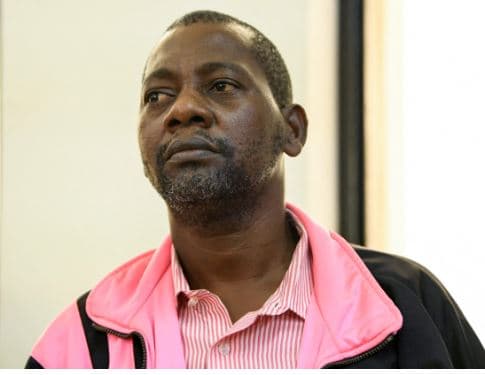
 Cult leader Paul Mackenzie. (Photo: Farhiya Hussein)
But perhaps the most striking argument is the defence's description of the convicts as victims of the tragedy.
"The convicts before you are also victims of the tragedy. In a way they lost property and their children," the lawyers submitted, asking the court to consider the losses they allegedly suffered.
The State, however, has sought the death penalty for Mackenzie, with life imprisonment proposed for the other 27 convicts.
The defence has also invoked Section 333(2) of the Criminal Procedure Code, asking the court to deduct the time already spent in custody from the eventual sentences.
In its concluding appeal, the defence insists that the court should not treat all the convicts alike, arguing that punishment must reflect individual culpability and prospects of rehabilitation.
"My Lady, justice is not measured by the severity of punishment, but by the fairness, proportionality and wisdom with which it is imposed," the lawyers submitted.
For Mackenzie, the contrast between the defiant words uttered after his arrest and the appeal for mercy now before the court marks a remarkable shift as he awaits the consequences of the Shakahola killing.


Comments
No comments yet. Be the first to share your thoughts.