

Kenya opens talks with Saudi Arabia after 350 workers denied entry over Ebola restrictions

The workers spent four days stranded at Sharjah Airport in the United Arab Emirates before boarding a flight back to Kenya, which landed at Jomo Kenyatta International Airport at about 1:30 pm on Monday, November 2, 2026.
Kenya has opened diplomatic talks with Saudi Arabia and Kuwait to lift travel restrictions imposed over Ebola concerns.
The move comes after more than 350 Kenyan workers who had travelled to Saudi Arabia for employment were denied entry despite holding valid work visas and forced to return home.
The workers spent four days stranded at Sharjah Airport in the United Arab Emirates before boarding a flight back to Kenya, which landed at Jomo Kenyatta International Airport at about 1:30 pm on Monday, November 2, 2026.
One of the affected workers, Mary Njau, described their experience at Sharjah Airport as frustrating, saying they had travelled with hopes of starting their jobs.
“We were stuck and stranded at Sharjah. We travelled with hopes but ended up being treated badly,” she said.
Njau urged the government to resolve the matter before their visas expire. Other returnees reported receiving limited meals and spending nights sleeping on airport floors.
Latest Stories
- Postnatal depression may affect children's brain development through breast milk, study finds
- European supermarkets targeted in second reported cyberattack
- Development projects lag as salaries, debt payments consume Sh13.17 trillion in three years
- Muturi turns up heat on Gachagua as opposition divisions threaten 2027 State House bid
The Association of Skilled Migrant Agencies of Kenya (ASMAK) also called for urgent diplomatic engagement between Nairobi and Riyadh.
The association’s Assistant Secretary General, Elab Muridi, said more than 350 workers were returning home, while approximately 150 others were still in transit.
He added that documents for about 2,200 workers had already been processed, with the applicants expected to travel.
“Already, more than 350 workers are on their way back, and most of them are here. We estimate that about 150 are still in transit,” Muridi said.
ASMAK Chair Francis Wahome said recruitment partners in Gulf Cooperation Council countries were equally surprised by the restrictions, adding that agencies had not received formal communication from the Kenyan government.
“Even our partners in Saudi Arabia, Kuwait and other Gulf Cooperation Council countries were shocked. They have been calling us to ask what is happening. Everyone in the recruitment sector is seeking answers from colleagues and the government because we have not received any formal communication from the government,” Wahome said.
The association’s Secretary General, Monica Mwema, said the restrictions had disrupted confirmed bookings and scheduled departures, leaving agencies seeking clarification on the 21-day rule.
“We have people who are coming back because they were not allowed to enter Saudi Arabia. Others have confirmed tickets, with some scheduled to leave tonight and others tomorrow. We have been caught off guard and are seeking clarity on the 21-day restriction. What does it mean?” Mwema posed.
On Monday, diplomatic discussions were held between Director General for Political Affairs Amb Josephat Maikara, Deputy Director General for Africa Affairs Amb Dennis Mburu and Director of the Middle East Directorate Sora Katelo, and Saudi Arabia’s Ambassador to Kenya, Saad Abdullah Al Nofaia, and Kuwait’s Chargé d’Affaires, Sami Talal Alenezi.
During the meeting, Maikara expressed Kenya’s concern over the suspension of arrivals, noting that the country had complied with guidelines issued by the World Health Organisation (WHO).
He said Kenya had successfully contained the outbreak through prompt action, with no new cases reported since October 19, 2026, and called on the two countries to review and lift the restrictions.
The Saudi ambassador and Kuwait’s Chargé d’Affaires agreed to present Kenya’s concerns to their respective governments and organise technical meetings between their health authorities and Kenya’s Ministry of Health to discuss the suspensions.
Saudi Arabia announced the indefinite travel restrictions on October 30, 2026, through the Saudi Press Agency, suspending travel by its citizens to Kenya and stopping the issuance of all visa categories for people travelling from the country.
The measures also prevent entry by travellers who have stayed in Kenya or another country experiencing an active Ebola outbreak within the 21 days before arrival, including those who transit through a third country.
The restrictions build on health protocols introduced in 2019 and strengthened in May 2026.
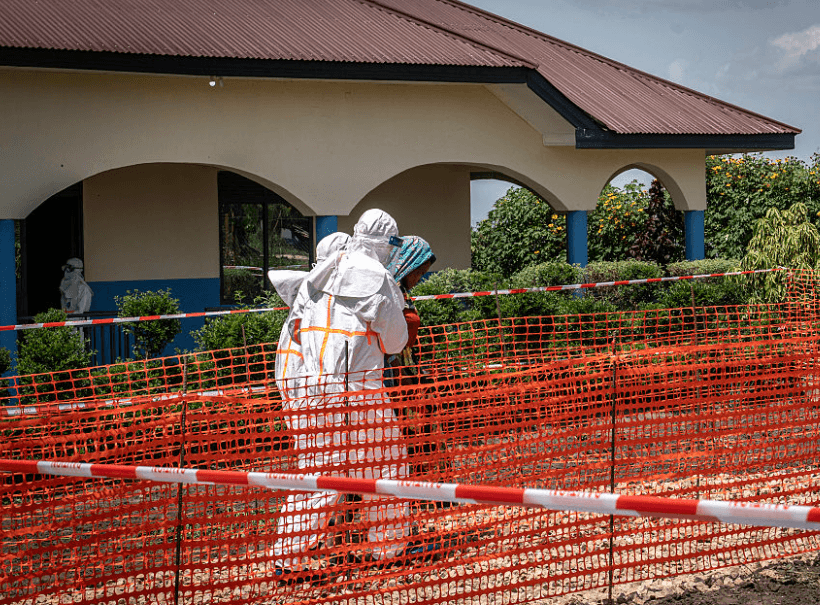
The restrictions come as Kenya responds to nine confirmed cases of the Bundibugyo strain of Ebola, which have resulted in two deaths.
The cases are linked to one cluster that originated from an imported infection involving a Kenyan man who travelled from the Democratic Republic of Congo through Uganda before arriving in Nairobi on October 3, 2026.
As of October 30, 2026, the Ministry of Health had reported 10 days without a new infection and had started releasing people who had completed the required 21-day monitoring period.


Comments
No comments yet. Be the first to share your thoughts.