
Colorectal cancer drug linked to rare skin condition that mimics potentially deadly skin cancer

A rare reaction to capecitabine caused dozens of rapidly developing skin lesions in a 75-year-old woman, highlighting the risk of misdiagnosis and the need to monitor unusual changes during cancer treatment.
A cancer drug commonly used to treat colorectal cancer has been linked to an unusual and potentially misleading side effect after a 75-year-old woman developed dozens of rapidly growing skin lesions on her face and neck, raising concerns that the reaction could be mistaken for skin cancer.
The case, published in a medical journal and reported by EurekAlert, describes how the woman, who had sigmoid colon cancer that had spread to her bones, developed numerous skin growths on her face and neck while taking an oral cancer medicine known as capecitabine.
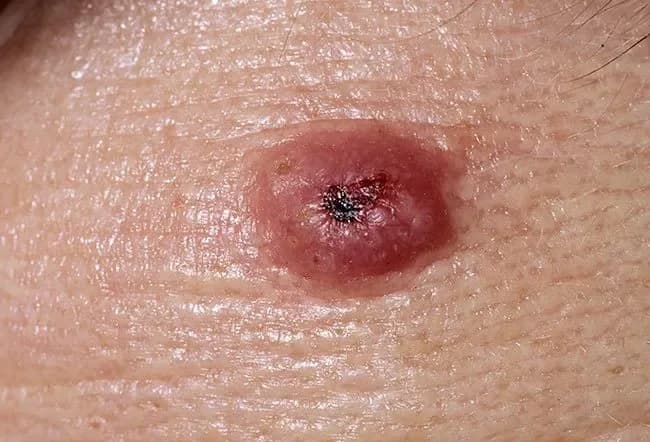
The growths appeared rapidly over two months, forming multiple closely packed, flesh-coloured to reddish bumps and firm nodules of varying sizes. Some of the lesions also developed small blood-stained crusts.
Doctors diagnosed the condition as eruptive keratoacanthoma, a rare skin disorder characterised by the sudden appearance of multiple growths. The condition can develop rapidly and produce numerous lesions across different parts of the body, making it difficult to distinguish from other skin conditions, including skin cancer.
Although the exact causes of eruptive keratoacanthoma are not fully understood, previous cases have been linked to exposure to ultraviolet light, viral infections, injuries, changes in the immune system and certain medicines.
Capecitabine is an oral cancer medicine commonly used to treat colorectal and other cancers. It works by converting into 5-fluorouracil (5-FU), a substance that interferes with the growth and multiplication of cancer cells.
Latest Stories
- Forgotten flint tools in museum boxes reveal how Egypt’s early farmers paved way for pharaohs
- No strong evidence testosterone therapy improves menopausal brain fog, study finds
- Sudan takes Ethiopia to UN over alleged drone attacks launched from its territory
- Family seeks court intervention after Nairobi lawyer Abshir Abdi vanishes in alleged abduction
However, its possible link to eruptive keratoacanthoma is unusual because 5-FU is itself used to treat the skin condition.
The authors noted that this makes capecitabine an unexpected possible trigger, meaning doctors may not immediately suspect the medicine when a patient develops widespread skin growths.
“Because 5-FU is commonly used to treat KA, capecitabine is not typically considered a trigger for eruptive KA,” the authors noted.
In the reported case, the woman had not received immunosuppressive treatment, which can sometimes contribute to unusual skin reactions. This made the suspected link to capecitabine particularly important in assessing the sudden appearance of the lesions.
Further examination of skin samples revealed well-differentiated squamous epithelial growth in the dermis, with structures known as keratin pearls. The cells showed mild abnormalities, while their growth pattern had pushing rather than infiltrative borders.
Genetic testing also identified missense mutations in the mechanistic target of rapamycin kinase (MTOR), a gene involved in regulating cell growth and other cellular processes.
The findings supported the diagnosis of capecitabine-induced eruptive keratoacanthoma.
However, the authors warned that the condition can be difficult to distinguish from squamous cell carcinoma, a type of skin cancer that develops from squamous cells.
The two conditions can share similar features when examined under a microscope, making it important for doctors to consider a patient's medical history and the appearance of the lesions alongside laboratory findings.
“Without clinical correlation, the lesion could easily be misdiagnosed as squamous cell carcinoma on histopathology alone,” the authors warned.
The distinction is important because an incorrect diagnosis could influence treatment decisions and expose patients to unnecessary interventions. Doctors therefore need to establish whether a patient has recently started taking medication that could be responsible for the sudden appearance of skin growths.
There is currently no standard treatment protocol for eruptive keratoacanthoma. Reported treatment options include topical corticosteroids, 5-FU, methotrexate and triamcinolone acetonide, as well as injections of some of these medicines directly into the lesions. Oral acitretin has also been used in some cases.
The choice of treatment may depend on the patient's overall health, the extent of skin involvement and the underlying condition being managed.
The authors said doctors should consider drug-induced eruptive keratoacanthoma when patients with advanced cancer develop sudden, widespread skin bumps and nodules, even if they have not received medicines that suppress the immune system.
The case highlights the importance of monitoring unusual skin changes during cancer treatment and reviewing patients' medication histories when new symptoms emerge.
It also demonstrates why laboratory findings should not be interpreted in isolation, particularly when two conditions can produce similar features. Recognising rare drug-related reactions could help doctors make more accurate diagnoses and choose appropriate treatment.
Keratoacanthoma is considered uncommon, and its exact global prevalence remains unknown because some cases are mistaken for squamous cell carcinoma. However, studies in Australia have estimated between 150 and 409 new cases per 100,000 people annually.


Comments
No comments yet. Be the first to share your thoughts.