
No new Ebola infections detected in past 24 hours as Kenya prepares to release first contacts from quarantine

All 14 samples from suspected cases test negative as Kenya maintains nine confirmed infections, traces 135 contacts and prepares to release the first contacts from quarantine on Sunday.
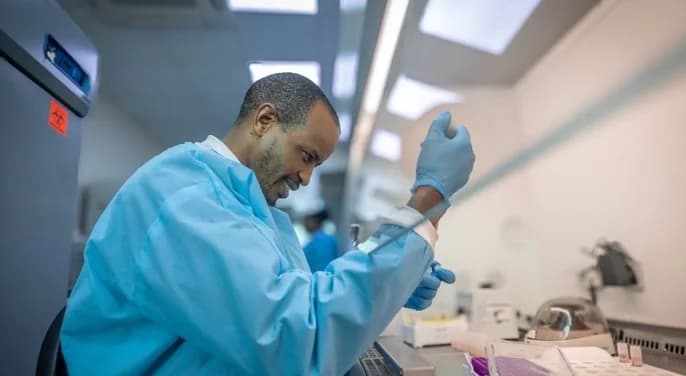
All 14 samples collected from suspected Ebola cases across Kenya in the past 24 hours have tested negative, offering a boost to the country’s efforts to contain the outbreak as the first contacts prepare to leave quarantine this weekend.
Kenya continues to report nine confirmed cases, with health authorities maintaining that all infections belong to a single cluster and there is no evidence of community transmission.
In a statement, Director-General for Health Patrick Amoth said all nine confirmed cases, including the index patient who died on October 5, were linked to the same cluster.
Kenya confirmed its first imported case of Bundibugyo virus disease (BVD) on October 6, triggering contact tracing, testing and enhanced surveillance to prevent further spread.
Dr Amoth said the eight patients currently receiving treatment at designated isolation facilities were stable and responding well to care from infectious disease specialists. The patients comprise four family members and four health workers who cared for the first patient.
Health authorities are hopeful that all eight patients will recover fully and eventually be discharged to reunite with their families.
Latest Stories
- KRA to block clearance of imports without valid digital marine cargo insurance starting November 1
- France records first human case of Shamonda virus: What is it and should you be concerned?
- Ruto challenges COMESA to fast-track market levy as he pushes for sustainable funding of regional programmes
- Six in 10 Ebola deaths in DRC occur outside treatment centres, WHO warns
All 135 contacts traced as quarantine release nears
The Ministry of Health has traced all 135 contacts associated with the index case, representing 100 per cent of the identified contacts both within Kenya and internationally.
Dr Amoth said the relevant health authorities in the countries concerned had been formally notified in line with the International Health Regulations (2005).
He thanked national and county contact-tracing teams, families, communities and development partners for their cooperation in helping contain the outbreak.
The ministry said epidemiologists had also mapped the exposure dates, quarantine periods and symptom onset for each confirmed case to establish how the infections occurred.
According to Dr Amoth, all the patients had close contact with the index case between October 3 and October 5 before entering quarantine. They subsequently developed symptoms within Ebola's known incubation period of two to 21 days.
The pattern is consistent with transmission from the first patient, with no evidence that infections occurred within quarantine facilities.
The ministry said infection prevention and control measures at the facilities had been further strengthened to reduce the risk of transmission.
Each contact's 21-day monitoring period is calculated from their last exposure. Anyone exposed to a subsequently confirmed case must have their monitoring period recalculated from the date of that later exposure.
The first contacts who complete the required 21 days of monitoring without developing symptoms are expected to be released from quarantine from Sunday, October 25.
Dr Amoth said their cooperation had played an important role in protecting the wider population, as authorities continued monitoring those whose quarantine periods had not yet ended.
The release will mark an important milestone in the outbreak response, although surveillance, testing and contact monitoring will continue.
Screening and surveillance remain in place
Enhanced surveillance remains in place at health facilities and within communities across all counties to ensure suspected cases are identified and investigated promptly.
At the country's points of entry, 709,093 travellers have been screened since the start of the response, including 3,107 during the latest 24-hour reporting period.
The Ministry of Health said a total of 461 samples had been tested since the outbreak response began.
Authorities continue to urge the public to cooperate with health teams as they monitor contacts, investigate new alerts and strengthen measures to prevent further transmission.

Comments
No comments yet. Be the first to share your thoughts.